




T-Line, Successor to Diamond T, Plans Return to Market
Exclusive — Diamond Specialty Vehicles LLC hopes to begin producing Class 6, 7 and 8 trucks, tractors and glider kits, mostly for vocational use, later this year, promising quality and simplicity.

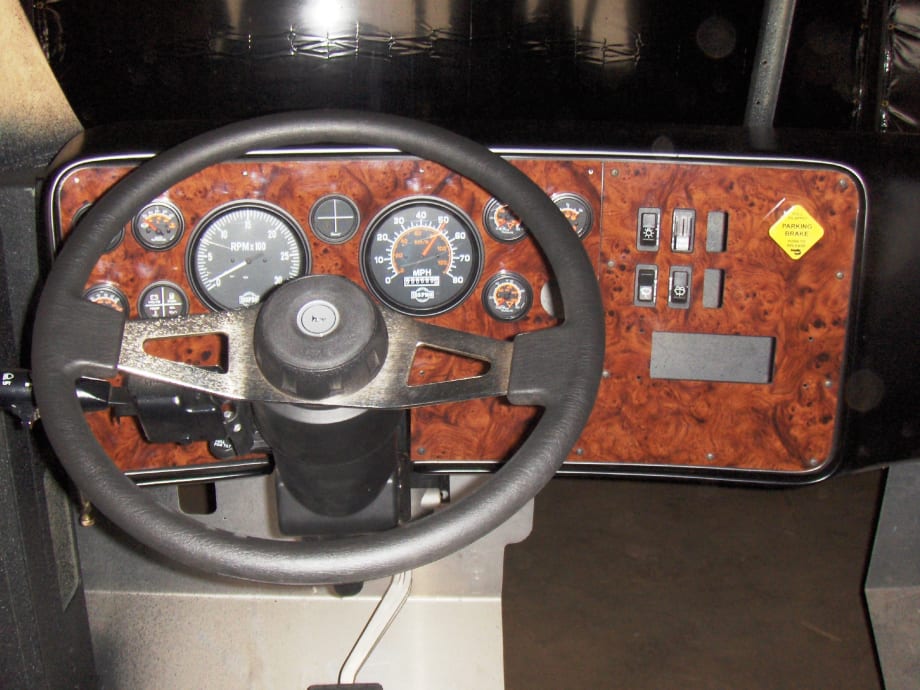
Instruments and controls will use hard wiring to ensure simplicity and reliability, the company says. Photo: Diamond Specialty Vehicles LLC
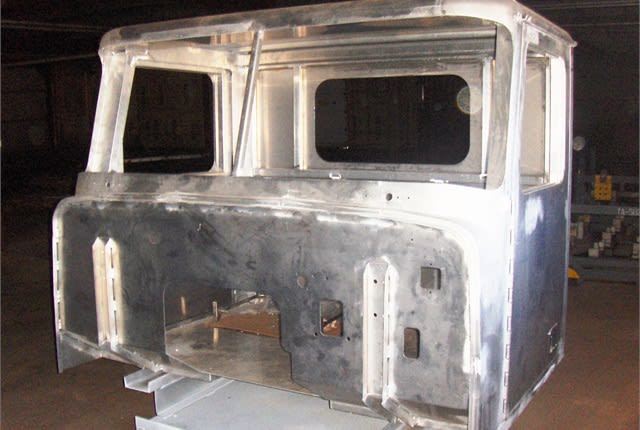
T-Line’s aluminum cab, built by a body maker in Wisconsin, can be altered for specialty applications.Photo: Diamond Specialty Vehicles LLC
T-Line Trucks & Chassis, a low-volume business that evolved from the old Diamond T and Diamond Reo operations, plans a return to production later this year. Its principals promise quality and simplicity through sound design, methodical assembly and use of hard-wired electrical circuitry.
Barring any further financial, legal or operational snags, which partners Joe Whitman and Bruce Fylstra have previously seen, the company, Diamond Specialty Vehicles LLC, hopes to begin producing Class 6, 7 and 8 trucks and tractors, mostly for vocational use.
Glider kits and complete "made to order" trucks, using a proprietary aluminum cab, are described on the company’s website, www.tlinetrucks.com. Powertrain offerings include Cummins diesels and Power Systems International gasoline and alternative-fuel engines, along with Eaton and Tremac manual transmissions, Allison automatics, and Dana Spicer and Meritor axles.
Whitman was chief engineer for Osterlund Inc., builder of Diamond Reo and Giant trucks from the late 1970s to the mid ‘90s. He continued producing Diamond T-brand trucks, mostly for export to South America, until 2000. Then he sold T-Line trucks for domestic and foreign customers until 2010, when a dispute with a contract assembler intervened.
He continued selling parts to support in-service vehicles here and abroad until 2013. Since then he’s been working on reviving the business. More recently, Fylstra, a veteran truck salesman, invested in the venture and is handling sales, marketing and dealer development. A parts stocking and distribution agreement has already been arranged with a known logistics firm.
“We’ll probably start with glider kits because people are having a lot of trouble with the modern engines and their exhaust equipment,” Whitman said. “There’s a lot of opportunity there.”
Simplicity is the watchword with the electrical system.
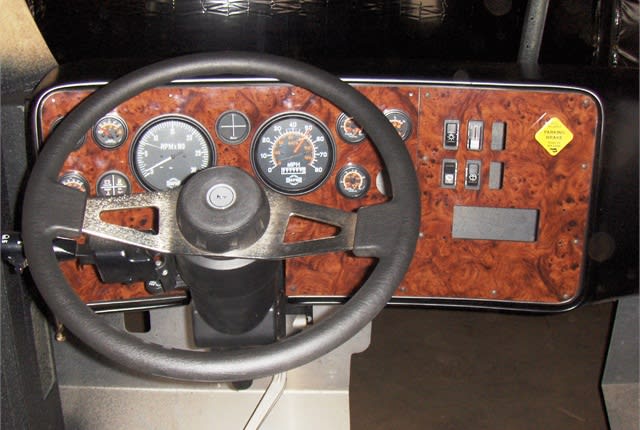
Instruments and controls will use hard wiring to ensure simplicity and reliability, the company says. Photo: Diamond Specialty Vehicles LLC
“We’re going to all hard wiring,” Fylstra said. “None of this multiplexing, and no fiber optics. You’ll still be able to change a light bulb in your dash. We’re cutting out all the redundancy -- no multiple fuse blocks; there’ll be one fuse box that everything will go into. ”
High-strength Domex steel from Sweden will go into T-Line frames, which will be powder-coated before air and electrical lines are strung. Because volume will be relatively low, assembly will be unlike any truck products now on the market.
“They’ll be stall-built by a team of two or three guys,” Fylstra said. “We can be more efficient this way because you can do it right and not be rushed by a moving assembly line.”
The aluminum cab is assembled from structural members and panels so it can be altered for specialty uses – high or low roofs, and added length for stowage or sleeper space, he said. The windshield consists of two pieces of mostly flat glass that will fit on either side. A body maker in Wisconsin has built more than a dozen cabs and is ready to produce more.
The T-Line aluminum cab could directly replace International S-series steel cabs, which often are damaged by rust, and that could be a side business, Fylstra thinks. Whitman said he used the S cabs in the last 10 years of production, until Navistar stopped making them.
Gliders and complete vehicles might be assembled by a contract manufacturer, but the partners prefer to set up their own facility, hopefully around Hershey, Pa., where the company is headquartered. Production of fiberglass hoods will be farmed out.
T-Line will remain the chosen name because it helps separate the brand from any possible liability for trucks made by previous owners and companies, Whitman explained.
As before, the name incorporates the ‘T’ from Diamond T, an auto and truck maker founded in 1907 by a C.A. Tilt, in Chicago. Through the years, Diamond T trucks were known for styling and mechanical innovation.
In 1967, Diamond T and Reo, for Ransom E. Olds of automobile fame, were merged into Diamond Reo by their owner, White Motor Co. Operations were consolidated in Lansing, Mich., Reo’s home. An Alabama investor bought the company in 1971, but it went out of business in 1974, the victim of an economic recession.
Loyal Osterlund, a Diamond Reo dealer in Harrisburg, Pa., soon obtained tooling and rights to build and sell the trucks. His company averaged about 150 trucks per year, until 1995. Fylstra, an admitted optimist, would like to see Diamond Specialty Vehicles produce thousands each year.
“I want to build them here in America and provide jobs to American workers,” he said. “I think we’ve got a brilliant future, even if we’re still a bubble gum and bailing wire operation at this point.”
More Equipment

How Volvo Updated Its D13 for EPA 2027 [Watch]
Volvo’s updated D13 promises lower emissions without sacrificing performance or fuel economy. Take a closer look at what changed inside the engine in this HDT Spotlight video.
Read More →
Michelin Tire Improves Efficiency and Durability for Regional Fleets
The Michelin X Multi Energy D2 is a regional haul drive tire engineered to help fleets improve fuel efficiency, durability and traction in demanding stop-and-go operations.
Read More →
ZF Expands Commercial Vehicle Push in North America
ZF is expanding its North American commercial-vehicle presence with new transmission applications, electrification, trailer technology and autonomous-driving systems.
Read More →
Tesla Wants a Self-Driving Semi. Are Cameras Enough?
Could Tesla’s camera-only autonomous driving technology work on an 80,000-pound Semi? In this commentary, HDT's Deborah Lockridge takes a look at Tesla, Cybercab, and how autonomous trucks see the road.
Read More →
Kodiak: Driverless Long-Haul Truck Launch on Track for 2026
Kodiak AI says its driverless long-haul safety case is 93% complete and it remains on track to begin commercial operations by year-end 2026.
Read More →
What DOT’s Automated Vehicle Strategy Means for Trucking
The U.S. Department of Transportation issued a new automated-vehicle strategy that outlines plans for driverless-truck regulations, cross-state freight corridors, and federal safety standards.
Read More →
East Coast Port Launches $45M Electric Truck Push
The Port Authority of New York and New Jersey announced millions in incentives for zero-emission drayage trucks, yard tractors, and new charging hubs near the port.
Read More →
PlusAI Going Public to Fund Autonomous Truck Launch
A SPAC deal could provide PlusAI with up to $300 million as it works toward a 2027 commercial launch of factory-built autonomous trucks.
Read More →
NHTSA Moves to Rewrite Truck Fuel-Economy Rules
The National Highway Traffic Safety Administration says it lacks authority to regulate medium- and heavy-duty truck engines separately from complete vehicles, but the existing standards have not yet been eliminated.
Read More →
Detroit Opens Orders for EPA 2027 Engines
Detroit isn’t starting from scratch to meet EPA 2027 diesel emissions standards. Its Gen 6 DD13 and DD15 engines keep much of today’s platform while updating the fuel and aftertreatment systems.
Read More →