




DOT Delays Speed-Limiter, Safety-Fitness Rules; ELD on Track
A final rule mandating electronic logging devices will still be published in September, while publication of a proposed rule to mandate speed limiters and one to establish a carrier safety-fitness determination system have been delayed a month.

Image: FMCSA
A final rule to mandate electronic logging devices is still slated to be published in September, while publication of a proposed rule to mandate speed limiters and one to establish a carrier safety-fitness determination system have each been delayed a month, according to the Department of Transportation’s April 17 rulemaking update.
DOT also advised that a final rule to forbid driver coercion and one to put in place a CDL drug and alcohol clearinghouse remain on track to be published as previously projected in September and December, respectively.
Listed here by order of rulemaking stage and projected timeframe are key FMCSA rules and their calendar status with a brief summary of each rule:
Prohibition of Coercion (RIN 2126-AB57). Final Rule to be published on September 10. Required by the MAP-21 Highway Bill, it will require that regulations governing commercial motor vehicle safety “ensure ... an operator of a commercial motor vehicle is not coerced by a motor carrier, shipper, receiver, or transportation intermediary’ to operate in violation of federal safety regs.
Electronic Logging Devices and Hours of Service Supporting Documents (RIN 2126-AB20). Final Rule to be published on September 30. This rulemaking would establish: (1) minimum performance and design standards for hours-of-service electronic logging devices; (2) requirements for the mandatory use of these devices by drivers currently required to prepare HOS records of duty status; (3) requirements concerning HOS supporting documents; and (4) measures to address concerns about harassment resulting from the mandatory use of ELDs.
Commercial Driver's License Drug and Alcohol Clearinghouse (RIN 2126-AB18). Final Rule to be published on December 14. Also mandated by MAP-21, it will create a central database for verified positive controlled substances and alcohol test results for commercial driver´s license holders and refusals by such drivers to submit to testing. It will require employers of CDL holders to report positive test results and refusals to test into the Clearinghouse. Prospective employers, acting on an application for a CDL driver position with the applicant´s written consent to access the Clearinghouse, would query the Clearinghouse to determine if any specific information about the driver applicant is in the Clearinghouse before allowing the applicant to be hired and to drive CMVs.
Heavy Vehicle Speed Limiters (RIN 2126-AB63). NPRM is to now be published on July 27. This joint FMCSA/NHTSA rule would require the installation of speed-limiting devices on heavy trucks. Per DOT, this would “decrease the estimated 1,115 fatal crashes annually involving vehicles with a GVWR of over 26,000 pounds on roads with posted speed limits of 55 mph or above.”
Carrier Safety Fitness Determination (RIN 2126-AB11). NPRM is to now be published on August 17. This rule would “adopt revised methodologies that would result in a safety fitness determination (SFD)” that would indicate when a motor carrier is “not fit to operate commercial motor vehicles” based on (1) the carrier's performance in relation to five of FMCSA’s Behavioral Analysis and Safety Improvement Categories (BASICs); (2) an investigation; or (3) a combination of on-road safety data and investigation information.
In addition, NHTSA’s Electronic Stability Control Systems for Heavy Vehicles (RIN 2127-AK97) is to be published as a Final Rule on May 7. This will require vehicle manufacturers to include electronic stability-control systems “that address both rollover and loss of control crashes” on new truck tractors and motor coaches, beginning with model year 2017.
More Fleet Management

How Telematics Improves Visibility, Control, and Performance in Refrigerated Fleets
Explore how telematics help refrigerated fleets improve visibility, uptime, efficiency, compliance, and cargo protection across connected cold chain operations.
Read More →
What the U.S.-Canada Trade War Means for Trucking
Escalating U.S.-Canada tariffs could disrupt cross-border freight, reduce truck volumes, raise costs, and create new uncertainty for carriers on both sides of the border.
Read More →
What Are Trucking’s Top Concerns for 2026?
The American Transportation Research Institute wants to know what's worrying trucking fleet managers, drivers, and other stakeholders in its annual Industry Issues survey.
Read More →

American Trucking Associations Looks for a New Leader
ATA President and CEO Chris Spear abruptly left his job at the association on August 21, at a pivotal time for the trucking industry.
Read More →
Public Wi-Fi Cybersecurity Risks: How Truck Drivers and Fleets Can Protect Their Data
Public Wi-Fi can expose truck drivers and fleets to credential theft, malware, and other cyber threats. Here’s how to reduce the risk on the road.
Read More →
For Nicky Cupp, Fleet Innovation Starts With Frustration
HDT Truck Fleet Innovator Nicky Cupp turns everyday pain points at Fraley & Schilling into opportunities for better technology and smarter processes.
Read More →
Adam Buttgenbach’s Approach to Electric Trucks: Start With Where They Fit
HDT Truck Fleet Innovator Adam Buttgenbach helped PepsiCo build one of North America’s largest EV fleets by focusing on where electric trucks make operational sense.
Read More →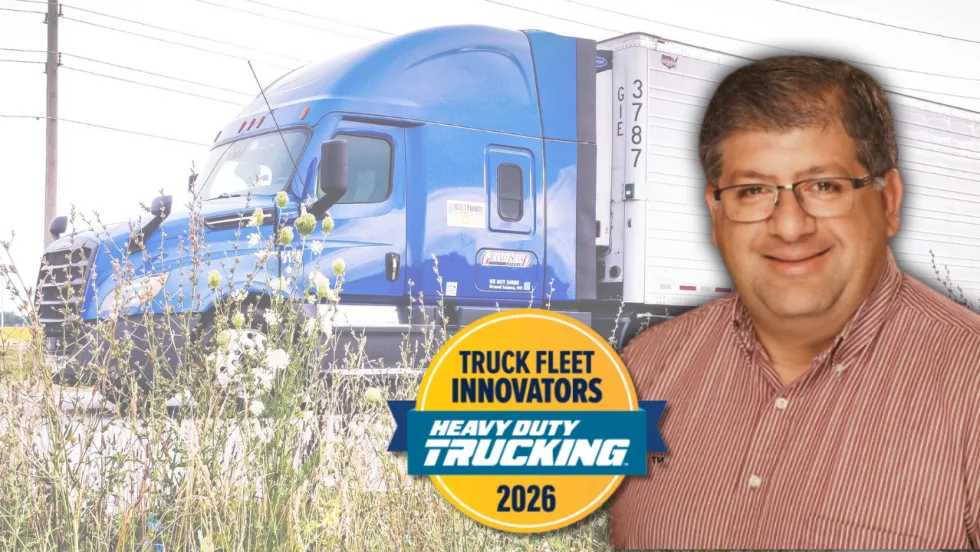
Deen Albert: Let Automation Do the Math, People Make the Decisions
HDT Truck Fleet Innovator Deen Albert makes sure people are still at the heart of operations at Grand Island Express, even while adopting artificial intelligence tools. AI-assisted dispatch helped boost revenue 25% with the same number of trucks.
Read More →
Trimble’s New AI Agent Takes Aim at Fleet Back-Office Busywork
Arc Agent works across Trimble TMS products to automate repetitive tasks such as freight orders, maintenance, invoices, fuel costs and more.
Read More →
How HDT’s 2026 Truck Fleet Innovators Are Rethinking Fleet Operations
Meet five trucking leaders who are challenging assumptions, solving operational problems, and putting innovative ideas to work.
Read More →