




Trucking Moves America Forward Meets 2015 Goals
Trucking Moves America Forward, the industry-wide image and education movement, announced that had it reached its goal of raising $1 million since its inception last March, which was made possible by contributions from more than 100 trucking companies, allied members and individuals.
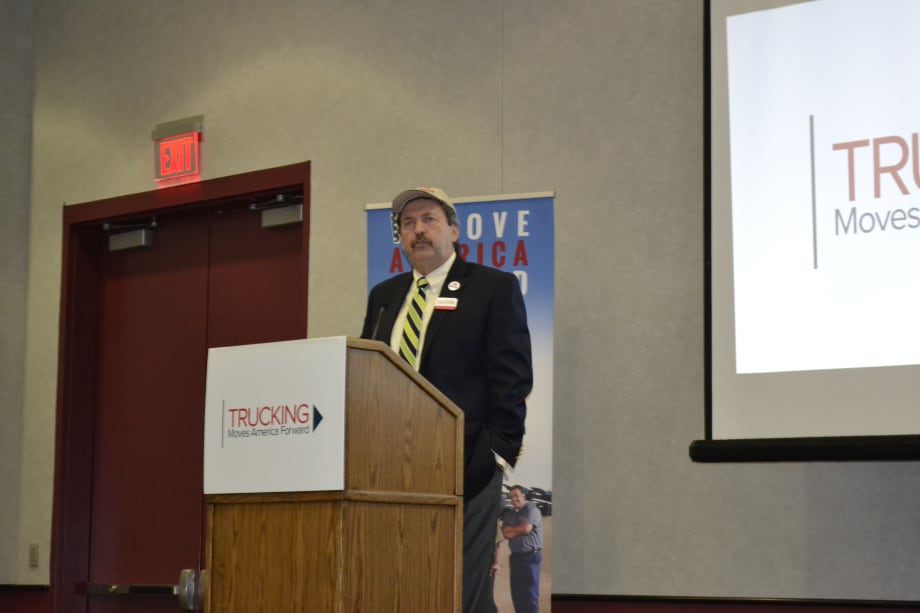
Kevin Burch, co-chairman of TMAF, expressed his excitement over meeting the 2014 goals, and what TMAF has planned for 2015. Photo: Stephane Babcock
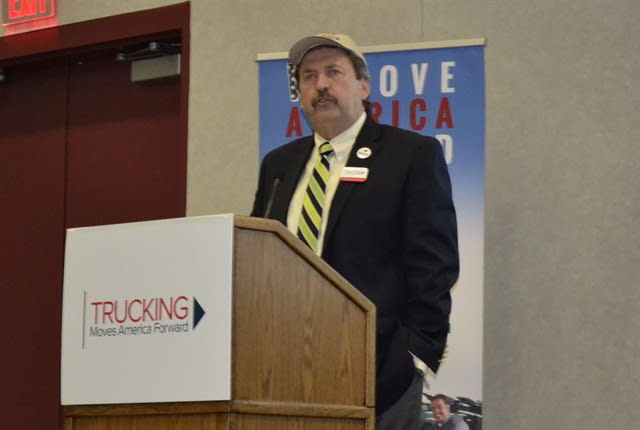
Kevin Burch, co-chairman of TMAF, expressed his excitement over meeting the 2014 goals, and what TMAF has planned for 2015.Photo: Stephane Babcock
Trucking Moves America Forward, the industry-wide image and education movement, announced that had it reached its goal of raising $1 million since its inception last March, which was made possible by contributions from more than 100 trucking companies, allied members and individuals.
“We have achieved great strides during our first year of the movement, and we are grateful for everyone who has contributed to TMAF through both financial and in-kind support,” said Kevin Burch, co-chairman of TMAF, president of Ohio-based Jet Express and second vice chairman of American Trucking Associations.
Burch highlighted the following achievements:
a total of more than 140 donors
more than $4 million of in-kind donations through advertising, sponsorships, trade shows, printing and more
sponsorship on the Love’s Travel Stops and Pilot Flying J NASCAR race cars
3,000 website subscribers
25,400 YouTube views
2,330 Facebook likes
890 Twitter followers
Dick Pingel, an OOIDA board member, represented the trucking owner-operators at the event and called for everyone to continue building upon the current momentum.
“It’s amazing to witness members from all areas of the trucking industry encourage each other and recognize how their roles are interconnected. From the professional truck drivers, to the technicians, travel-plaza attendants, dispatchers, and others, all who have joined together and are willing to make a real difference. But we must continue to grow, so that as a strong, united force, we can maintain a healthy, thriving industry,” Pingel said.
Keith Tuttle, president of Motor Carrier Service, and chairman of Truckload Carriers Association, acknowledged the movement’s efforts in improving the image of the industry.
“We must continue to tell the story that today’s drivers are skilled professionals and devoted family men and women, trained to focus on safety, efficiency and reliability, while operating the safest and most sustainable trucks,” Tuttle said.
For 2015, TMAF announced that its goals are to continue fundraising; activate and engage the trucking industry further by providing marketing and public relations tools; support federal and state advocacy efforts focused on highway funding, highway infrastructure and improving the operational environment; continue to develop strategies for public messages by using research measurements; continue to build pride within the trucking industry and to make trucking an attractive career.
More Drivers

Truck Drivers Need More Than Another Alert
Fleets have more visibility into truck health, safety events, and driver activity than ever. The next challenge is turning all that information into useful guidance for the person who has to decide what to do next.
Read More →
FMCSA Removes 110 Truck Driver Training Schools from Certified ELDT List
Federal regulators also are targeting more than 160 additional training providers and launching a nationwide audit of third-party CDL skills testers as part of a broader crackdown on trucking fraud.
Read More →
Hours of Service Pilot Programs: FMCSA Readies for 2027 Rollout
Two pilot programs could eventually reshape hours-of-service rules, giving truck drivers options to pause their 14-hour clock or use longer split sleeper rest periods.
Read More →
Medical Cards, English Proficiency Reshape Roadcheck Violations
Medical-card violations jumped to the top of the driver out-of-service list during CVSA’s 2026 International Roadcheck, while English-language proficiency violations appeared among the leading violations for the first time.
Read More →
Driver Trust Can Make or Break the Success of Fleet Safety Technology
New Teletrac Navman research suggests that onboarding, transparency about driver data, and positive feedback can play a significant role in how commercial drivers respond to safety and coaching technology.
Read More →
EEOC Sues KLLM Over Alleged Sex Discrimination in Driver Training
KLLM is facing a federal sex-discrimination lawsuit over policies the EEOC alleges put female truck driver trainees at a disadvantage.
Read More →
FMCSA Moves to Codify English Language Requirements for Commercial Drivers
By changing regulations on English-language proficiency requirements for commercial drivers, rather than relying on a guidance memo, the FMCSA said future administrations won't be able to walk back the Trump administration's stricter enforcement with just a memo.
Read More →
Drivers Put Western Star Trucks to the Test at Star Nation Experience
Watch to get an inside look at the Western Star trucks, technology, and community behind the Star Nation Experience 2026!
Read More →
Trump Administration Looks to Put More Veterans Behind the Wheel
The Freedom Haulers program pulls together existing and expanded programs at several federal agencies to recruit veterans to drive commercial heavy-duty trucks and cut the red tape for them to get a CDL, training, and employment.
Read More →
Putting Mack’s Command Steer to the Test
A test drive of Mack’s Command Steer active steering system evaluates how it can make truck driving easier and less tiring.
Read More →