Sens. Michael Bennet (D-Colo.) and Richard Burr (R-N.C.) have reintroduced a bipartisan bill that would allow liquefied natural gas (LNG) to better compete with diesel with taxation based on energy output rather than per gallon.
by Staff
February 6, 2015
Sens. Michael Bennet D-Colo. (left) and Richard Burr R-N.C. Offical Senate photos
1 min to read
Sens. Michael Bennet D-Colo. (left) and Richard Burr R-N.C. Offical Senate photos
Sens. Michael Bennet (D-Colo.) and Richard Burr (R-N.C.) have reintroduced a bipartisan bill that would allow liquefied natural gas (LNG) to better compete with diesel with taxation based on energy output rather than per gallon.
Under the current federal highway excise tax, LNG is taxed by the gallon but because of its lower energy output, vehicles require more LNG to produce the same energy as diesel fuel. This makes LNG cost-prohibitive compared with diesel, the senators argue, and creates a built-in disincentive for fleets to use LNG.
Ad Loading...
"This bill would allow LNG and diesel to compete more fairly in the market while offering a cleaner fuel source to help keep our air clean," said Bennet.
Currently, LNG is cheaper at the pump than diesel but the excise tax rate for both LNG and diesel fuel is set at 24.3 cents per gallon. It takes about 1.7 gallons of LNG to equal the energy in a gallon of diesel fuel. This effectively results in LNG being taxed at 170% the rate of diesel fuel on an equivalent energy basis, according to the bill.
"This is a no-brainer," said Burr. "Our bill would eliminate a current tax disincentive for using LNG, a fuel that is not only environmentally cleaner but would also reduce our dependence on foreign oil."
Purdue researchers demonstrated a high-power wireless charging system capable of delivering energy to electric heavy-duty trucks at highway speeds, advancing the concept of electrified roadways for freight transportation.
The Environmental Protection Agency is asking diesel engine makers to provide information about diesel exhaust fluid system failures as it considers changes to emissions regulations.
The Environmental Protection Agency said California can’t enforce its Heavy-Duty Inspection and Maintenance Regulation, known as Clean Truck Check, on vehicles registered outside the state. But California said it will keep enforcing the rule.
The Trump administration has announced it will no longer criminally prosecute “diesel delete” cases of truck owners altering emissions systems in violation of EPA regulations. What does that mean for heavy-duty fleets?
Natural gas is quietly building a reputation as a clean, affordable, and reliable alternative fuel for long-haul trucks. And Ian MacDonald with Hexagon Agility says the Cummins X15N is a big reason why.
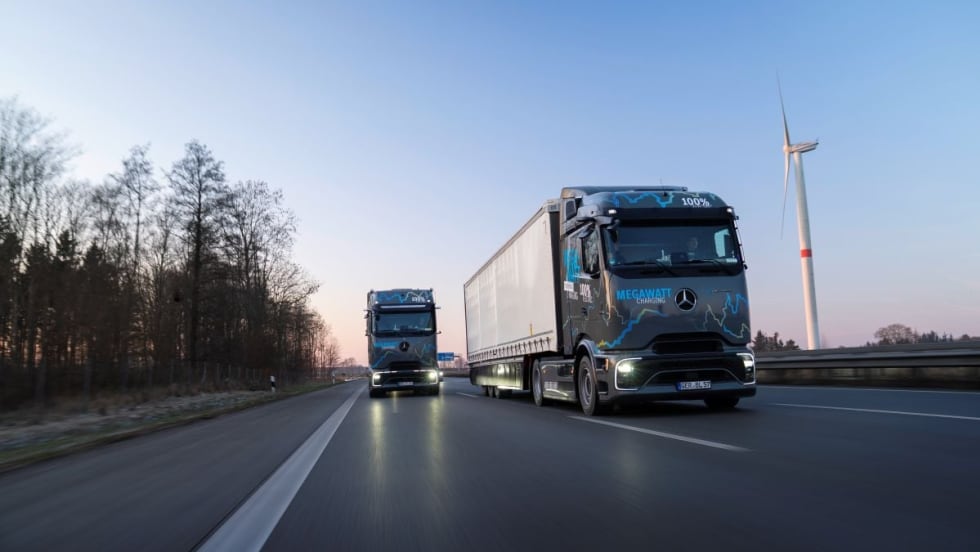
Mercedes-Benz has begun a new series of tests in Europe to validate vehicle compatibility with megawatt chargers and assess charging performance, thermal management, and usability on long-haul duty routes.
Safety, uptime, and insurance costs directly impact profitability. This eBook looks at how fleet software is evolving to deliver real ROI through proactive maintenance, AI-powered video telematics, and real-time driver coaching. Learn how fleets are reducing crashes, defending claims, and using integrated data to make smarter operational decisions.