




Truckload Linehaul Rates Increasing, Intermodal Slowing
A measure of truckload linehaul rates show they rose 7.4% in December compared to the same time in 2013.
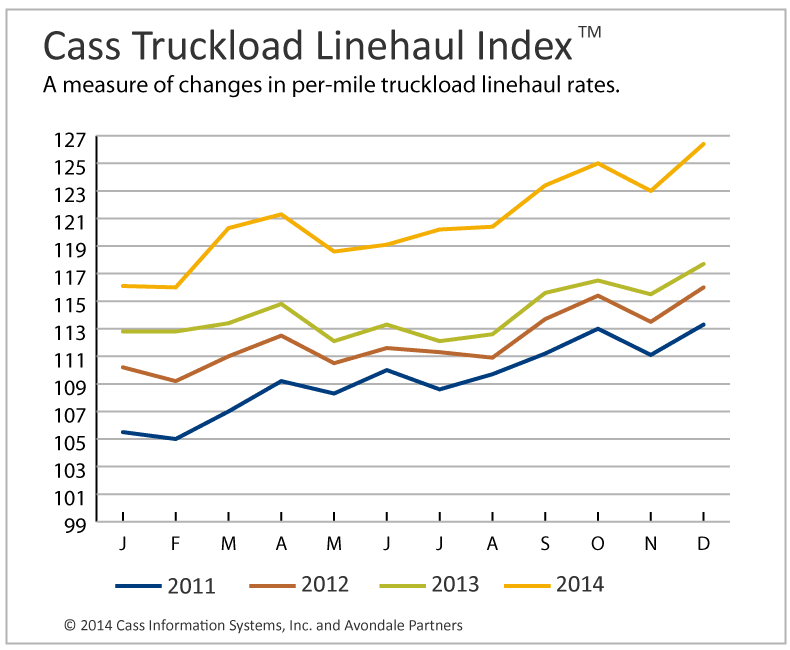
A measure of truckload linehaul rates show they rose 7.4% in December compared to the same time in 2013.
The latest Cass Truckload Linehaul Index shows demand increasing and capacity remaining extraordinarily tight, and its expected that contract rate increases will continue to drive the measure even higher, according to the investment firm Avondale Partners, which provides analysis of the index.
“We would point out that contract pricing, which applies to more than 95% of the public carriers’ freight, has been accelerating after a drawn-out bid season. As a result, although spot market pricing has decelerated somewhat, it remains strong,” said Avondale. “We are not surprised to see our index continue to post mid-to-high single digit gains and we expect this to continue into the first quarter of 2015.
Avondale said it is raising it contract truckload pricing prediction to an increase of 4% to 9% in 2015, “depending on how much of a rate increase each carrier was successful in obtaining in 2014 and when those rate increases were achieved.”
The Cass Truckload Linehaul Index is indicator of market changes in per-mile truckload pricing that isolates the linehaul component of full truckload costs from other components, such as fuel and accessorials, providing a reflection of trends in baseline truckload prices.
Meantime, the Cass Intermodal Price Index, which measures total intermodal per-mile costs, rose 1.5% year-over-year in December and are projected to slow.
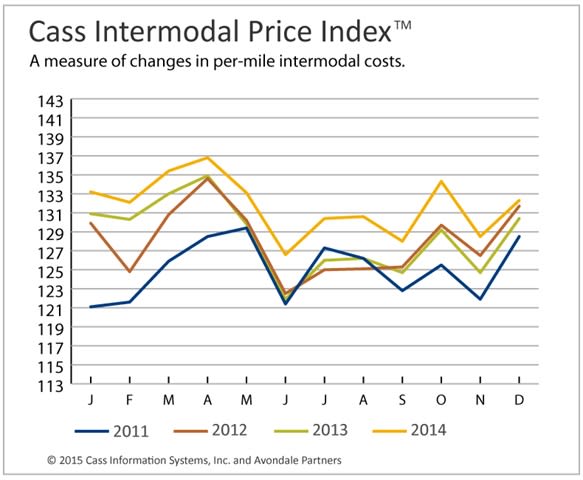
Avondale is forecasting intermodal rates are expected to decline in 2015 due to the dramatic drop in diesel prices the past few months, and the even more dramatic drop in oil prices, leading shippers to shift their intermodal loads back to truckload.
It said the index has already started to decelerate from a solid pace of around 3% annual increase it had been posting for much of second half of 2014.
“We concede that the extent to which loads can be shifted from domestic intermodal back to over-the-road truck is dependent on trucking capacity,” said Avondale, “but the greater than 15 cents per mile decline in fuel surcharges collected by truckers in the last 6 months with most of that decline coming in the most recent month has to challenge demand and pricing power for domestic intermodal.”
The Cass Intermodal Price Index is an indicator of market fluctuations in per-mile U.S. domestic intermodal costs that includes all costs associated with the move, such as linehaul, fuel and accessorials.
Data within both indexes are derived from actual freight invoices paid on behalf of Cass Information Systems’ clients, which totaled over $23 billion in 2013, according to the company.
More Fleet Management
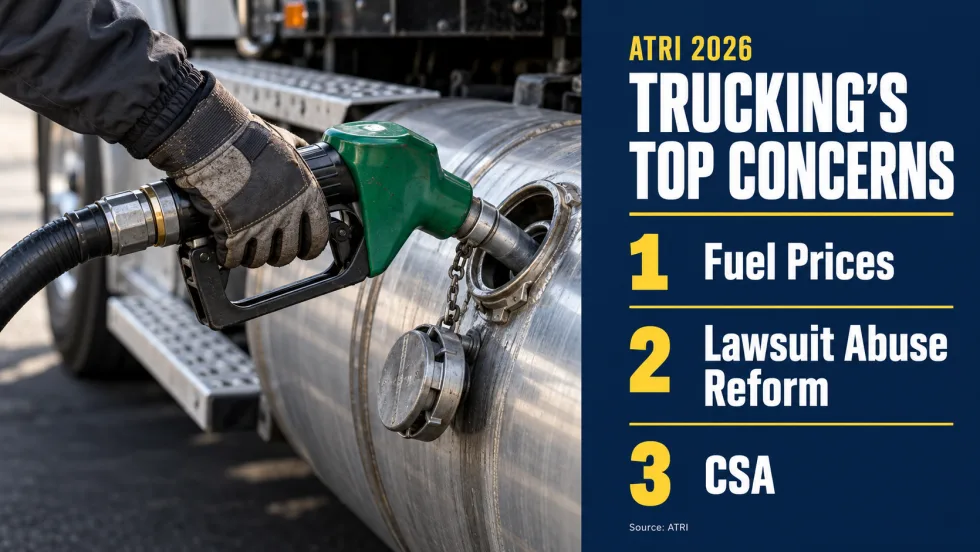
Diesel Prices Hijack Trucking’s Worry List
ATRI’s annual survey finds cautious optimism about freight, but diesel costs, litigation, and insurance continue to squeeze fleets. Drivers have different priorities on several issues.
Read More →
Nomination Deadline Extended for HDT Emerging Leaders
Just a few more days to nominate accomplished trucking fleet professionals under 40 who are making an impact and helping lead the industry forward for the HDT Emerging Leaders award. Deadline extended to October 20!
Read More →
What Will ATA’s New Leader Bring to Trucking's Table?
Incoming President and CEO Mark Colson’s record in Alabama offers clues about his priorities and approach following Chris Spear’s abrupt departure as the head of the American Trucking Associations.
Read More →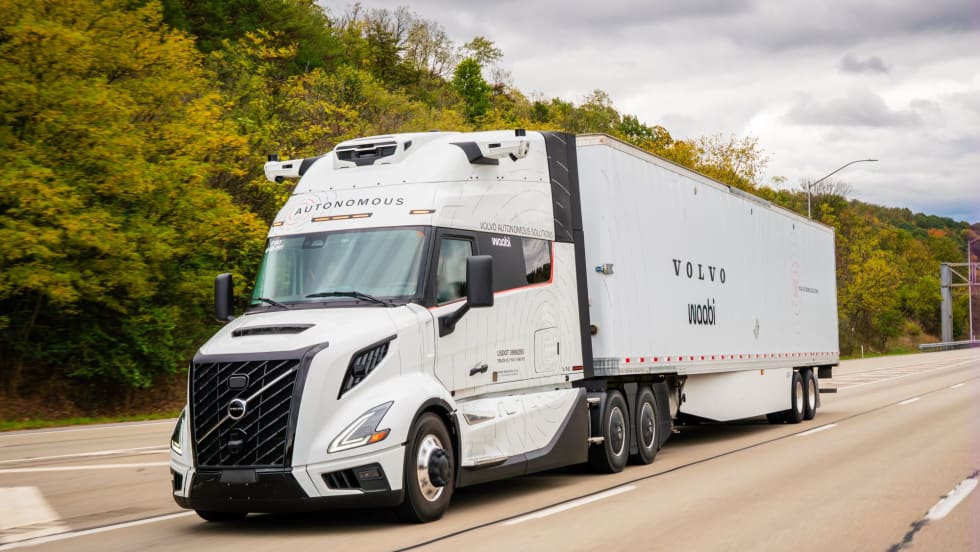
Volvo, Waabi Start Commercial Autonomous Operations in Texas
Volvo VNL Autonomous trucks, powered by the Waabi Driver, are hauling freight directly to third-party facilities for a customer in Texas.
Read More →
Samsara Launches Custom AI Agent Builder
Agent Studio lets fleets create AI tools for hours-of-service monitoring, reporting and driver support, including agents that communicate by phone.
Read More →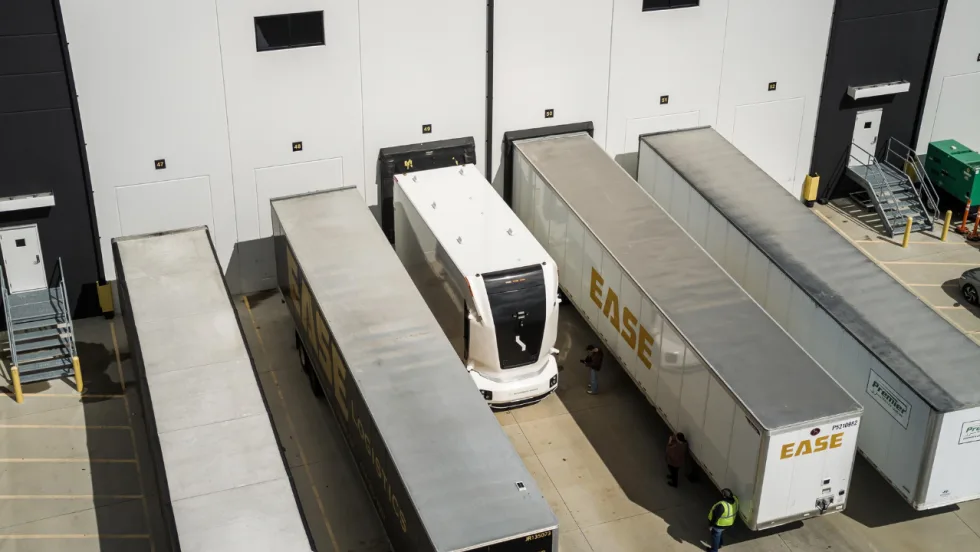
Einride Driverless Electric Trucks Begin Daily Freight Operations in Ohio
Two cabless electric trucks are hauling freight between EASE Logistics facilities in Marysville, Ohio, as part of a multi-state truck automation project.
Read More →
Geotab Links Fleet Card to Vehicle Data
The new card combines fuel discounts with telematics-based purchase controls. Geotab’s analysis also points to potential savings from choosing lower-priced fuel stops.
Read More →
How MFA Helps Protect Trucking Fleets
Multi-factor authentication adds protection when passwords are stolen. Here’s how it works and where fleets should start.
Read More →
How Better Freight Data Helps Trucking Teams Get Ahead of Disruption
Trucking and logistics teams have plenty of data. The problem is getting the right information in front of the right people soon enough to act. Better-connected data can help teams spot trouble earlier and make smarter decisions before small problems become big ones.
Read More →
Trimble: Taking Artificial Intelligence in Trucking Beyond Faster Tasks
At Insight 2026, Trimble executives argued that fleets may need to redesign workflows to get more from AI as it introduced new products and enhancements. AI’s value will depend on how fleets combine automation with their people's knowledge.
Read More →