




Restart Study on Track to Start This Month
The Federal Motor Carrier Safety Administration is on track to launch its study of the 34-hour restart, said Martin Walker, chief of the agency’s research division.


Photo: Jim Park
The Federal Motor Carrier Safety Administration is on track to launch its study of the 34-hour restart, said Martin Walker, chief of the agency’s research division.
Walker said drivers and carriers are showing interest in participating in the naturalistic study that Congress ordered when it suspended the more restrictive restart that went into effect in 2013.
The 2013 rule said that if a driver takes a 34-hour restart he must take off two periods between 1 a.m. and 5 a.m., and that the restart could only be used once a week. FMCSA put that provision in place because it had research indicating that nighttime sleep provides better recuperation than daytime sleep.
At the urging of American Trucking Associations, Congress suspended the provision while the study is under way. ATA argued that the provision cuts productivity and does not improve safety.
Walker said the agency will let a contract for the study this month. The study will compare five months of experience by drivers operating under the more restrictive rule to those working under the current rule.
He said FMCSA is looking for drivers who routinely drive 60 to 70 hours a week, and at night, as well as carriers that will support those drivers.
The agency has set up a website that spells out the terms of the study and provides links for more information.
Walker also said the agency will address another restart issue in another study.
ATA contended that the 2013 restart hurt safety by putting drivers on the road during early morning rush hour, thus increasing their risk exposure. Congress did not specifically ask for research on this possible risk, but the agency plans to look at it in an additional study it is planning, Walker said.
More Safety & Compliance

ZF Expands Commercial Vehicle Push in North America
ZF is expanding its North American commercial-vehicle presence with new transmission applications, electrification, trailer technology and autonomous-driving systems.
Read More →
Truck Drivers Need More Than Another Alert
Fleets have more visibility into truck health, safety events, and driver activity than ever. The next challenge is turning all that information into useful guidance for the person who has to decide what to do next.
Read More →
Tesla Wants a Self-Driving Semi. Are Cameras Enough?
Could Tesla’s camera-only autonomous driving technology work on an 80,000-pound Semi? In this commentary, HDT's Deborah Lockridge takes a look at Tesla, Cybercab, and how autonomous trucks see the road.
Read More →
What DOT’s Automated Vehicle Strategy Means for Trucking
The U.S. Department of Transportation issued a new automated-vehicle strategy that outlines plans for driverless-truck regulations, cross-state freight corridors, and federal safety standards.
Read More →
NYC Expands Speed, Pedestrian Safety Tech Across Fleet
New York City is expanding intelligent speed assistance and pedestrian-alert systems across its municipal fleet, moving the technologies from pilot programs into vehicle procurement and retrofit requirements.
Read More →
FMCSA Removes 110 Truck Driver Training Schools from Certified ELDT List
Federal regulators also are targeting more than 160 additional training providers and launching a nationwide audit of third-party CDL skills testers as part of a broader crackdown on trucking fraud.
Read More →
Beyond DOT Compliance: What Makes a Trucking Fleet Truly Safe?
A trucking fleet can follow every rule and still make unsafe decisions. The real test comes when safety conflicts with freight, productivity, or cost.
Read More →
Hours of Service Pilot Programs: FMCSA Readies for 2027 Rollout
Two pilot programs could eventually reshape hours-of-service rules, giving truck drivers options to pause their 14-hour clock or use longer split sleeper rest periods.
Read More →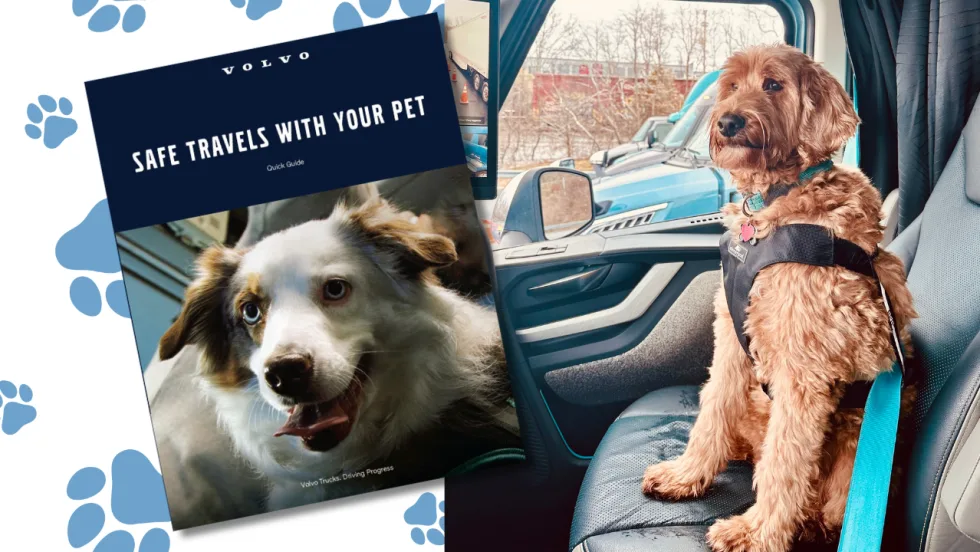
New Guide Offers Pet Safety Tips for Truck Drivers
Hundreds of thousands of pets travel in truck cabs. A new safety guide from Volvo Trucks and the Center for Pet Safety offers practical advice for truck drivers who bring dogs and cats along for the ride.
Read More →
Medical Cards, English Proficiency Reshape Roadcheck Violations
Medical-card violations jumped to the top of the driver out-of-service list during CVSA’s 2026 International Roadcheck, while English-language proficiency violations appeared among the leading violations for the first time.
Read More →