




New Enrollment Requirements for TWIC Applicants
The U.S. Department of Homeland Security and the Transportation Security Administration announced some changes to the Transportation Worker Identification Credential card program, used by truckers and other transportation workers to access the nation’s maritime ports.
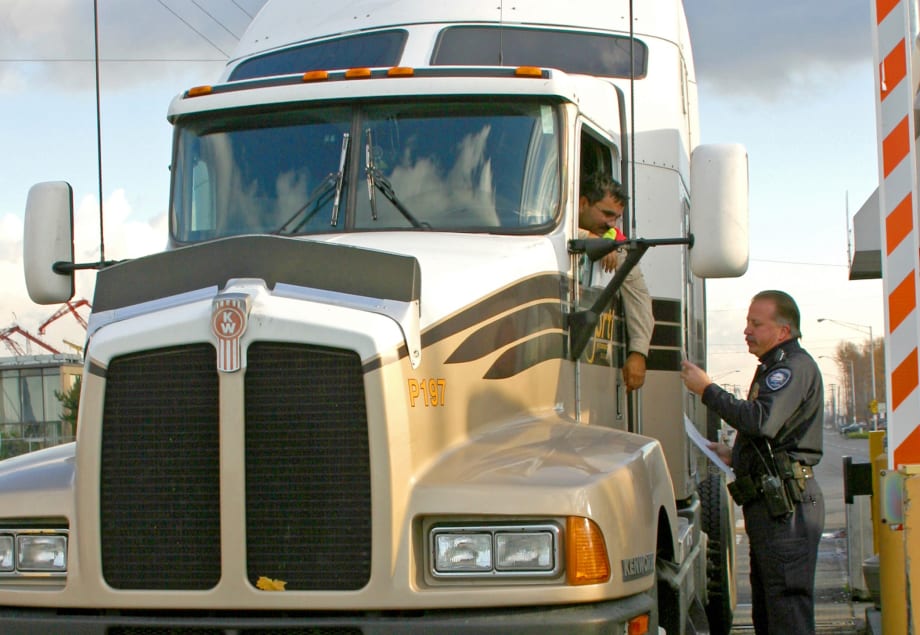
TWIC check at the Port of Tacoma in Washington. Photo: Port of Tacoma
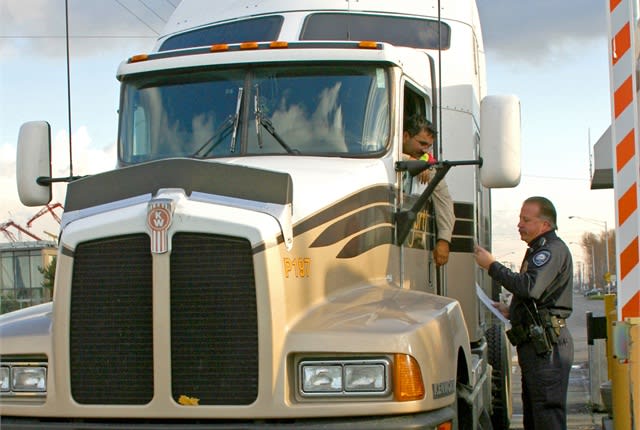
TWIC check at the Port of Tacoma in Washington.Photo: Port of Tacoma
The U.S. Department of Homeland Security and the Transportation Security Administration has announced some changes to the Transportation Worker Identification Credential card program, used by truckers and other transportation workers to access the nation’s maritime ports.
Starting on July 1, applicants who were born in the United States, and who claim U.S. citizenship, must provide certain documents to prove their citizenship. They are listed on the TWIC website.
Until the deadline, TWIC applicants who were born in the U.S. may continue to certify that they are U.S. citizens by checking the box on the electronically signed TWIC application or provide documents listed on the Universal Enrollment Services website.
TSA said it is making this change to align TWIC proof-of-citizenship requirements with those of its other security programs, such as the Hazardous Material Endorsement.
Also, on Feb. 1, the TWIC fee will be reduced to $128.00, $1.75 less than the current amount, due to lowered FBI fingerprint processing charges, according to TSA.
TSA also noted that currently some TWIC applicants are experiencing delays of more than 75 days to receive their TWIC card. It said the delay mainly applies to applications that involve criminal history records or immigration status that must be verified. It is strongly encouraging all applicants to apply for their TWICs at least 10 to 12 weeks prior to when the card will be required to avoid inconvenience or interruption in access to maritime facilities.
Changes to the TWIC card are also in the works. Since TSA began issuing the new version in May 2014, only the first 14 characters of the applicant’s last name are printed on the card. This has caused some TWIC cardholders to have their credentials questioned at facilities because the name on the card does not match the person’s full name, according to TSA. It will soon make a system change to extend the last name as printed on the TWIC cards so they will carry a maximum of 19 characters. TSA said is looking into ways to include full last names, regardless of the number of characters, given the limited space available on the card for printing.
More information on these changes in the TWIC program are available by calling the UES Call Center at 1-855-DHS-UES1 or 1-855-347-8371, Monday through Friday, from 8 a.m. to 10 p.m., Eastern time.
More Safety & Compliance
PrePass, Kodiak Connect Driverless Trucks to Roadside Enforcement
The system will allow enforcement agencies to verify Enhanced Inspection information and decide whether Kodiak’s autonomous trucks can bypass roadside screening sites.
Read More →
From One Generation to the Next: How Mentorship Builds Safer Truck Drivers
After three decades in trucking, Harold Perry shares what he's learned about driver safety, mentorship, and helping the next generation build confidence behind the wheel.
Read More →
FMCSA Pauses Biennial-Update Enforcement Amid Motus Transition
Carriers whose updates were due on or after June 1 have more time, while FMCSA works to stabilize its new registration system and warns of phishing sites impersonating its new carrier registration system, Motus.
Read More →
ZF Expands Commercial Vehicle Push in North America
ZF is expanding its North American commercial-vehicle presence with new transmission applications, electrification, trailer technology and autonomous-driving systems.
Read More →
Truck Drivers Need More Than Another Alert
Fleets have more visibility into truck health, safety events, and driver activity than ever. The next challenge is turning all that information into useful guidance for the person who has to decide what to do next.
Read More →
Tesla Wants a Self-Driving Semi. Are Cameras Enough?
Could Tesla’s camera-only autonomous driving technology work on an 80,000-pound Semi? In this commentary, HDT's Deborah Lockridge takes a look at Tesla, Cybercab, and how autonomous trucks see the road.
Read More →
What DOT’s Automated Vehicle Strategy Means for Trucking
The U.S. Department of Transportation issued a new automated-vehicle strategy that outlines plans for driverless-truck regulations, cross-state freight corridors, and federal safety standards.
Read More →
NYC Expands Speed, Pedestrian Safety Tech Across Fleet
New York City is expanding intelligent speed assistance and pedestrian-alert systems across its municipal fleet, moving the technologies from pilot programs into vehicle procurement and retrofit requirements.
Read More →
FMCSA Removes 110 Truck Driver Training Schools from Certified ELDT List
Federal regulators also are targeting more than 160 additional training providers and launching a nationwide audit of third-party CDL skills testers as part of a broader crackdown on trucking fraud.
Read More →
Beyond DOT Compliance: What Makes a Trucking Fleet Truly Safe?
A trucking fleet can follow every rule and still make unsafe decisions. The real test comes when safety conflicts with freight, productivity, or cost.
Read More →