




FMCSA Will Help Train Police on Truck Traffic Enforcement
The Federal Motor Carrier Safety Administration will soon launch a national program to train police officers in traffic enforcement for large trucks. The agency worked with the Commercial Vehicle Safety Alliance on a curriculum covering the basics of truck safety enforcement.

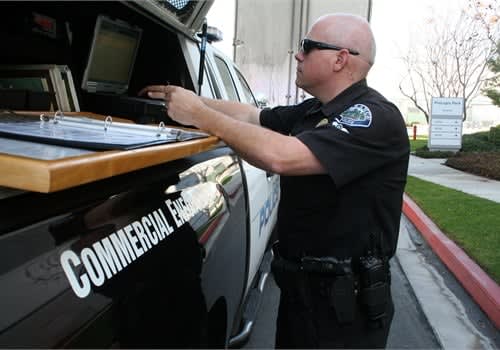
Photo via Police Mag

The Federal Motor Carrier Safety Administration will soon launch a national program to train police officers in traffic enforcement for large trucks.
Jack Van Steenburg, chief safety officer at the agency, said the agency worked with the Commercial Vehicle Safety Alliance on a curriculum covering the basics of truck safety enforcement and will launch the program February 17.
Although it might sound unreasonable that police don’t already know how to enforce traffic rules for trucks, in fact there’s a problem. Some officers are reluctant to pull over a truck due to a lack of understanding, Van Steenburg said in a presentation at the Transportation Research Board in Washington, D.C., Tuesday.
Police may avoid action because they are concerned about the safety of pulling a truck over, are not qualified to conduct a truck inspection or do not understand the documentation involved, said Stephen Keppler, executive director of CVSA.
It is also true, Keppler added, that when an officer does pull over a truck, the information about that event does not necessarily get entered into the appropriate federal safety database.
Both Van Steenburg and Keppler noted that trucking interests such as American Trucking Associations have long been urging the agency to put more resources into traffic enforcement.
ATA contends that traffic stops coupled with a limited inspection are several times more effective than roadside inspections.
CVSA has held that while traffic enforcement is effective, it needs to be part of a comprehensive program that includes the kind of information that can only be gathered at a roadside inspection.
The curriculum FMCSA and CVSA have put together focuses on safely conducting truck and bus stops. It includes information on types of violations and truck documentation requirements, Van Steenburg said.
The Large Truck and Bus Traffic Enforcement Train-the-Trainer Course will be rolled out in Fairfax, Va., on February 17. It also will be shown at the National Symposium on Work Zones and Large Trucks, scheduled for Jacksonville, Fla., April 13.
More Safety & Compliance

Trump Administration Expands Homeland Security's Role in Trucking Enforcement
The administration's latest trucking crackdown goes beyond roadside inspections, expanding Homeland Security's role in commercial vehicle enforcement and investigations involving CDL training schools.
Read More →
Paccar Recalls 2027 Trucks Built This Summer for Possible Electrical Problem
The nearly 6,000 Kenworth and Peterbilt trucks in the recall could potentially lose engine power, among other things.
Read More →
Brake Safety Week to Focus on Drums and Rotors
Commercial vehicle inspectors will be focusing on brakes during CVSA's Brake Safety Week, August 23-29.
Read More →
Trump Administration Looks to Put More Veterans Behind the Wheel
The Freedom Haulers program pulls together existing and expanded programs at several federal agencies to recruit veterans to drive commercial heavy-duty trucks and cut the red tape for them to get a CDL, training, and employment.
Read More →
$604 Million Verdict Tests Broker Liability After Supreme Court Ruling
C.H. Robinson plans to appeal after a Texas jury found it bore the largest share of responsibility for a fatal 2021 crash, in a case that follows the Supreme Court's Montgomery decision allowing negligent hiring claims against freight brokers.
Read More →
How Fraley & Schilling Improved Logbook Compliance by Over 50%
Fraley & Schilling needed a way to close a compliance workflow gap in its ELD system without adding more work from driver training, reminders, and back-office follow-ups. It found the answer in a custom driver app.
Read More →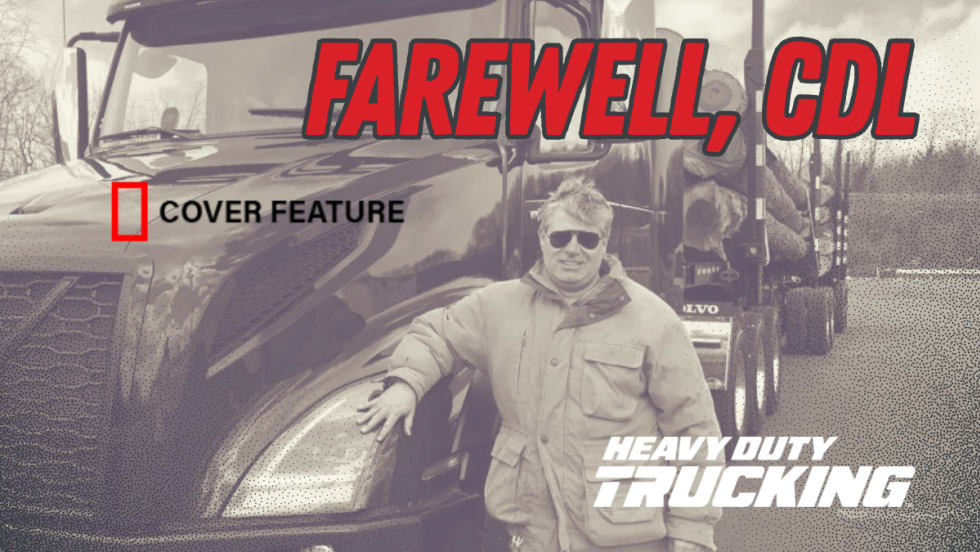
Farewell, CDL: Why I'm Giving Up My Commercial Driver's License
After more than 20 years as a CDL holder, HDT Executive Editor Jack Roberts is letting his commercial license expire. Not because he wants to — but because trucking's nuclear verdict crisis has made the risks of public-road test drives too great for editors, manufacturers, and everyone involved.
Read More →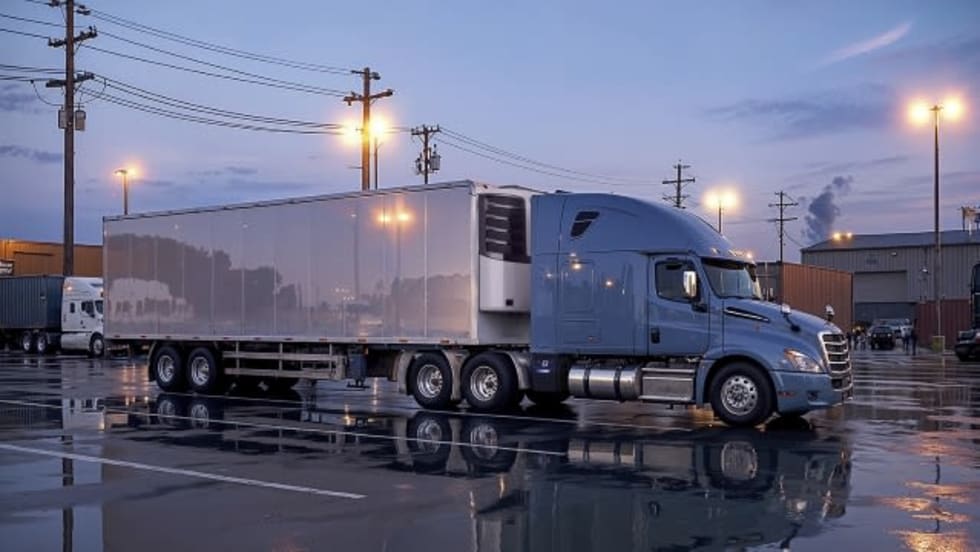
Enhance Fleet Performance with High-Efficiency Auxiliary Power Units
Drive sustainable cost savings while increasing driver comfort during short- and long-haul logistics operations.
Read More →
Wabash Trailers Recalled for Improperly Installed Underride Guards
More than 900 Wabash dry van trailers may not comply with the Federal Motor Vehicle Safety Standard for rear impact guards.
Read More →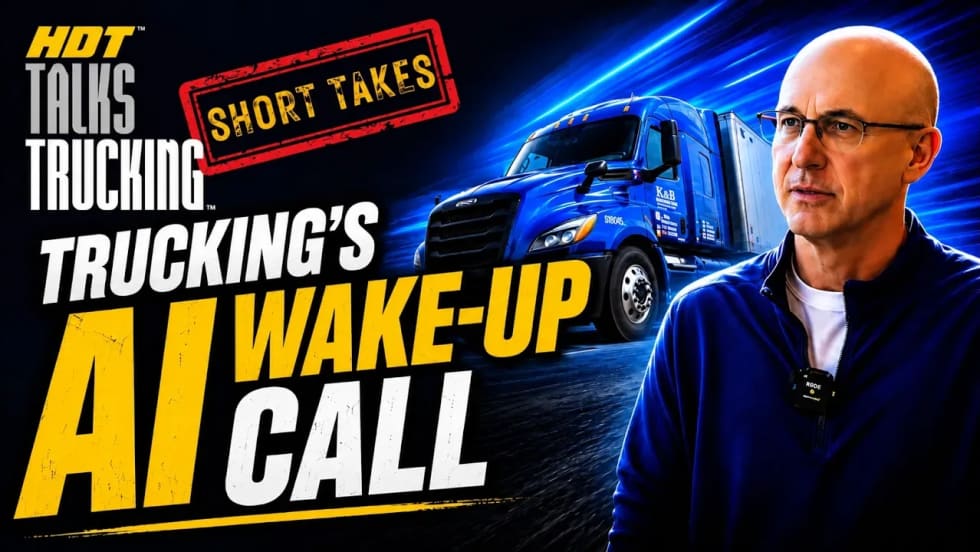
Why K&B Trucking Is Embracing AI and Driver Safety Technology
Crunching data and embracing artificial intelligence are key in K&B Trucking's safety efforts, says the company's safety director.
Read More →