




Reaction to Restart Suspension Includes Enforcement Concerns
As Congress moves toward suspension of the 34-hour restart provision of the hours of service rule, some trucking groups applaud the move while police worry about how they will enforce the change.


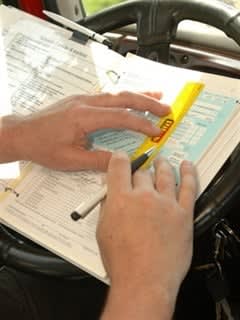
As Congress moves toward suspension of the 34-hour restart provision of the hours of service rule, some trucking groups applaud the move, while police worry about how they will enforce the change.
The suspension is included in a must-pass appropriations bill that House and Senate negotiators have agreed on. The bill must be voted through by both chambers and signed by the president, which probably will happen this week.
Steve Keppler, executive director of the Commercial Vehicle Safety Alliance, warned of enforcement problems with the change. He said it is impossible for police and safety inspection officials to implement the revised rule immediately. Inspectors need training and the software they use for roadside inspections and compliance reviews must be changed, Keppler said.
“You’re going to have varying levels of implementation, which impacts results, data quality and CSA scores,” he said.
Keppler, whose group represents the safety enforcement community, also said that the current rule should not be changed until its impact is understood.
“Because we don’t know the impacts of the new rules, we can’t compare them against the old ones,” he said. “Anyone who thinks that they know that is not telling the truth … no one can say that with any sense of confidence across the entire industry, because the analysis just hasn’t been done.”
Keppler was repeating concerns he expressed as Congress considered the change. Some trucking interests share his reservations.
The suspension is likely to be temporary, noted Lane Kidd, managing director of the Trucking Alliance, a small group of carriers that lobbies Capitol Hill on safety issues.
“But the permanent fix to this debate over how many hours truck drivers should be on duty will coincidentally occur the same month, when Congress’s two-year window for installing electronic logging devices will likely begin, and only then will we know when and for how many hours truck drivers should be on the highway,” he said in a statement.
Kidd was referencing the rule expected next October that will require almost all carriers to use electronic logging devices.
The Restart
The current restart provision requires drivers to take two periods off between 1 a.m. and 5 a.m. during their 34-hour restart, and limits use of the restart to once a week.
The appropriations bill suspends this provision while the Federal Motor Carrier Safety Administration studies its impact. The suspension will last until the agency finishes the study or September 30 of next year, whichever comes later.
Meanwhile the earlier version of the restart, which does not contain these restrictions, will be in effect.
Other Reactions
American Trucking Associations, the prime mover behind the measure, applauded Congress’s action.
“We’re pleased that the Collins language is included in the FY 2015 omnibus spending bill,” said ATA President and CEO Bill Graves in a statement. “We now urge the House and Senate to pass the overall bill and that the President sign it into law.”
Graves was referencing the work of Sen. Susan Collins, R-Maine, who championed the measure in the Senate.
ATA contends that the current restart provision reduces productivity for some carriers and may increase risk by putting more trucks on the road during Monday morning rush hour.
Todd Spencer, executive vice president of the Owner-Operator Independent Drivers Association, also applauded the bill.
“Small business truckers know from personal experience that current restart restrictions compromise safety by forcing them onto the roads during the most congested and dangerous hours of morning traffic,” Spencer said in a statement. “While this isn’t the final word on the restart restrictions, OOIDA and our members thank Sen. Collins for her commitment to safety and her tenacity in fighting for sound policy.”
Rep. Richard Hanna, R-N.Y., a proponent of the suspension, said federal agencies must prove that regulations do not cause more harm than good.
“I firmly believe that this rule has made our roads less safe, putting the traveling public in harm’s way and hurting our small businesses,” Hanna said in a statement. “I look forward to seeing this regulation removed until the facts come to light.”
The safety advocacy community expressed alarm at the suspension.
Joan Claybrook, chair of Citizens for Reliable and Safe Highways, said the suspension will guarantee that truck driver fatigue will grow.
“Our drivers are being driven to death,” she said in a statement.
Daphne Izer, founder of Parents Against Tired Truckers, said Sen. Collins put the economic interests of trucking before safety.
“Sen. Collins’s enduring loyalty to corporate trucking interests drove this safety attack and will be a major setback to keep tired truckers off the roads,” she said in a statement.
Enforcement Concerns
Keppler of CVSA believes Congress errs when it issues what is essentially an operational decree and bypasses the standard administrative process that gives enforcement officials time to prepare for changes.
“Our position all along has been that we support a study,” he said. “We need to understand the impact of the new rule. But let’s wait until we have the results (before) we effect changes.”
Some trucking interests have complained that the research FMCSA did to prepare for the rule was faulty, he said.
While he would not comment on the quality of the research, he did say this: “So on one side they are saying we have issues with the research, but on the other they’re saying let’s make a change before we understand the current research. They want it both ways.”
He said he understands the industry’s concern about the loss of productivity, and the contention that putting more trucks on the road at busy times could increase risk.
“I am sensitive to that,” he said. “But the rules are first and foremost safety rules and we don’t know whether they have impacted safety to the positive or negative. So we shouldn’t be making changes to safety regulations based on productivity issues.”
More Safety & Compliance
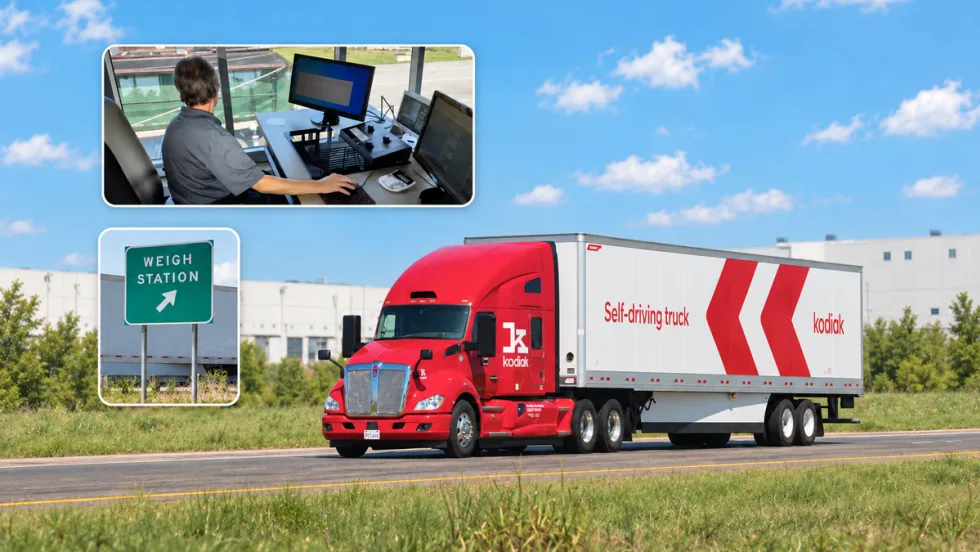
PrePass, Kodiak Connect Driverless Trucks to Roadside Enforcement
The system will allow enforcement agencies to verify Enhanced Inspection information and decide whether Kodiak’s autonomous trucks can bypass roadside screening sites.
Read More →
From One Generation to the Next: How Mentorship Builds Safer Truck Drivers
After three decades in trucking, Harold Perry shares what he's learned about driver safety, mentorship, and helping the next generation build confidence behind the wheel.
Read More →
FMCSA Pauses Biennial-Update Enforcement Amid Motus Transition
Carriers whose updates were due on or after June 1 have more time, while FMCSA works to stabilize its new registration system and warns of phishing sites impersonating its new carrier registration system, Motus.
Read More →
ZF Expands Commercial Vehicle Push in North America
ZF is expanding its North American commercial-vehicle presence with new transmission applications, electrification, trailer technology and autonomous-driving systems.
Read More →
Truck Drivers Need More Than Another Alert
Fleets have more visibility into truck health, safety events, and driver activity than ever. The next challenge is turning all that information into useful guidance for the person who has to decide what to do next.
Read More →
Tesla Wants a Self-Driving Semi. Are Cameras Enough?
Could Tesla’s camera-only autonomous driving technology work on an 80,000-pound Semi? In this commentary, HDT's Deborah Lockridge takes a look at Tesla, Cybercab, and how autonomous trucks see the road.
Read More →
What DOT’s Automated Vehicle Strategy Means for Trucking
The U.S. Department of Transportation issued a new automated-vehicle strategy that outlines plans for driverless-truck regulations, cross-state freight corridors, and federal safety standards.
Read More →
NYC Expands Speed, Pedestrian Safety Tech Across Fleet
New York City is expanding intelligent speed assistance and pedestrian-alert systems across its municipal fleet, moving the technologies from pilot programs into vehicle procurement and retrofit requirements.
Read More →
FMCSA Removes 110 Truck Driver Training Schools from Certified ELDT List
Federal regulators also are targeting more than 160 additional training providers and launching a nationwide audit of third-party CDL skills testers as part of a broader crackdown on trucking fraud.
Read More →
Beyond DOT Compliance: What Makes a Trucking Fleet Truly Safe?
A trucking fleet can follow every rule and still make unsafe decisions. The real test comes when safety conflicts with freight, productivity, or cost.
Read More →