




Spot Freight Rates Give Back Recent Gains
After recovering somewhat the week before, new numbers show spot market freight rates have turned lower or remain unchanged, according to the freight matching service provider DAT Solutions.

After recovering somewhat the week before, new numbers show spot market freight rates have turned lower or remain unchanged, according to the freight matching service provider DAT Solutions.
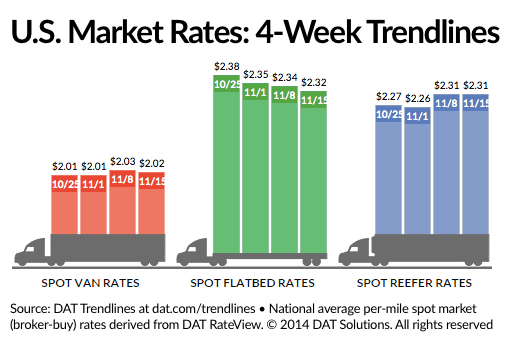
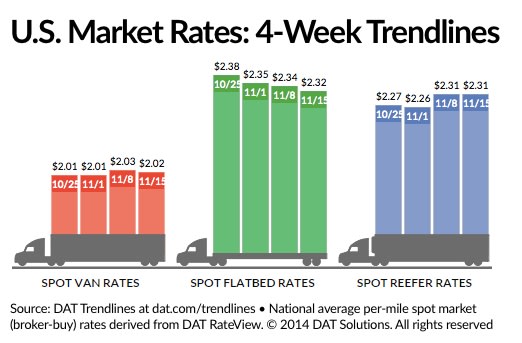
Flatbeds fell 0.9% to an average of $2.32 per mile from Nov. 9 through Nov. 15 compared to the previous seven days, its lowest level out of the past four weeks and three cents less than last month’s average.
Vans declined by 0.5% for an average of $2.02 per mile, very close to where it has been for at least four weeks, while reefers were unchanged at $2.31 per mile.
The numbers came as a 4.5% increase in spot market truck capacity outweighed a 2.7% gain in the number of spot market loads available to haul.
Also, increases in load-to-truck ratios in the van and reefer categories were not strong enough to push rates higher while a 10% drop in the flatbed sector was reflected in its average rate falling slightly. The flatbed ratio fell to 15.1 loads per truck. Vans registered 3 loads available for every truck while the load-to-truck ratio increased 6.7% for reefers to 9.8.
The effect of falling or unchanged overall rates was amplified slightly by a 1.5% average increase in the cost of fuel.
With current spot market truck capacity running tight, recent developments, including snow in parts of the country and congestion at West Coast ports, could help push rates higher, according to DAT Analyst Mark Montague writing in the company’s Freight Talk Blog.
“Delays may add to the pressure on trucking company schedules in the last two weeks before Black Friday. Rates may rise briefly, and more freight will likely find its way to the spot market,” he wrote on Nov. 14. “ If the weather gets bad again and trucks are unable to move easily, that could prevent small fleets from taking advantage of the short-term rate spike. Meanwhile, large fleets are adding trailers to their pools at a record pace in order to preload and cut down time.”
More Fleet Management
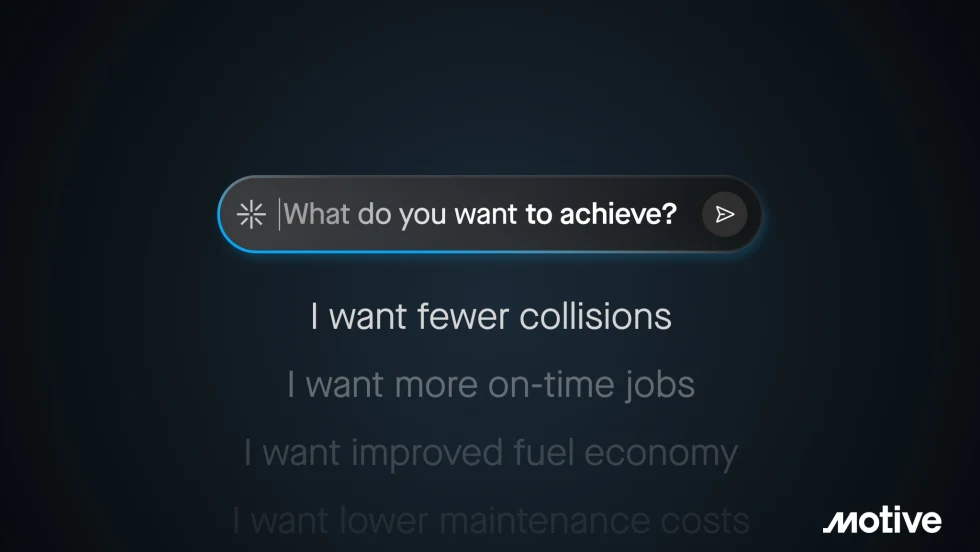
Motive Adds AI Agents for Fleet Operations
New tools automate follow-up on fleet data, from maintenance work orders to driver alerts, with two-way voice conversations planned for later this year.
Read More →
Can You Beat Our Trucking Trivia Challenge?
Test your truck knowledge with 19 trivia questions from Heavy Duty Trucking Exchange. Can you keep up with the fleet pros?
Read More →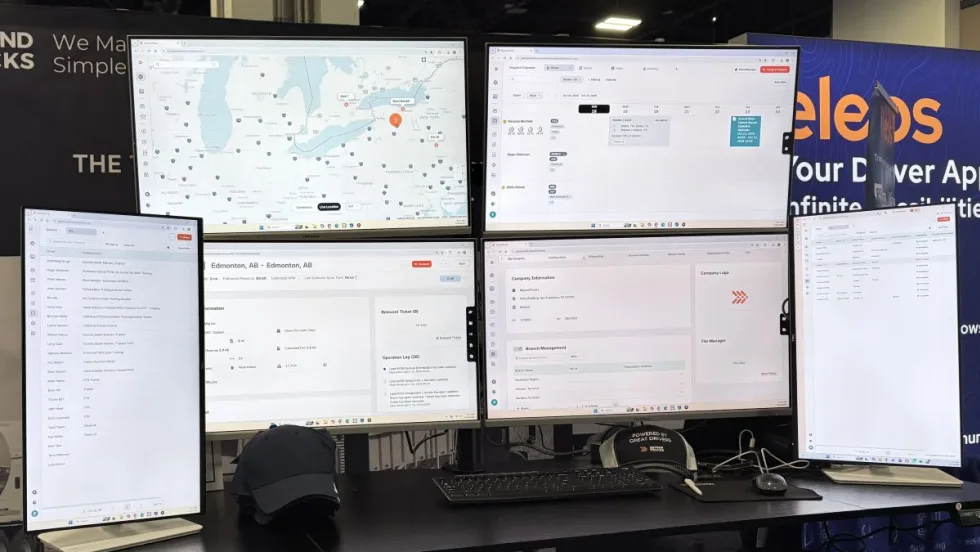
BeyondTrucks Adds Rules Checks to Dispatch
New Compatibility Engine checks driver qualifications, equipment requirements and fleet policies before loads are dispatched.
Read More →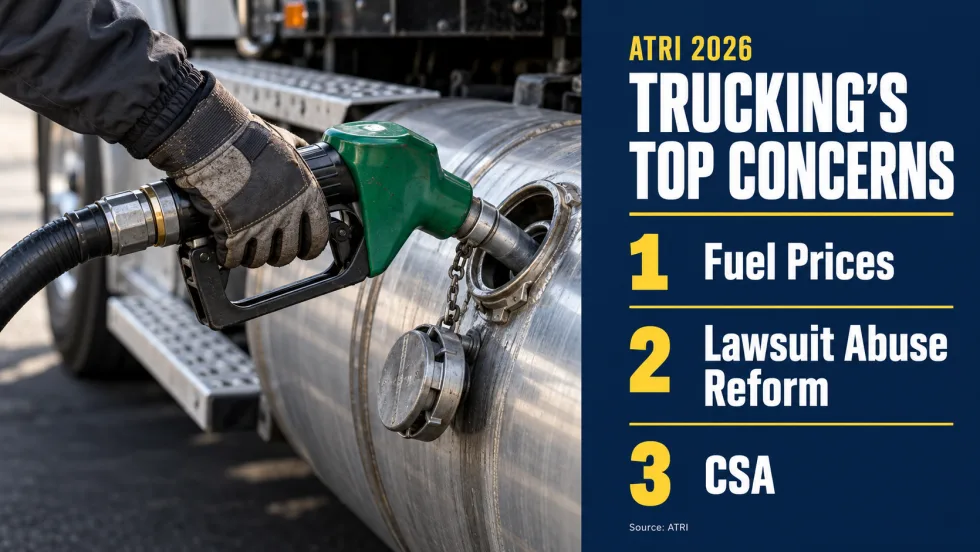
Diesel Prices Hijack Trucking’s Worry List
ATRI’s annual survey finds cautious optimism about freight, but diesel costs, litigation, and insurance continue to squeeze fleets. Drivers have different priorities on several issues.
Read More →
Nomination Deadline Extended for HDT Emerging Leaders
Just a few more days to nominate accomplished trucking fleet professionals under 40 who are making an impact and helping lead the industry forward for the HDT Emerging Leaders award. Deadline extended to October 20!
Read More →
What Will ATA’s New Leader Bring to Trucking's Table?
Incoming President and CEO Mark Colson’s record in Alabama offers clues about his priorities and approach following Chris Spear’s abrupt departure as the head of the American Trucking Associations.
Read More →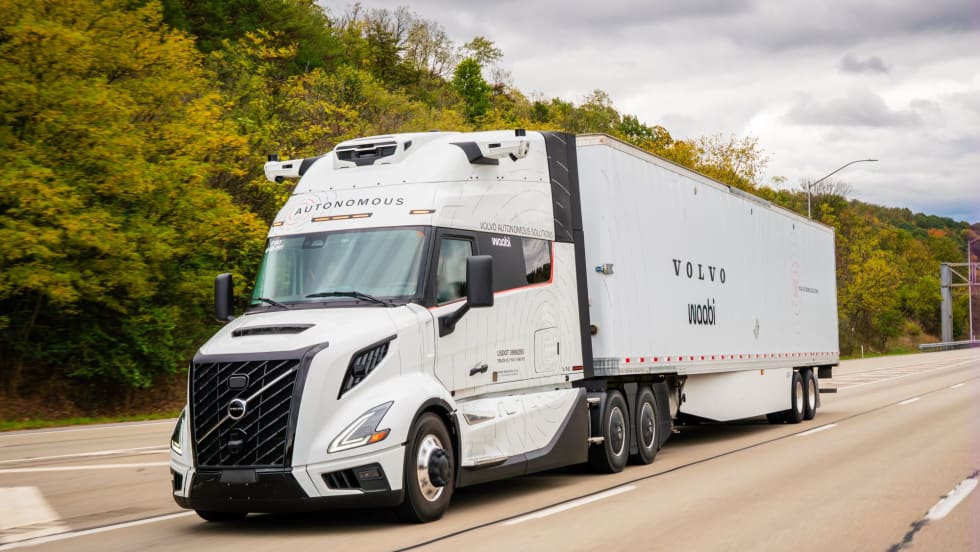
Volvo, Waabi Start Commercial Autonomous Operations in Texas
Volvo VNL Autonomous trucks, powered by the Waabi Driver, are hauling freight directly to third-party facilities for a customer in Texas.
Read More →
Samsara Launches Custom AI Agent Builder
Agent Studio lets fleets create AI tools for hours-of-service monitoring, reporting and driver support, including agents that communicate by phone.
Read More →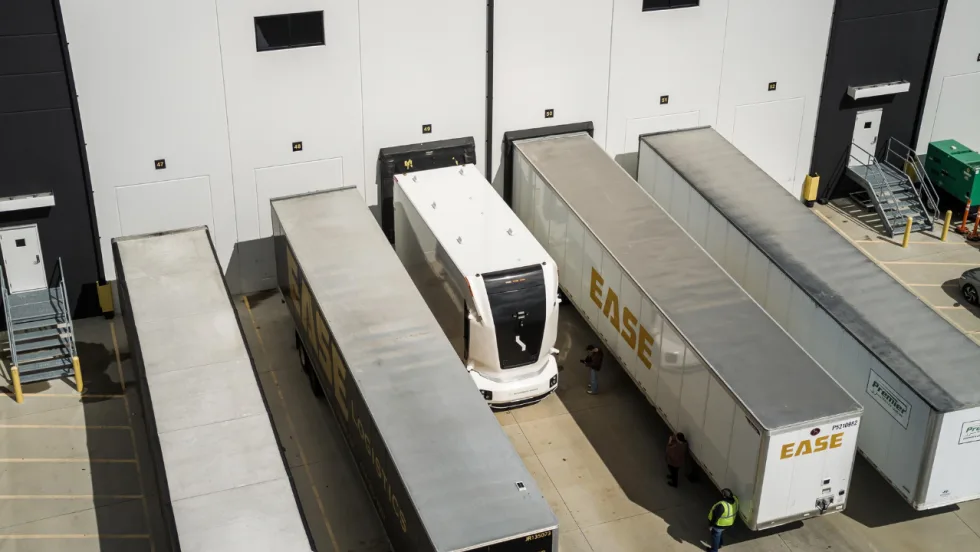
Einride Driverless Electric Trucks Begin Daily Freight Operations in Ohio
Two cabless electric trucks are hauling freight between EASE Logistics facilities in Marysville, Ohio, as part of a multi-state truck automation project.
Read More →
Geotab Links Fleet Card to Vehicle Data
The new card combines fuel discounts with telematics-based purchase controls. Geotab’s analysis also points to potential savings from choosing lower-priced fuel stops.
Read More →