




CVSA Joins Push to Hide CSA Data from Public
The truck safety enforcement community has joined the industry effort to get the Federal Motor Carrier Safety Administration to hide CSA safety data from public view. In a November 14 letter to Transportation Secretary Anthony Foxx, the Commercial Vehicle Safety Alliance said that Safety Measurement System scores should be available to police but not to the public.

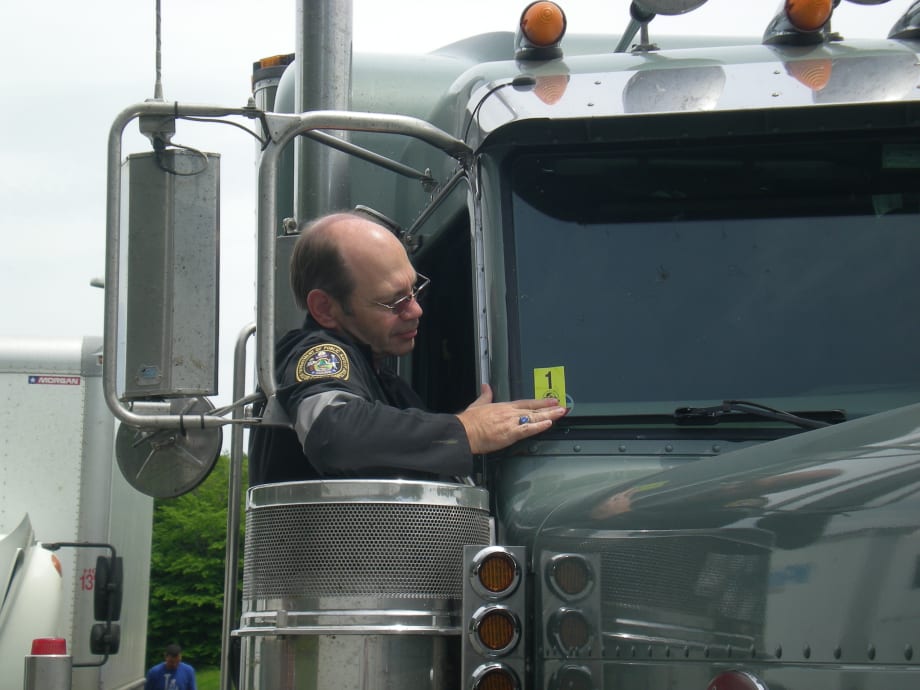
CVSA says there are unavoidable differences in enforcement practices from state to state that affect carrier scores under CSA. (File photo: CVSA)
CVSA says there are unavoidable differences in enforcement practices from state to state that affect carrier scores under CSA. (File photo: CVSA)
The truck safety enforcement community has joined the industry effort to get the Federal Motor Carrier Safety Administration to hide CSA safety data from public view.
In a November 14 letter to Transportation Secretary Anthony Foxx, the Commercial Vehicle Safety Alliance said that Safety Measurement System scores should be available to police but not to the public.
In the letter, CVSA Executive Director Stephen Keppler defended CSA as “a very good program with tremendous potential.”
But the data that are available to the public are being used incorrectly, and this is affecting the enforcement community’s work, Keppler said in an interview.
“People are using the information in ways it was not designed to be used, particularly when they don’t understand all the information,” he said.
CVSA represents state, provincial and federal truck safety officers, as well as trucking and other interests.
The purpose of CSA is to help the agency and enforcement officers to target the carriers most in need of safety action, Keppler said.
“Making the information available to people who don’t understand what it means can create challenges for enforcement in terms of how it does its work. It can create operational impacts on states when people make assertions about the program that are not correct.”
With this letter, CVSA joins trucking interests that have been saying for some time that the data should be withheld from the public.
In August a coalition of industry groups, including American Trucking Associations, asked Foxx to have FMCSA shield the data from the public. They said the scores are neither consistent nor accurate, and should be available only to the carriers, the agency and enforcement personnel.
The industry has been pressing its case on Capitol Hill, pushing a bill by Rep. Lou Barletta, R-Pa., that would shield the information from the public until the agency corrects shortcomings in the system.
FMCSA’s response has been that the SMS system has improved safety by making carrier violations and safety records publicly available. Carriers that have high scores in some SMS categories are more likely to be involved in a crash, the agency says.
CSA (Compliance, Safety, Accountability) uses data from crashes and roadside inspections to flag carriers for enforcement action. The SMS system categorizes this data and produces scores intended to highlight carriers that need attention.
Keppler said in his letter to Foxx that the enforcement community appreciates carrier concerns about SMS.
There are unavoidable differences in enforcement practices from state to state, and these differences can affect carriers’ SMS scores, he said. “The (jurisdiction) in which carriers operate can impact the accuracy of their measurements,” he said.
He also said that SMS scores are a useful prioritization tool for enforcement, but are not a good indicator of an individual carrier’s propensity to be involved in a future crash.
“Their utility in providing the public with information about fleets’ safety performance is limited,” he said.
The agency should improve the program’s ability to identify individual carriers that pose a risk. “Until these improvements are made, however, CVSA echoes stakeholders’ call to remove SMS scores from public view.”
Keppler said he has not yet received a response from Foxx.
More Safety & Compliance
PrePass, Kodiak Connect Driverless Trucks to Roadside Enforcement
The system will allow enforcement agencies to verify Enhanced Inspection information and decide whether Kodiak’s autonomous trucks can bypass roadside screening sites.
Read More →
From One Generation to the Next: How Mentorship Builds Safer Truck Drivers
After three decades in trucking, Harold Perry shares what he's learned about driver safety, mentorship, and helping the next generation build confidence behind the wheel.
Read More →
FMCSA Pauses Biennial-Update Enforcement Amid Motus Transition
Carriers whose updates were due on or after June 1 have more time, while FMCSA works to stabilize its new registration system and warns of phishing sites impersonating its new carrier registration system, Motus.
Read More →
ZF Expands Commercial Vehicle Push in North America
ZF is expanding its North American commercial-vehicle presence with new transmission applications, electrification, trailer technology and autonomous-driving systems.
Read More →
Truck Drivers Need More Than Another Alert
Fleets have more visibility into truck health, safety events, and driver activity than ever. The next challenge is turning all that information into useful guidance for the person who has to decide what to do next.
Read More →
Tesla Wants a Self-Driving Semi. Are Cameras Enough?
Could Tesla’s camera-only autonomous driving technology work on an 80,000-pound Semi? In this commentary, HDT's Deborah Lockridge takes a look at Tesla, Cybercab, and how autonomous trucks see the road.
Read More →
What DOT’s Automated Vehicle Strategy Means for Trucking
The U.S. Department of Transportation issued a new automated-vehicle strategy that outlines plans for driverless-truck regulations, cross-state freight corridors, and federal safety standards.
Read More →
NYC Expands Speed, Pedestrian Safety Tech Across Fleet
New York City is expanding intelligent speed assistance and pedestrian-alert systems across its municipal fleet, moving the technologies from pilot programs into vehicle procurement and retrofit requirements.
Read More →
FMCSA Removes 110 Truck Driver Training Schools from Certified ELDT List
Federal regulators also are targeting more than 160 additional training providers and launching a nationwide audit of third-party CDL skills testers as part of a broader crackdown on trucking fraud.
Read More →
Beyond DOT Compliance: What Makes a Trucking Fleet Truly Safe?
A trucking fleet can follow every rule and still make unsafe decisions. The real test comes when safety conflicts with freight, productivity, or cost.
Read More →