




Highway Bill: ‘Nowhere to Go But Up’
Undaunted by the conventional political view that Congress will accomplish nothing in the upcoming lame duck session, Sen. Tom Carper, D-Del., insists there is a chance to pass and fund a six-year highway program.

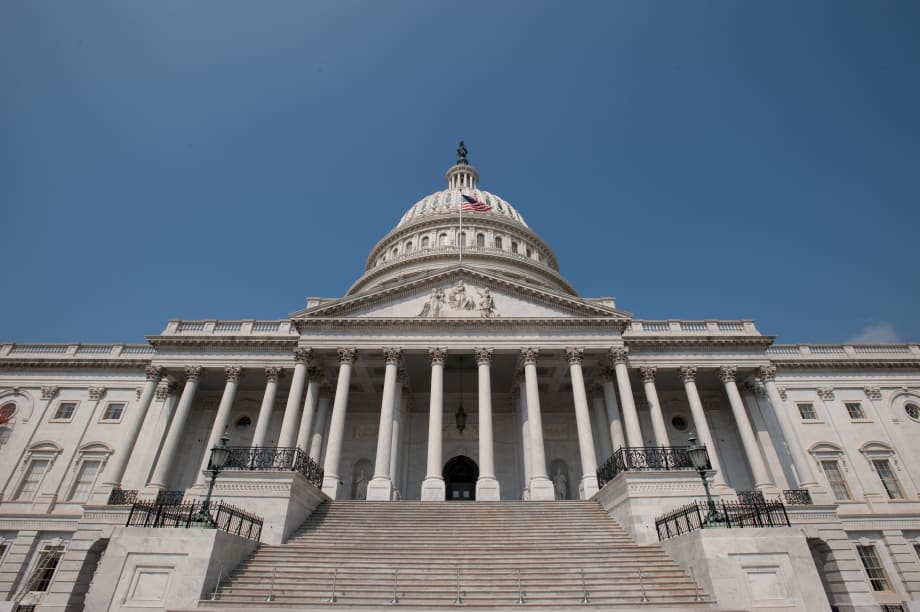
Public domain photo via FEMA.
Public domain photo via FEMA.
Undaunted by the conventional political view that Congress will accomplish nothing in the upcoming lame duck session, Sen. Tom Carper, D-Del., insists there is a chance to pass and fund a six-year highway program.
The November mid-term election will reset the state of play in Congress. Republicans are expected to retain control of the House and pollsters say there’s a better than even chance that the GOP will win a majority of the Senate. But Carper is focused on the chance that there will be a balance of Senators who will support action on a long-term bill.
In remarks to a group of women transportation leaders, WTS International, in Washington, D.C., Wednesday, Carper counted out the numbers.
He said that after the election there will be eight or nine Senators who won’t run again, plus a similar number whose terms are up in 2016 who also won’t run. On top of that will be another eight or nine up for election in 2018 in a similar status.
“So what you have here is roughly a quarter of the U.S. Senate who are free agents,” he said. “They may be willing to do the right thing because they don’t have to worry about repercussions from the electorate.”
The right thing, Carper says, is to pass a multi-year highway bill funded by an increase in federal fuel taxes.
“We’re not going away,” he said, referencing a bipartisan cadre of Senators who have been agitating for a highway bill this year.
“This would be terrible lame duck to waste,” he said, referencing a well-known quote by current Chicago mayor and former White House chief of staff Rahm Emanuel, “You never want a serious crisis to go to waste.”
The current highway program is operating under a short-term bill that expires next May, but if Congress waits until then it is likely to punt as it has so many times in the past, Carper said.
“The best way is not to waste the opportunity (of the lame duck session).”
The flip side of Carper’s analysis is that the lame duck Congress will default to the easier choice of avoiding a vote on raising transportation taxes.
Leslie Blakey, executive director of the Coalition for America’s Gateways and Trade Corridors, said it is likely that Congress will simply pass another short-term spending resolution and go home.
But she agrees with Carper that it will be difficult to get the job done in May. The election will bring new members to Congress who will have a hard time getting up to speed on transportation issues by then, she said.
A number of former Transportation Secretaries on hand at the conference were not optimistic that Congress is prepared to take on transportation funding.
Jim Burnley, who served as DOT Secretary during the Reagan Administration, said the country has not yet had the debate that is necessary.
“We will have to have a fundamental debate in a more serious way than we have,” he said. “The Highway Trust Fund has collapsed … and we are at a point where issues have to be decided.”
He and Norman Mineta, who led the Transportation Department in the George W. Bush administration, said that fuel taxes will no longer work as a funding mechanism for surface transportation.
Burnley said Republicans in the House are overwhelmingly opposed to raising fuel taxes and there is no political consensus on an alternative.
Mineta said fuel taxes “obviously” are not the way to go, referencing declining revenues to the Highway Trust Fund as a result of improving fuel economy. And there’s not much support for a mileage tax, either, he said.
The core of the problem is that there’s always someone to shoot down suggested solutions, Mineta said.
“There are people in Congress opposed to spending but who can’t see difference between spending for investment and spending for consumption,” he said.
The former secretaries do see encouraging signs, however.
Mary Peters, who followed Mineta as DOT secretary during the Bush administration, said a recent positive development has been voter rejection of the Tea Party in a number of races.
The Tea Party wants to cut taxes and federal spending, and opposes compromise on those points.
“I think the Tea Party influence took the Republican Party and the Republican agenda down the wrong path,” she said.
She then acknowledged the risk of her statement: “I have just committed political suicide.”
But she also is encouraged Congress’s work on a budget agreement this year, and by the bipartisan cooperation between Rep. Bill Shuster, R-Pa., chairman of the House Transportation and Infrastructure Committee and that committee’s ranking Democrat, Nick Rahall of West Virginia.
Mortimer Downey, who was deputy Transportation Secretary from 1993 to 2001, noted that Congress passed a water resources bill this year and a House panel posted a bipartisan call for more robust investment in freight infrastructure. He also noted House Speaker John Boehner’s recent comment that a highway bill is “doable.”
Rodney Slater, DOT Secretary in the Clinton administration, said momentum is building for action and that he believes President Obama will assert leadership.
Presidential leadership is key, the former secretaries said.
“There have been good words from Obama but we need leadership,” Burnley said.
Andrew Card, DOT Secretary under George H.W. Bush, said Obama has not been engaged as he should be.
But there are others in Congress who have not stepped up, either, Burnley said. The chairmen of the congressional funding panels, Senate Finance and House Ways and Means, must be involved.
“Step one is to get all of the key players in Congress to start participating in the discussion,” he said. “We have nowhere to go but up.”
More Fleet Management

Color Match Smarter: Tools That Restore & Perform
For fleet managers and collision repair professionals keeping heavy-duty trucks on the road, getting the color right the first time isn't just about appearance — it's about efficiency, turnaround time, and bottom-line results. Discover how today's digital color tools are transforming the repair process from guesswork to precision.
Read More →
FMCSA Pauses Biennial-Update Enforcement Amid Motus Transition
Carriers whose updates were due on or after June 1 have more time, while FMCSA works to stabilize its new registration system and warns of phishing sites impersonating its new carrier registration system, Motus.
Read More →
2026 Blueprint for Countering Smarter Supply Chain Theft
Cargo theft is no longer just the cost of doing business. It's a multi-billion-dollar criminal enterprise exploiting vulnerabilities across your fleet, drivers, and supply chain.
Read More →


How Telematics Improves Visibility, Control, and Performance in Refrigerated Fleets
Explore how telematics help refrigerated fleets improve visibility, uptime, efficiency, compliance, and cargo protection across connected cold chain operations.
Read More →
What the U.S.-Canada Trade War Means for Trucking
Escalating U.S.-Canada tariffs could disrupt cross-border freight, reduce truck volumes, raise costs, and create new uncertainty for carriers on both sides of the border.
Read More →
What Are Trucking’s Top Concerns for 2026?
The American Transportation Research Institute wants to know what's worrying trucking fleet managers, drivers, and other stakeholders in its annual Industry Issues survey.
Read More →
American Trucking Associations Looks for a New Leader
ATA President and CEO Chris Spear abruptly left his job at the association on August 21, at a pivotal time for the trucking industry.
Read More →
Public Wi-Fi Cybersecurity Risks: How Truck Drivers and Fleets Can Protect Their Data
Public Wi-Fi can expose truck drivers and fleets to credential theft, malware, and other cyber threats. Here’s how to reduce the risk on the road.
Read More →
For Nicky Cupp, Fleet Innovation Starts With Frustration
HDT Truck Fleet Innovator Nicky Cupp turns everyday pain points at Fraley & Schilling into opportunities for better technology and smarter processes.
Read More →
Adam Buttgenbach’s Approach to Electric Trucks: Start With Where They Fit
HDT Truck Fleet Innovator Adam Buttgenbach helped PepsiCo build one of North America’s largest EV fleets by focusing on where electric trucks make operational sense.
Read More →