




Trucking Productivity Facing Challenges
Logistics cost as a percent of GDP has been declining over the last 30 years, from 16% before deregulation to 8% now. But while logistics costs have been reduced, productivity has leveled out and may even decrease, according to Stifel's John Larkin, speaking at TMW's annual user conference.


John Larkin told attendees at TMW Systems' user conference that trucking productivity could take a hit. Photo: Jim Beach

John Larkin told attendees at TMW Systems' user conference that trucking productivity could take a hit. Photo: Jim Beach
NASHVILLE – Logistics cost as a percent of GDP has been declining over the 30 years, from 16% before deregulation to 8% now. But while logistics costs have been reduced, productivity has leveled out as the number of miles per tractor has flattened, and may even decrease more, according to John Larkin, managing director and head of transportation and capital markets research for the investment firm Stifel. On the other hand, there are real opportunities for the industry and the economy as a whole.
Speaking during the opening session of TWW Systems’ annual Transforum user conference here on Sept. 22, Larkin said there a number of reasons for this situation. Supply chains today are optimized on a continuous basis, yet the driver shortage and regulatory burdens are hampering productivity.
“We’ve seen a plateauing to 2,050 to 2,150 miles per week per truck,” he noted, while in the “old days, you would see 2,790 to 2,900 miles per week. But those days are behind us.”
Fewer miles mean a company needs more trucks to get the same amount of work done, but it’s hard to put more trucks on the road when companies can’t find enough drivers for the trucks they have. Of course, longer combinations and heavier trucks would help the productivity part of the equation, but that is unlikely to happen, as Congress has been reluctant to allow longer combinations.
The driver situation is the industry’s number one problem, Larkin said.
“The people who used to become truck drivers were interested in freedom, seeing America, they didn’t like to be told what to do." But all of that has changed. Today, drivers are feel as though they are micromanaged – they are told where to fuel, when to rest and they are monitored constantly for fuel efficiency, on time performance, safety performance.
“In some cases, they are being filmed inside the cab of the truck,” he said. And upcoming regulations dealing with electronic logging devices, newer forms of drug testing and testing for sleep apnea will depress the driver pool even more.
Economic headwinds and tailwinds
The economy, while growing as a slower pace than is traditional following as recession, nonetheless has some bright spots.
“There are a lot of tailwinds behind the economy,” he said. Silicon Valley is still an innovative leader, the shale revolution in oil has made the U.S. one of the leading producers of oil in a very short time, manufacturing processes have become more efficient, asset prices are rising, and the housing sector is recovering.
But there are plenty of headwinds as well, he said, which include terrorism, a low labor force participation rate, the unwinding of the Federal Reserve Board’s stimulus program, an increasing regulatory burden and a complex tax code. Other drags on the economy include aging infrastructure and the fact that median household income has dropped about 8% in the last 6 years.
“The middle class is struggling," he said, since the GDP growth rate has only been about 2% since the downturn, when normally coming out of a recession you see double that growth rate. But that is not happening this time and there is about a $2 trillion gap between where we would have been if it had happened, he said.
Labor force participation is lagging, with a lot of people working at lower level jobs than they are qualified for and a lot working part time when they would like to work full time. And, a lot of people have dropped out of the labor force altogether, having given up on finding jobs. “There’s a lot of work to do to put everyone to work in America,” he said.
Trucking dynamics
As for trucking industry dynamics, Larkin said that the truckload segment is facing a big challenge with the driver shortage. “Until automation (driverless trucks) solves this problem, this industry is going to struggle to find drivers.” Regulations coming down the pike will make it difficult for some of the drivers working in the industry today to continue working, he added.
Less-than-truckload, on the other hand, is doing well right now, he said. The next revolution in that segment could be dimensional pricing –similar to what package delivery firms use. Loads will be priced on their dimensions rather than their weight, which could force shippers to be more efficient with their packaging, he said.
And because of the driver shortage, railroads have been booming, but it’s not necessarily because railroads have taken market share from trucking companies, Larkin explained. “It is not the usual competition – more a cooperative effort between rail and trucking to save the truck drivers for the really time-critical, important loads.”
Large logistics companies are also doing well, with big logistics firms getting bigger at the expense of smaller firms.
And despite the overall economy not doing all that well, Larkin said there are some “very exciting things happening in the economy despite the slow growth rate.”
More Drivers

New Independent Contractor Rule Gives Trucking More Clarity
The Labor Department is once again changing how it determines who's an independent contractor. This time, the rule includes specific examples addressing trucking safety requirements, CDLs, and lease-purchase agreements.

Catching Driver Fatigue is One Thing. What You Do Next Matters Just as Much
Fleets are getting better at detecting driver drowsiness. Few have figured out what should happen next, and that gap is where the real risk still lives.

133 ELDs Revoked as ATA Pushes Certification Reform
FMCSA just removed a record number of electronic logging devices from its registry. ATA says it's time to rethink how ELDs get approved in the first place.

CVSA Sets 2027 International Roadcheck Dates
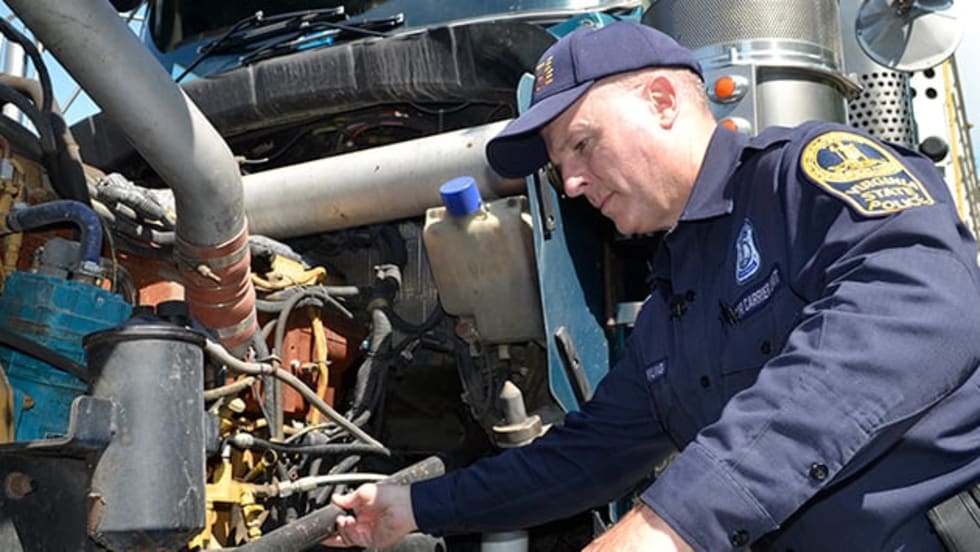
The annual 72-hour truck inspection blitz will take place May 11–13 across North America. Here's what fleets can expect and what inspectors found during the 2026 event.

FDA Eases Path for Oral-Fluid Testing
Federal actions could advance oral-fluid drug testing for truck drivers, but lab certification delays and marijuana rescheduling questions remain.

Why Hiring Truck Drivers Is Getting Harder
Higher recruiting costs, a shrinking driver pool, and renewed pay competition are raising the stakes for fleets heading into 2027.
Roehl Offers Truck Drivers $10,000 Retention Incentive
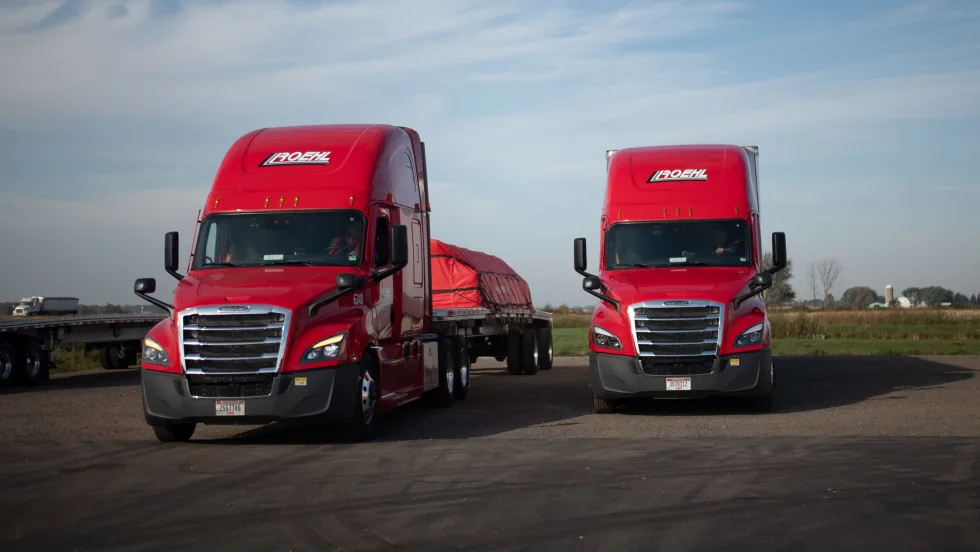
Payments begin after the first load and continue in mileage-based installments for eligible experienced drivers joining the fleet.
Platform Science Adds Dispatch and Safety Tools
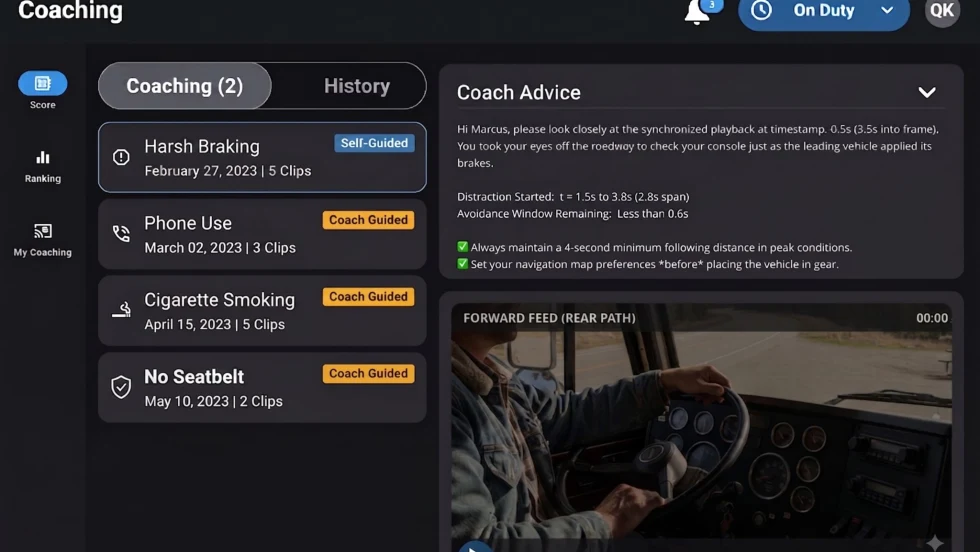
Four additions to PS Fleet help fleets monitor loads, manage driver coaching, share truck locations and adjust video system settings.

When Language Stops the Truck: The Return of ELP Out-of-Service Orders
English language proficiency rules for commercial drivers aren’t new, but renewed out-of-service enforcement has raised the stakes. Here’s what carriers need to know before a driver reaches a roadside inspection.

Samsara Launches Custom AI Agent Builder
Agent Studio lets fleets create AI tools for hours-of-service monitoring, reporting and driver support, including agents that communicate by phone.