




Supreme Court Lets California's Low-Carbon Fuel Rules Stand
Overshadowed by the Hobby Lobby decision, the U.S. Supreme Court Monday turned aside a challenge to California's low carbon fuel standard, which a coalition of energy, farm and trade groups claimed illegally discriminates against fuel produced outside of the state.


The U.S. Supreme Court Monday said it won't consider a challenge to California's low carbon fuel standard, which critics say will lead to higher fuel prices in the Golden State.
The controversial 2007 rule, the only one of its kind in the country, requires fuel producers to reduce the carbon footprint of their products over the entire life cycle of the fuel, including the greenhouse gases generated in producing, refining and transporting the fuel.
The goal is to encourage biofuels, electric vehicles and other alternatives that account for less greenhouse gas emissions.
A coalition of energy, farm and trade groups sued, saying the rule illegally discriminates against fuel produced outside of the state. California, however, contends that some of the fuels with the lowest carbon-intensity scores came from out of state.
A federal trial judge blocked the rule in 2011, but a federal appeals court reversed that ruling last year. The Supreme Court let that ruling stand without comment.
More Fuel Smarts

Calstart Becomes Catalyst Mobility, Reflecting Broader Focus
Calstart is now Catalyst Mobility, reflecting the nonprofit’s growing national role in clean transportation, including zero-emission trucks, infrastructure and incentive programs.
Read More →
Record Diesel Prices Squeeze Trucking Fleets
Average U.S. diesel prices have climbed to nearly $6 a gallon, surpassing the 2022 record as tight refinery capacity and Middle East disruptions keep fuel costs elevated.
Read More →
How Fuel Delivery Shapes Engine Performance
Fuel delivery depends on more than what happens at the injector. For fleet, maintenance and technical professionals, looking at the full path from pump to injector can provide useful context for understanding engine performance.
Read More →

East Coast Port Launches $45M Electric Truck Push
The Port Authority of New York and New Jersey announced millions in incentives for zero-emission drayage trucks, yard tractors, and new charging hubs near the port.
Read More →
California Bill Could Shed Light on Electric Truck Prices
Why do battery-electric Class 8 trucks remain so expensive? A California bill headed to Gov. Gavin Newsom would give fleets and state agencies more visibility into what manufacturers charge.
Read More →
Detroit Opens Orders for EPA 2027 Engines
Detroit isn’t starting from scratch to meet EPA 2027 diesel emissions standards. Its Gen 6 DD13 and DD15 engines keep much of today’s platform while updating the fuel and aftertreatment systems.
Read More →
Zero-Emission Truck Corridor Planned for West Coast
California, Oregon, Washington, British Columbia and Baja California are coordinating plans for truck charging and hydrogen fueling from Canada to Mexico.
Read More →
A Closer Look at Kenworth’s Electric T880E Vocational Truck [Video]
Learn more about Kenworth's T880E battery-electric vocational truck at the Paccar Technical Center, including its range, applications, upfitting considerations, and PTO options, in this HDT Spotlight video.
Read More →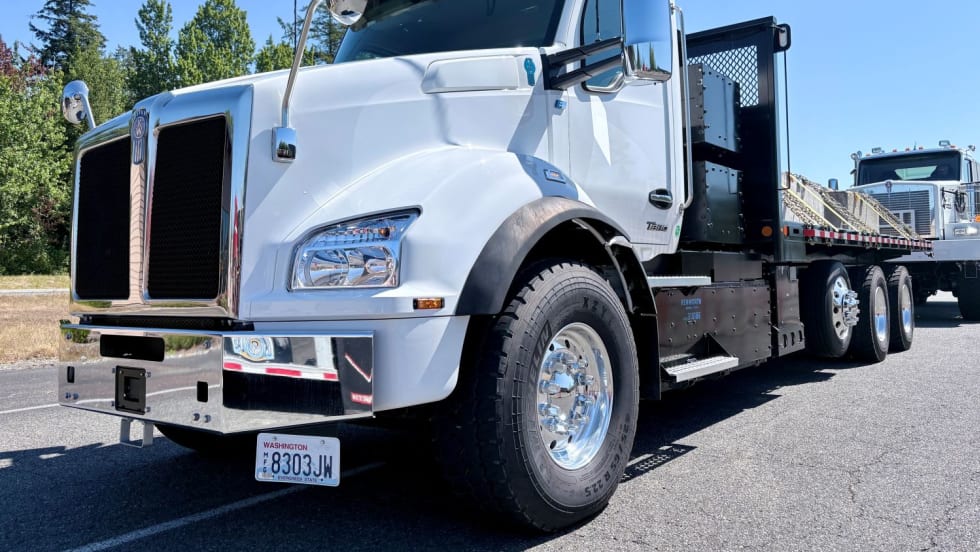
Kenworth T880E Brings EV Power to Vocational Trucks
A closer look at the Kenworth T880E’s range, charging, powertrain and upfit options — and where fleets are showing the most interest.
Read More →
Jennie Abarca Is Proving Electric Trucks Can Do the Job
HDT Truck Fleet Innovator Jennie Abarca is building confidence in fleet electrification one load at a time while openly sharing the challenges she encounters along the way as a small-fleet owner.
Read More →