




NTSB: I-5 Bridge Collapse Due to Systemic Errors
The collapse of an interstate highway bridge that was struck by a truck carrying an oversize load was ultimately caused by a series of deficiencies in a system intended to safeguard the passage of oversized loads over Washington State’s roadways, the National Transportation Safety Board determined in a meeting Tuesday in Washington, D.C.
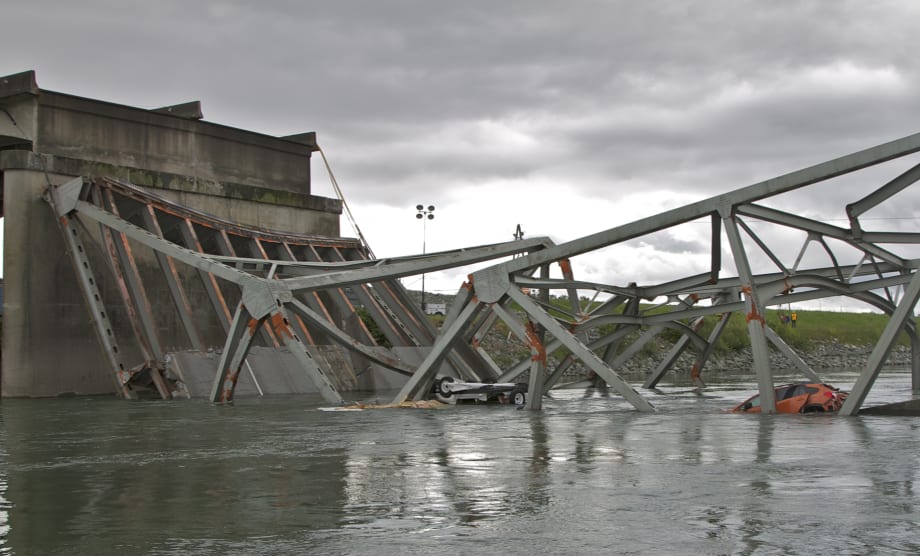
Water level view of the accident scene. Photo: NTSB
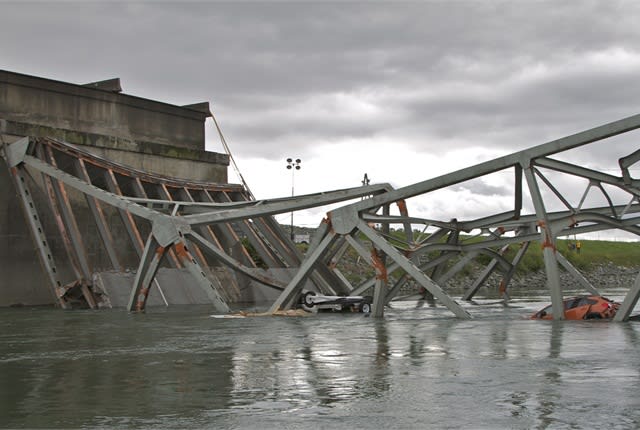
Water level view of the accident scene. Photo: NTSB
The collapse of an interstate highway bridge that was struck by a truck carrying an oversize load was ultimately caused by a series of deficiencies in a system intended to safeguard the passage of oversized loads over Washington State’s roadways, the National Transportation Safety Board determined in a meeting Tuesday in Washington, D.C.
On May 23, 2013, at about 7:05 p.m. PDT, a heavy truck operated by the Canadian firm of Mullen Trucking, was traveling southbound on Interstate 5 when the oversize load it was carrying struck the top of a bridge spanning the Skagit River near Mt. Vernon, Wash. Seconds later, the damage caused a span of the bridge to collapse. Two passenger vehicles and a camper-trailer fell into the river, and two other vehicles were damaged. None of the eight vehicle occupants involved in the bridge collapse was seriously injured.
The NTSB cited deficiencies including the failure of the driver of the pilot/escort vehicle to perform basic safety functions, inadequate route planning by the trucking company, Washington State’s inadequate permitting process, and the lack of low-clearance warning signs for the bridge, as to the causes of the bridge collapse.
Mullen Trucking had hired another company, G&T Crawlers, to operate a pilot/escort vehicle as required by state law for the trip from the Canadian border to the truck’s destination, the port of Vancouver, Wash, according to the board. The truck followed the pilot/escort vehicle, which was equipped with a height pole intended to verify clearance from obstructions for the oversize load.
In the 30 minutes leading up to the accident, the driver of the pilot vehicle had used a hands-free mobile phone to engage in five calls, including the one that she was on when the truck struck the bridge, NTSB determined. An off-duty commercial truck driver traveling near the pilot vehicle said he saw the height pole strike four or five bridge elements.
The pilot vehicle driver said that she did not observe the height pole contact the bridge structure as she was passing under it. NTSB investigators were unable to conclusively determine if the pole contacted any part of the bridge structure, but did conclude that the driver’s use of the cell phone distracted her and “diminished her ability to recognize whether the height pole struck the bridge.”
“Eliminating distraction in transportation is a top priority for the NTSB,” said Acting Chairman Christopher Hart. “As we can see from this accident, any element that reduces a driver’s attention can have harmful results. Drivers must always focus on the task at hand and be aware of their surroundings.”
Although the trucking company had obtained a permit for the trip, it failed to check and plan accordingly for the low clearances encountered along the route, according to NTSB. As the truck approached the bridge, it was travelling in the right lane where the clearance was lowest due to the arc design of the support brace. Investigators said that had the truck been in the left lane, where the vertical clearance was greater, the oversize load would have cleared the bridge.
The NTSB called for changes in the permitting process used by Washington State Department of Transportation to authorize movements of oversize loads on its roadways. The current system allows trucking companies to enter data about a trip into an Internet-based application and obtain a permit without any review or evaluation of the proposed oversize movement activities, according to the board. The NTSB said that the protection of bridge infrastructure was “too vital of a state concern to leave the responsibility for assessing the risk associated with the transportation of oversize loads entirely with the motor carrier.”
The NTSB also said that the lack of warning signage was a concern since Washington State Department of Transportation did not have any low-clearance signage by the interstate highway bridge to warn drivers of the height restrictions. Washington State has 22 bridges on its interstate system with a similar design as the Skagit River Bridge, and none have low-clearance signs or give any indications of the lane oversize vehicles should use, according the board.
Since the bridge collapse, the state DOT had repaired and updated the Skagit River Bridge by replacing the support brace’s arc design with a horizontal design that provides a uniform vertical clearance of 18 feet across the width of the bridge. It is also developing bridge clearance data and interactive maps to improve their permit process, said NTSB.
“This costly accident was the result of a series of mistakes that could have been avoided,” said Hart, “The recommendations issued by the NTSB highlight the importance of driver awareness and the states’ responsibilities to provide adequate resources about low clearances.”
The full report will be available in several weeks.
As a result of the investigation, NTSB issued 18 safety recommendations to federal and state officials as well as safety and trucking groups.
It has called on Federal Highway Administration to develop a best practices guide that the states can use to prevent bridge strikes by over height vehicles and notify the state departments of transportation of the circumstances of the collapse of the Skagit River Bridge span, and create a timetable for those states that need to change their low-clearance signage requirements to conform to the uniform minimum clearance requirement proposed.
It also proposed to FHWA, the Specialized Carriers & Rigging Association, and the Commercial Vehicle Safety Alliance, that they work together to revise the pilot car escort best practices guidelines and related training materials to ensure that they contain updated recommended practices for pilot/escort vehicle operations, and disseminate the revised documents to groups that provide pilot/escort vehicle driver training
NTSB also recommended that all states, the District of Columbia, and the Commonwealth of Puerto Rico ban the nonemergency use by pilot/escort vehicle drivers of portable electronic devices (other than those designed to support the pilot/escort vehicle driving task), except to communicate hazard-related information to the escorted vehicle.
The National Transportation Safety Board is an independent federal agency charged by Congress with investigating every civil aviation accident the United States and significant accidents in other modes of transportation; railroad, highway, marine and pipeline. The NTSB determines the probable cause of the accidents and issues safety recommendations aimed at preventing future accidents. It does not have the power to implement new regulations or laws.
A synopsis of the NTSB report, including probable cause, findings, and a complete list of the safety recommendations, is available on the agency’s website.
Equipment Editor Jim Park, a former driver, thinks the NTSB should have focused in more on one cause of this crash. Read more in his On the Road Blog.
More Safety & Compliance

Driveline Defect Spurs Recall of Daimler, Paccar, Mack and Volvo Trucks
More than 6,900 2027-model trucks are being recalled because a missing snap ring could allow the driveline to separate from the truck.
Truck Snow Removal: Fines Aren't the Only Risk
Delaware and Maryland are the latest states to add requirements and fines for snow and ice removal on commercial trucks. But a flying-ice accident could cost a fleet more than a citation.

How ATA Wants to Fix ELD Certification
ATA's new roadmap calls for independent ELD certification, better fraud detection and closer oversight of providers. Here's how the proposed system would work.
133 ELDs Revoked as ATA Pushes Certification Reform
FMCSA just removed a record number of electronic logging devices from its registry. ATA says it's time to rethink how ELDs get approved in the first place.
CVSA Sets 2027 International Roadcheck Dates
The annual 72-hour truck inspection blitz will take place May 11–13 across North America. Here's what fleets can expect and what inspectors found during the 2026 event.

FMCSA’s New Complaint Platform Makes It Easier to Report Trucking Safety Concerns
The FMCSA Complaint Center features expanded complaint categories and a name change away from the word "consumer."

FDA Eases Path for Oral-Fluid Testing
Federal actions could advance oral-fluid drug testing for truck drivers, but lab certification delays and marijuana rescheduling questions remain.
Kodiak Lines Up Fleets for Driverless Trucking
An agreement for 75 trucks, a new Texas freight lane, and progress on safety validation move Kodiak closer to its planned driverless highway launch.
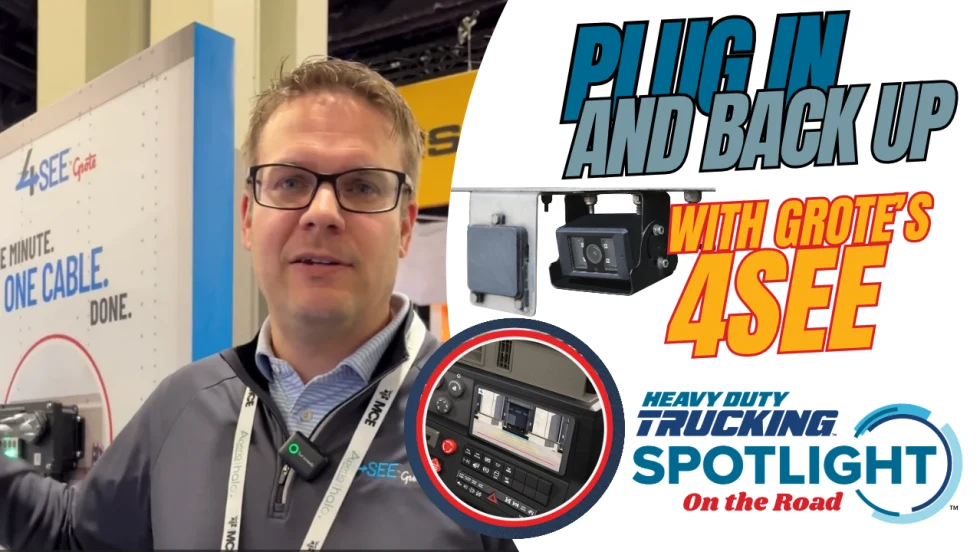
More Trailer Data Through the Same Seven-Way [Video]
Can trucking’s standard seven-way connector handle more cameras and trailer data? Grote’s Adam Slade shows HDT how the company is using new technology with its 4See trailer system, not only to add a new backup camera but also to expand other capabilities — without adding another connection.
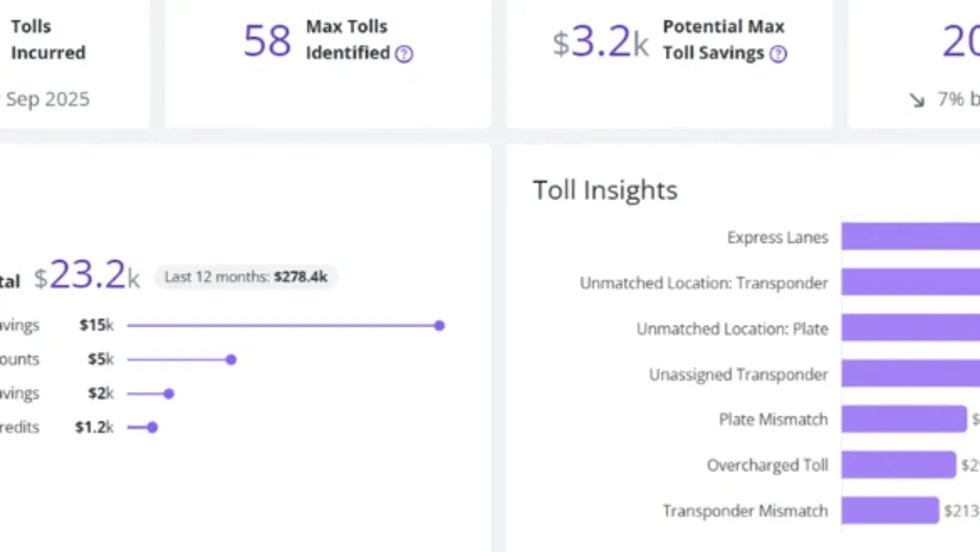
PrePass Intelligence Mines Fleet Bypass, Toll and Safety Data
PrePass Intelligence helps fleets measure bypass savings, flag potential toll overcharges, and spot suspicious transactions by combining data from separate systems.