




Trucking Alliance Pushes Plan to Study 34-Hour Restart
Congress is considering a plan to study the 34-hour restart provision of the hours of service rule using data collected by electronic logs. This approach is being suggested by the Trucking Alliance and other groups to counter the effort by American Trucking Associations to have Congress cut off funds for enforcement of the restart provision.

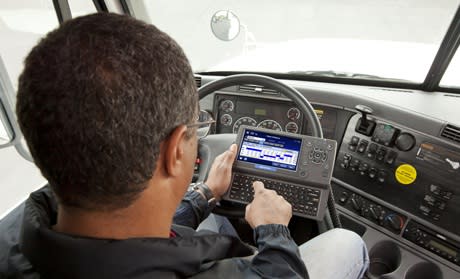
Data gleaned from electronic logs will produce technologically objective data, while Psychomotor Vigilance Tests will gauges the impact of fatigue on drivers' reactions.

Data gleaned from electronic logs will produce technologically objective data, while Psychomotor Vigilance Tests will gauges the impact of fatigue on drivers' reactions.
Congress is considering a plan to study the 34-hour restart provision of the hours of service rule using data collected by electronic logs.
This approach is being suggested by the Trucking Alliance and other groups to counter the effort by American Trucking Associations to have Congress cut off funds for enforcement of the restart provision.
In a letter to the leadership of the Senate Appropriations Committee, a coalition of the Alliance, safety advocates and the Teamsters union asked for language instructing the Federal Motor Carrier Safety Administration to conduct a study comparing the current restart provision to the old restart.
The transportation subcommittee is scheduled to vote on its appropriations bill Tuesday morning. The full committee will follow on Thursday.
The study proposal would require FMCSA to publish a final electronic log rule by January 15 next year, so that researchers could use data from early adapters of the rule.
FMCSA published its proposed electronic log rule last March and is accepting comments until June 26. Then it must review those comments and make any changes before it posts the final rule.
Under the study proposal, researchers would compare the work schedules and fatigue levels of two groups of drivers, one using the new restart provision and one the old.
The new provision, which took effect in 2013, requires two periods off between 1 a.m. and 5 a.m. and limits use of the restart to once a week. The old one does not contain these restrictions.
The proposal calls for the study to include enough drivers to produce a statistically significant result. Researchers would measure fatigue with the Psychomotor Vigilance Test, which gauges the impact of fatigue on a person’s reactions. It also would use actigraph watches, cameras and other onboard systems that track critical safety events, as well as the log data.
The proposal also calls for an independent peer review of both the study plan and its findings.
Reactions
FMCSA prefers the study to the enforcement cut-off. The agency said in a statement that it would review the study’s findings before making any decisions about changing the restart provision.
FMCSA has always used research to guide its rulemaking process, especially with regard to the hours of service, the agency said.
ATA says it is pushing the Appropriations Committee to cut off funding for enforcement because the restart provision cuts productivity and driver pay without improving safety. It wants the cutoff while the Government Accountability Office studies the rule.
ATA officials were not available for comment on the study proposal.
The Commercial Vehicle Safety Alliance, representing the police who enforce the rule, prefers the study to ATA’s defunding option, said executive director Steve Keppler.
Defunding creates problems for the Alliance’s members by making enforcement more difficult, Keppler said. The study is a better option because it keeps the current rule in place while researchers gather data.
But even the study would add to the difficulty of enforcement, Keppler added. CVSA’s ideal solution is to keep the provision as it is now and evaluate its impact over time.
The Trucking Alliance represents a half-dozen carriers that have been lobbying Congress and FMCSA for the electronic logging mandate and other safety initiatives.
“The Trucking Alliance strongly supports this agreement language because it accomplishes two things,” said managing director Lane Kidd.
“It gets the electronic logging device rule out much more quickly than we’ve been told it would be, and it uses those newly compliant devices to actually generate data so that once and for all we will know what the hours of service rule will be.”
The Alliance members are Maverick USA, Knight Transportation, J.B. Hunt, Dupre’, Boyle Transportation and Fikes Truck Line.
They are joined in the letter by Advocates for Highway and Auto Safety, the Trauma Foundation, Citizens for Reliable and Safe Highways, Road Safe America, Parents Against Tired Truckers, the Consumer Federation of America and the Truck Safety Coalition, in addition to the Teamsters union.
They said that the restart provision should not be defunded, revised or replaced without a comprehensive study of its effectiveness.
“The current 34-hour restart provision is a reasonable measure to provide truck drivers with a traditional weekend off from work, on alternate weeks, and to address chronic, cumulative driver fatigue and other serious health conditions,” the groups say in their letter.
Using data from electronic logs “will produce technologically objective data so that everyone will finally be able to determine what the HOS rules should be,” they said.
The letter went to Sens. Barbara Mikulski, D-Md., chair of the Appropriations Committee; Patty Murray, D-Wash., chair of the Transportation Subcommittee; Richard Shelby, R-Ala., the ranking member of the full committee; and Susan Collins, the ranking member of the subcommittee.
More Fleet Management

2026 Blueprint for Countering Smarter Supply Chain Theft
Cargo theft is no longer just the cost of doing business. It's a multi-billion-dollar criminal enterprise exploiting vulnerabilities across your fleet, drivers, and supply chain.
Read More →
How Telematics Improves Visibility, Control, and Performance in Refrigerated Fleets
Explore how telematics help refrigerated fleets improve visibility, uptime, efficiency, compliance, and cargo protection across connected cold chain operations.
Read More →
What the U.S.-Canada Trade War Means for Trucking
Escalating U.S.-Canada tariffs could disrupt cross-border freight, reduce truck volumes, raise costs, and create new uncertainty for carriers on both sides of the border.
Read More →

What Are Trucking’s Top Concerns for 2026?
The American Transportation Research Institute wants to know what's worrying trucking fleet managers, drivers, and other stakeholders in its annual Industry Issues survey.
Read More →
American Trucking Associations Looks for a New Leader
ATA President and CEO Chris Spear abruptly left his job at the association on August 21, at a pivotal time for the trucking industry.
Read More →
Public Wi-Fi Cybersecurity Risks: How Truck Drivers and Fleets Can Protect Their Data
Public Wi-Fi can expose truck drivers and fleets to credential theft, malware, and other cyber threats. Here’s how to reduce the risk on the road.
Read More →
For Nicky Cupp, Fleet Innovation Starts With Frustration
HDT Truck Fleet Innovator Nicky Cupp turns everyday pain points at Fraley & Schilling into opportunities for better technology and smarter processes.
Read More →
Adam Buttgenbach’s Approach to Electric Trucks: Start With Where They Fit
HDT Truck Fleet Innovator Adam Buttgenbach helped PepsiCo build one of North America’s largest EV fleets by focusing on where electric trucks make operational sense.
Read More →
Deen Albert: Let Automation Do the Math, People Make the Decisions
HDT Truck Fleet Innovator Deen Albert makes sure people are still at the heart of operations at Grand Island Express, even while adopting artificial intelligence tools. AI-assisted dispatch helped boost revenue 25% with the same number of trucks.
Read More →
Trimble’s New AI Agent Takes Aim at Fleet Back-Office Busywork
Arc Agent works across Trimble TMS products to automate repetitive tasks such as freight orders, maintenance, invoices, fuel costs and more.
Read More →