



Trucking increased its dominance over other transportation modes in December when it comes to hauling freight between the U.S. and its North American Free Trade Agreement partners, Canada and Mexico.
 MENU
MENU SEARCH
Trucking increased its dominance over other transportation modes in December when it comes to hauling freight between the U.S. and its North American Free Trade Agreement partners, Canada and Mexico.
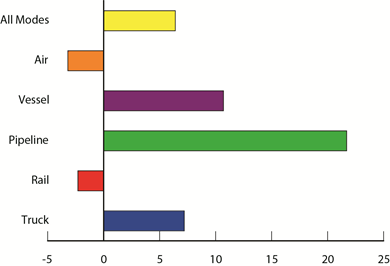
Percent change in value of U.S.-NAFTA freight flows by mode, December 2013 compared to December 2012. Credit: U.S. DOT
Trucking increased its dominance over other transportation modes in December when it comes to hauling freight between the U.S. and its North American Free Trade Agreement partners, Canada and Mexico.
A new U.S. Transportation Department report shows trucks carried 57.2% of the $90.1 billion of U.S.-NAFTA trade in December 2013, accounting for $26.3 billion of exports and $25.2 billion of imports. This is a 7.2% increase from December 2012 while rail declined 2.3%. Vessel rose 10.7% and air declined 3.2%.
While the value of freight carried by rail decreased during the period, rail was still the second largest mode, at 14.9%, followed by vessels at 11.2%, pipeline at 7.7% and air at 4%. The surface transportation modes of truck, rail and pipeline carried 79.7% of the total NAFTA freight flows.
Total NAFTA trade during December increased 6.4% from a year earlier while suface trade gained 6.5% during the same time. The total value of NAFTA trade during the month increased 3.5 from December 2012.
U.S.-Canada trade by pipeline increased the most of any mode from December 2012 to December 2013, growing 21.9%. For trade with Canada in December, trucks carried 52.2% of the $50 billion of freight, followed by rail at 15.7%, pipelines at 13.2%, vessel at 7.1% and air at 4.7%. The surface transportation modes of truck, rail and pipeline carried 81.2% of the total U.S.-Canada freight flows.
The value of U.S.-Mexico trade by pipeline had the largest percentage increase of any mode from December 2012 to December 2013, growing 17.5%. Freight moved by vessel and air between the U.S. and Mexico increased by 14.8% and decreased by 0.2%, respectively, while trucks gained 9.8%.
For trade with Mexico in December, trucks carried 63.3% of the $40.1 billion of the freight, followed by vessel at 16.4%, rail at 13.8%, air at 3.1% and pipelines at 0.8%. The surface transportation modes of truck, rail and pipeline carried 77.9% of the total U.S.-Mexico freight flows.
In December 2013, the top commodity group transported between the U.S. and Canada was mineral fuels, of which $6.6 billion moved by pipeline. The top commodity category transported between the U.S. and Mexico in December 2013 was electrical machinery, of which $7.2 billion moved by truck.

HDTX is an intimate event that connects heavy-duty trucking fleet managers with industry suppliers through small-group discussions, educational sessions, and structured one-on-one meetings.
Read More →HDTX is an intimate event that connects heavy-duty trucking fleet managers with industry suppliers through small-group discussions, educational sessions, and structured one-on-one meetings.
Read More →HDTX is an intimate event that connects heavy-duty trucking fleet managers with industry suppliers through small-group discussions, educational sessions, and structured one-on-one meetings.
Read More →
New DAT One feature shows top-paying loads directly on an iPhone’s home screen, helping carriers react faster to spot-market opportunities.
Read More →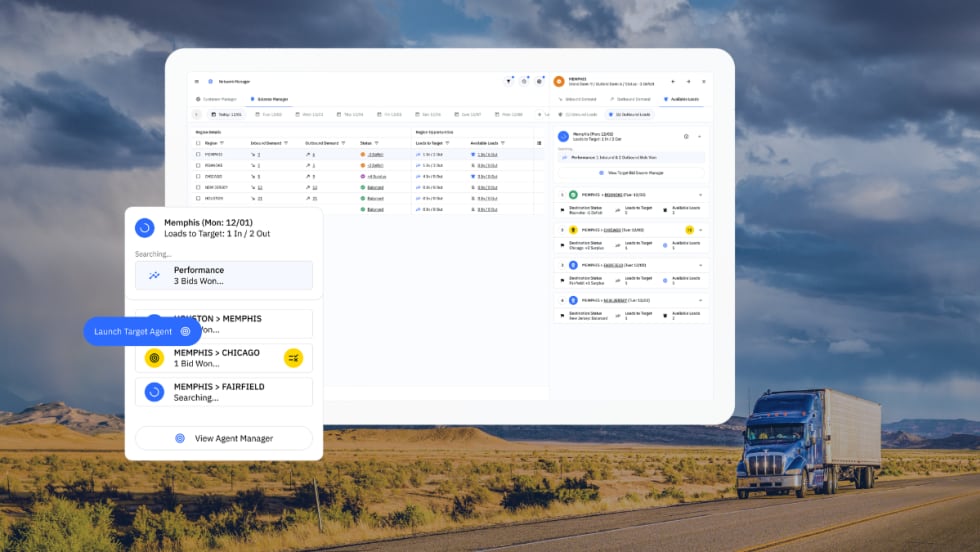
Optimal Dynamics says its new Scale platform uses AI agents and optimization to help carriers find and secure freight that improves network balance and profitability.
Read More →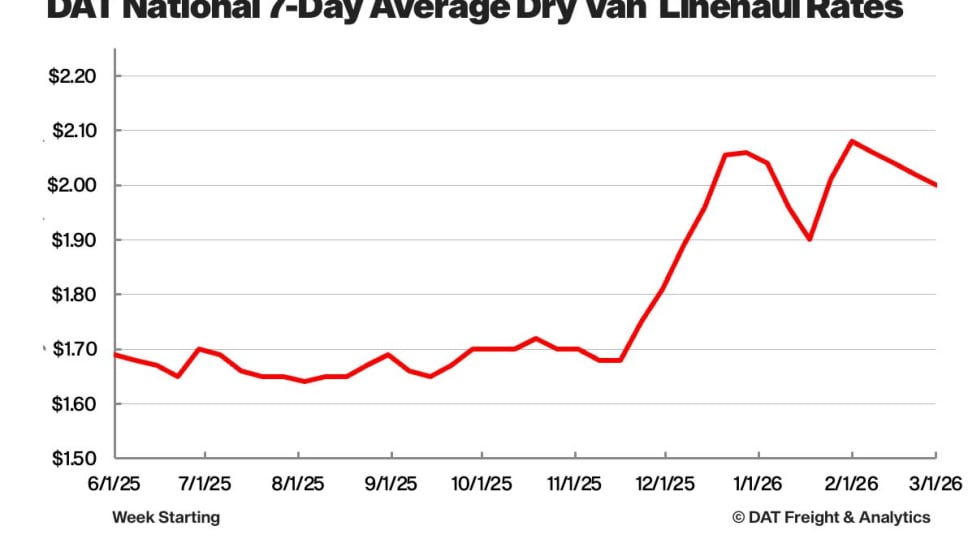
DAT Freight & Analytics data shows tightening flatbed capacity, easing produce markets, and softening van and reefer rates.
Read More →
NACFE's Run on Less - Messy Middle project demonstrates the power of data in helping to guide the future of alternative fuels and powertrains for heavy-duty trucks.
Read More →
A federal court ruling allows New York City’s congestion pricing program to continue, leaving truck tolls in place for fleets delivering into Manhattan.
Read More →A federal court ruling allows New York City’s congestion pricing program to continue, leaving truck tolls in place for fleets delivering into Manhattan.
Read More →
Fontaine Modification has introduced a new customer portal designed to give fleets real-time visibility into the truck modification process, addressing one of the most common questions fleet managers face: “Where’s my truck?”
Read More →