




Study: New HOS Rules Could Mean Higher Consumer Costs
New Federal Motor Carrier Safety Administration hours-of-service regulations for truckers could mean increased costs for consumers, according to a new study from the University of Tennessee’s Global Supply Chain Institute.

New Federal Motor Carrier Safety Administration hours-of-service regulations for truckers could mean increased costs for consumers, according to a new study from the University of Tennessee’s Global Supply Chain Institute.

In place since July 1, the rules reduce the maximum number of truckers’ weekly driving hours from eighty-two to seventy and mandate a thirty-minute rest break prior to the eighth hour on duty. However, the study found the rules also mean it might take longer for companies to transport their products or force them to add more truckers on the road.
The UT study surveyed 417 companies and found that 58% of them expected an increase in their carrier rates. They anticipated passing on the costs to their customers in the long term.
Mary Holcomb, an associate professor in the UT Department of Marketing and Supply Chain Management and the study’s author, believes that this is not a realistic solution.
“In this economy, companies won’t want to damage the relationships with their customers by raising prices,” Holcomb said. “Carriers may be unable to absorb these increased costs, so companies will have to improve their operations in order to minimize their impact.”
Holcomb’s study identifies ways companies could mitigate those costs. She noted that many of those businesses are incorporating some new initiatives.
“Many of them also will be a doubling down on efforts already underway,” she said.
Efforts to transport products more efficiently and control costs include the following:
Extending lead time for some customers.
Increasing customer delivery windows.
Improving shipment consolidation.
Increasing the use of “drop and hook,” which involves dropping a loaded trailer at a customer’s facility and hooking up and leaving with another loaded trailer.
The research also uncovered actions that many companies have yet to consider. Less than 5% of the polled companies planned to reduce costs by consolidating shipments with other companies.
“The logistics of coordinating shipping across companies is often too complex to sustain,” said Dean Vavalides, logistics analyst for Pilot Flying J, who collaborated on the study. “It just requires too much synchronization.”
Holcomb added that she was also surprised to discover that so few companies plan on shifting their transportation methods from truck to rail although research showed that long-haul moves have been the most impacted by the hours-of-service rule change. Switching the long-haul moves from truck to rail could reduce the arrival time, she said.
The UT Global Supply Chain Institute will conduct a follow-up study in mid-2014 on the longer-term impact of the hours-of-service rules.
More Drivers

EEOC Sues KLLM Over Alleged Sex Discrimination in Driver Training
KLLM is facing a federal sex-discrimination lawsuit over policies the EEOC alleges put female truck driver trainees at a disadvantage.
Read More →
FMCSA Moves to Codify English Language Requirements for Commercial Drivers
By changing regulations on English-language proficiency requirements for commercial drivers, rather than relying on a guidance memo, the FMCSA said future administrations won't be able to walk back the Trump administration's stricter enforcement with just a memo.
Read More →
Drivers Put Western Star Trucks to the Test at Star Nation Experience
Watch to get an inside look at the Western Star trucks, technology, and community behind the Star Nation Experience 2026!
Read More →
Trump Administration Looks to Put More Veterans Behind the Wheel
The Freedom Haulers program pulls together existing and expanded programs at several federal agencies to recruit veterans to drive commercial heavy-duty trucks and cut the red tape for them to get a CDL, training, and employment.
Read More →
Putting Mack’s Command Steer to the Test
A test drive of Mack’s Command Steer active steering system evaluates how it can make truck driving easier and less tiring.
Read More →
Competition Heating Up for Truck Drivers
New report reveals rising driver hiring costs, the return of sign-on bonuses, growing AI advantages, and the operational factors shaping driver retention.
Read More →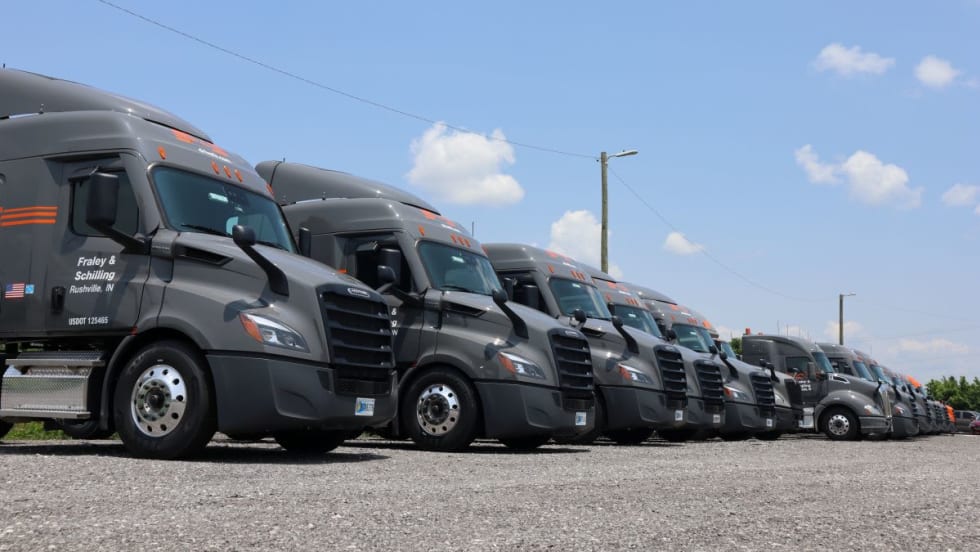
How Fraley & Schilling Improved Logbook Compliance by Over 50%
Fraley & Schilling needed a way to close a compliance workflow gap in its ELD system without adding more work from driver training, reminders, and back-office follow-ups. It found the answer in a custom driver app.
Read More →
Volvo Goes Gaming
Volvo has roared into American Truck Simulator with two new flagship trucks.
Read More →
What the Best Fleets to Drive For Teach About Driver Retention
Survey fatigue, AI-powered routing, owner-operator expectations, and the decline of social media all emerged as themes from this year's Best Fleets to Drive For program.
Read More →
Driver Retention Lessons From the Best Fleets to Drive For
What separates trucking's best workplaces from the rest? Jane Jazrawy shares the biggest lessons from this year's Best Fleets to Drive For program on driver retention, communication, AI, and workforce trends on the HDT Talks Trucking podcast.
Read More →