




FMCSA Study Says PSP Program Lowering Crash and Driver OOS Numbers
A recent Federal Motor Carrier Safety Administration report shows that motor carriers using the agency’s Pre-Employment Screening Program are seeing a greater decline in crash rates than those who are not using it.

A recent Federal Motor Carrier Safety Administration report shows that motor carriers using the agency’s Pre-Employment Screening Program are seeing a greater decline in crash rates than those who are not using it.
“The overall adjusted improvement in the crash rates for the PSP group, across all size classes, was statistically significant,” said the report.
It also found those using PSP experienced a drop in driver out-of-service violations.
Overall it found crash rates declined 8% for carriers while driver OOS violations fell 17.2% for fleets using PSP, as opposed to those who haven’t
Declines in crash rates were even bigger for carriers who have between 6 and 20 drivers, falling 20.6%, and those with between 21-100 drivers, declining 21.1%.
FMCSA says the 12.4% decline in the crash rates with trucking operations that have 1 and 5 drivers, and a drop of 3.4%, for those with more than 100, are not statistically significant.
Declines in the driver OOS rates for carriers using PSP as opposed to those not using it, ranged between 10.1% for those with 21 to 100 drivers, to as much as 18.3% for those with between 1 and 5 drivers.
FMCSA also compiled some industry information including tracking the extent of PSP use throughout the trucking business with it showing the number of PSP users has steadily increased monthly since PSP began distributing information in May 2010.
The total number of requests to the PSP system is also increasing, most notably the monthly request totals continue to climb.
“All of these metrics indicate that PSP use is increasing throughout the motor carrier industry,” said the FMCSA study. “Currently, there are about 35,000 PSP users making about 70,000 requests per month. These requests come from both drivers and motor carriers, but almost all of these users are motor carrier companies with only a small fraction of requests coming from drivers.”
FMCSA said also gathered non-scientific information from a handful of motor carriers of various sizes utilizing PSP to provide some evidence, even if anecdotal, of how these companies view the PSP. All represented carriers responded favorably when asked about the system, and they reported using it for new hires.
“Most carriers use the PSP report to ensure that drivers accurately report information on their applications and do not omit places of employment or crashes,” said FMCSA “Violations in the PSP report for pre-trip inspections, logbooks, and speeding were high on the list of concerns and were generally believed to be a better indication of a driver’s safety performance rather than violations that the driver had little direct influence to avoid.
FMCSA established the Pre-Employment Screening Program to comply with a law requiring the agency to provide information on driver safety performance to persons conducting pre-employment screening for the motor carrier industry. The system has around 3.5 million driver records, which varies slightly from month-to-month as the record data is refreshed.
PSP was launched in May, 2010, and is a voluntary program. Motor carriers may use the information provided through the PSP, comprised of 5 years of crash data and 3 years of inspection data on the driver, to assist in determining if a driver applicant should be hired.
The PSP safety impact analysis studied carriers at a snapshot in time, 12 months before PSP launched and 12 months after, so the study covers carriers from 2009 through 2011.
97% of the companies using PSP are trucking companies and 2% are bus companies. The remaining 1% represents 3rd party industry service providers, who provide driver screening services for bus and truck companies, according to FMCSA.
More Drivers

Samsara Launches Custom AI Agent Builder
Agent Studio lets fleets create AI tools for hours-of-service monitoring, reporting and driver support, including agents that communicate by phone.
Read More →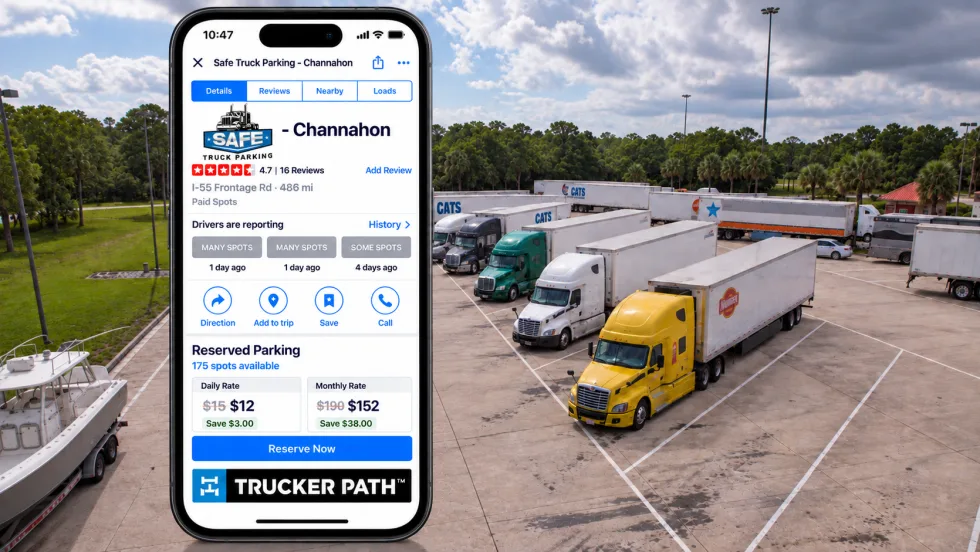
Trucker Path Expands Reserved Parking Network
Trucker Path has added close to 6,000 more truck parking spaces to its Trucker Path Reserved Parking Network with the addition of Safe Truck Parking.
Read More →
EEOC Sues Texas Trucking Company Over Driver Age Limits
The agency says Trancasa USA rejected applicants over 65 and applied tougher driving-record standards to those over 60.
Read More →
Nussbaum, Roehl Announce Second Driver Pay Increase This Year
This year has seen a swath of major truck driver pay increases as freight capacity has tightened.
Read More →
From One Generation to the Next: How Mentorship Builds Safer Truck Drivers
After three decades in trucking, Harold Perry shares what he's learned about driver safety, mentorship, and helping the next generation build confidence behind the wheel.
Read More →
Truck Drivers Need More Than Another Alert
Fleets have more visibility into truck health, safety events, and driver activity than ever. The next challenge is turning all that information into useful guidance for the person who has to decide what to do next.
Read More →
FMCSA Removes 110 Truck Driver Training Schools from Certified ELDT List
Federal regulators also are targeting more than 160 additional training providers and launching a nationwide audit of third-party CDL skills testers as part of a broader crackdown on trucking fraud.
Read More →
Hours of Service Pilot Programs: FMCSA Readies for 2027 Rollout
Two pilot programs could eventually reshape hours-of-service rules, giving truck drivers options to pause their 14-hour clock or use longer split sleeper rest periods.
Read More →
Medical Cards, English Proficiency Reshape Roadcheck Violations
Medical-card violations jumped to the top of the driver out-of-service list during CVSA’s 2026 International Roadcheck, while English-language proficiency violations appeared among the leading violations for the first time.
Read More →
Driver Trust Can Make or Break the Success of Fleet Safety Technology
New Teletrac Navman research suggests that onboarding, transparency about driver data, and positive feedback can play a significant role in how commercial drivers respond to safety and coaching technology.
Read More →