




After the Hours-of-Service Ruling: Research on 34-Hour Restart, Action on Capitol Hill
Even as a federal court was recently upholding most of the hours of service rules, the Federal Motor Carrier Safety Administration has been working on a field study of the 34-hour restart.
Even as a federal court was recently upholding most of the hours of service rules, the Federal Motor Carrier Safety Administration has been working on a field study of the 34-hour restart that could influence that provision in the future, and there's a move on Capitol Hill to force the agency to return to the old rules.
Congress ordered the study in last year’s highway bill, at the insistence of the American Trucking Associations, which said the agency should confirm in the field the finding from a laboratory study that daytime sleep is not as restorative as nighttime sleep.
That finding is the scientific basis for the requirement that a driver take two periods off between 1 a.m. and 5 a.m. during his 34-hour restart, and it figured prominently in the court’s decision to uphold the provision.
It remains to be seen if the data from the field study will be persuasive enough for the agency to reconsider its approach to the restart.
Data collection for the study was finished in July and the final report is expected later this year, said agency spokesperson Marissa Padilla.
Meanwhile, there is a move in the House of Representatives to cut off funding for implementation or enforcement of the new hours and return to the old rule.
An attempt by Rep. Richard Hanna, R-N.Y., and several others to attach the amendment to transportation funding legislation failed when House leaders withdrew the bill.
But Hanna will pursue the amendment, said Renee Gamela, his communications director.
“He’s been discussing the amendment with colleagues and we’re confident it would have strong, bipartisan support when it comes up,” Gamela said.
The amendment is supported by 16 trucking and shipping interests, including ATA, OOIDA and UPS, as well as the Transportation Intermediaries Association, the National Retail Federation and the National Grocers Association.
Hanna, joined by Reps. Tom Rice, R-S.C., Trey Radel, R-Fla., and Todd Rokita, R-Ind., said in a Dear Colleague letter that the new rule decreases driver flexibility and raises costs – complaints that have been aired by all of the industry interests.
More Fleet Management
Does Your Trucking Fleet Need a New TMS? [Video]
Cloud technology, AI and new integrations are changing what transportation management systems can do. But does taking advantage of those advances mean replacing your existing TMS?
Read More →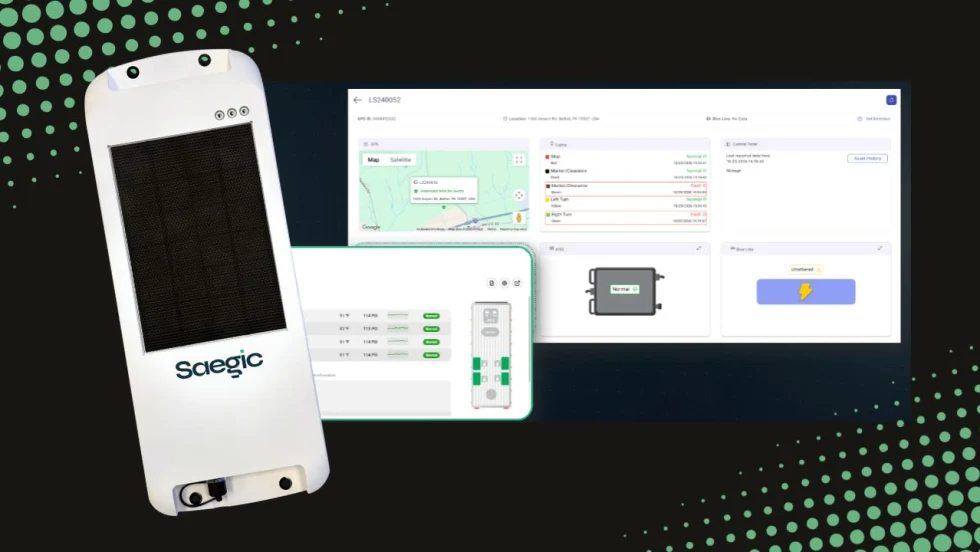
Road Ready Becomes Saegic, Launches New Trailer Telematics Gateway
Clarience Technologies is rolling out new hardware and expanding its plans for connecting trailer telematics, maintenance data, and video.
Read More →
Give Your Trucking Fleet a Cybersecurity Walkaround
Your fleet's cybersecurity policies may look good on paper. These seven checks can help you find out whether they’re working.
Read More →
Kodiak Lines Up Fleets for Driverless Trucking
An agreement for 75 trucks, a new Texas freight lane, and progress on safety validation move Kodiak closer to its planned driverless highway launch.
Read More →
ITS Logistics Settles Religious Harassment Case
The Nevada-based logistics firm agreed to pay more than $396,000 to settle a religious harassment charge involving an employee's Jewish identity.
Read More →
Your Trucks Are Busy. That Doesn’t Mean They’re Winning.
High utilization doesn’t always mean strong margins. Looking beyond the current load can help fleets make better dispatch decisions and get more value from each truck’s time.
Read More →
Why This Trucking Recovery Is Different
Freight demand remains sluggish, but rising costs and tougher enforcement have taken enough capacity out of the market to change the outlook for motor carriers.
Read More →
Platform Science Adds Dispatch and Safety Tools
Four additions to PS Fleet help fleets monitor loads, manage driver coaching, share truck locations and adjust video system settings.
Read More →
PrePass Intelligence Mines Fleet Bypass, Toll and Safety Data
PrePass Intelligence helps fleets measure bypass savings, flag potential toll overcharges, and spot suspicious transactions by combining data from separate systems.
Read More →
Motive Adds AI Agents for Fleet Operations
New tools automate follow-up on fleet data, from maintenance work orders to driver alerts, with two-way voice conversations planned for later this year.
Read More →