Just as the hours of service changes take effect, here’s new research on how the rules could affect operations and safety. Two academics, Asvin Goel of Jacobs University in Bremen, Germany, and Thibaut Vidal of MIT and the Centre for Research on Transportation in Montreal, studied how carriers can use route optimization to get the most out of their operations under the new rules.
Oliver Patton・Former Washington Editor
August 7, 2013
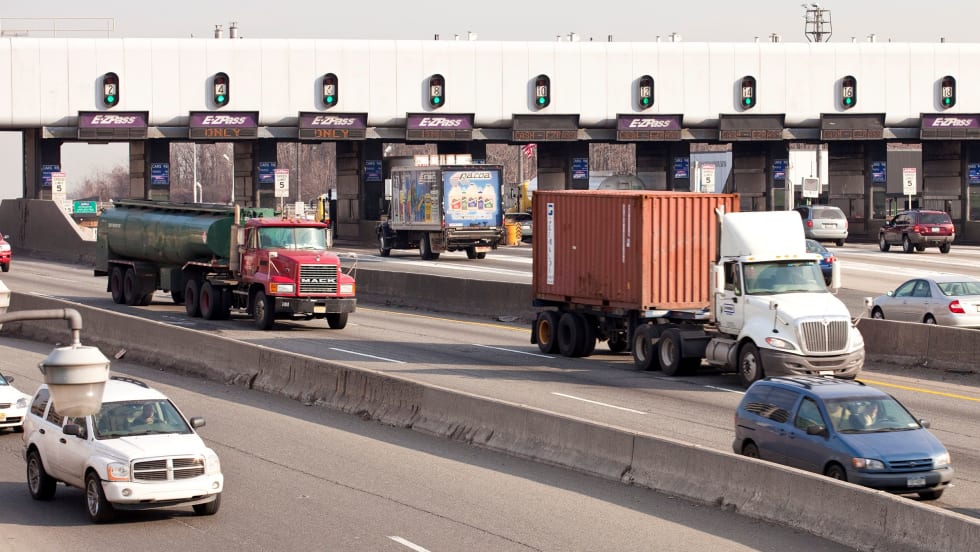
Photo: Jim Park
2 min to read
Photo: Jim Park
Just as the hours of service changes take effect, here’s new research on how the rules could affect operations and safety.
Two academics, Asvin Goel of Jacobs University in Bremen, Germany, and Thibaut Vidal of MIT and the Centre for Research on Transportation in Montreal, studied how carriers can use route optimization to get the most out of their operations under the new rules.
Ad Loading...
In a separate study they analyzed the impact of the new 34-restart and rest break requirements, finding that they will reduce accident risk by up to 2% while increasing costs by less than 0.2%.
This cost assessment is significantly lower than others. The economist Nöel Perry, for example, believes the new rule will lead to a 2% to 3% reduction in overall industry productivity. Goel and Vidal also said that the risk of crashes could be cut by 5% if daily driving time were limited to 10 hours rather than the current 11. The cutback would increase transportation costs by less than 1%, they said.
“Our results indicate that in their regulatory impact assessment the Federal Motor Carrier Safety Administration may have underestimated the safety benefit of reducing the daily driving time limit and overestimated the resulting cost increase,” the researchers said.
Ad Loading...
“It may well be that the net benefit of reducing the daily driving time to 10 or even 9 hours is positive,” Goel said.
This observation runs counter to what FMCSA found in its analysis. The agency considered cutting daily driving time to 10 hours, but decided not to because its cost-benefit analysis showed that 11 hours offered a greater net benefit than either 10 hours or nine hours.
But the work of Goel and Vidal may yet play into the hours of service debate, because the agency has said it is committed to conducting a comprehensive analysis of risk, hour-by-hour, and it does not consider the case for the 10-hour limit closed.
In the route optimization study, the researchers said they developed an algorithm that enabled them to compare carrier operations under hours of service rules in different countries.
“Our experiments demonstrate that European Union rules lead to the highest safety, whereas Canadian regulations are the most competitive in terms of economic efficiency,” they said.
Ad Loading...
“Australian regulations appear to have unnecessarily high risk rates with respect to operating costs. The recent rule change in the United States reduces accident risk rates with a moderate increase in operating costs.”
The optimization method also gives carriers a way to adapt their operations to changes in hours of service rules, they said.
When the unexpected happens, how you react to, and deal with operational blind spots is critical. Here’s how to keep you recovery on track, when nothing is normal.
As fleets adopt artificial intelligence for routing, maintenance, and load matching, new security risks are emerging. Learn where the vulnerabilities are and how to put the right controls in place.
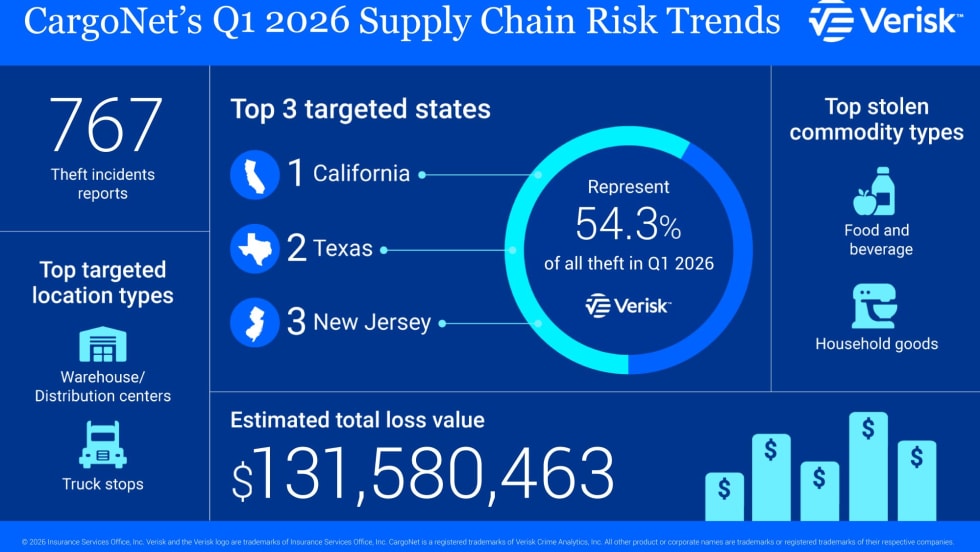
CargoNet reports fewer supply chain crime events to start 2026. But losses hold steady as organized crime shifts tactics toward impersonation schemes and high-value goods.
Heavy Duty Trucking is searching for forward-looking leaders at trucking fleets as nominations for HDT’s Truck Fleet Innovators 2026. Deadline is May 15.
Cargo theft rings plant operatives as drivers inside legitimate, fully vetted carriers, then execute coordinated thefts that look like a traditional straight theft from the outside.
The American Transportation Research Institute will examine driver coaching, regulatory impacts — including the "Beyond Compliance" concept —and weather disruptions that shape trucking operations.
Fleet Advantage's Brian Antonellis says it's time for fleets to get back to the fundamentals of good maintenance practices. And that includes replacing older, inefficient equipment.