




Port of L.A. to Spend $400 Million on Capital Improvements
The Los Angeles Harbor Commission has adopted a 2013-14 fiscal year (FY) budget of approximately $1.1 billion for the Port of Los Angeles, including one of the largest annual Capital Improvement Programs - $399.9 million or 37% of the total budget - in the port's history.
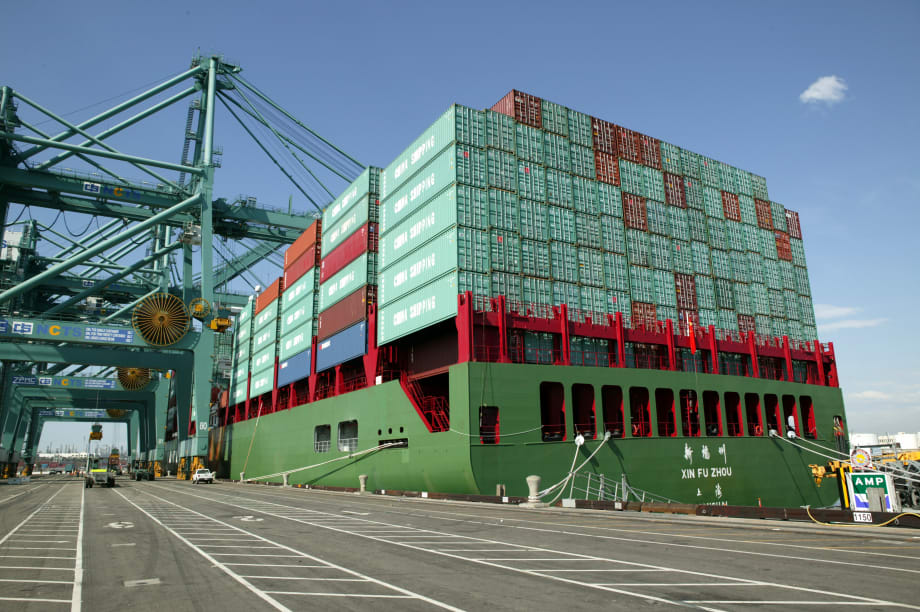
The Los Angeles Harbor Commission has adopted a 2013-14 fiscal year (FY) budget of approximately $1.1 billion for the Port of Los Angeles, including one of the largest annual Capital Improvement Programs - $399.9 million or 37% of the total budget - in the port's history.

The budget supports more than 8,500 jobs, 6,870 of which are attributable to construction project spending in the coming fiscal year which begins July 1.
“Capital improvements and improved efficiency are essential if we’re to maximize cargo flow as well as maintain our position as the nation’s number one container port," said Harbor Commission President Cindy Miscikowski.
The capital spending budget earmarks more than $380 million for container terminal and transportation upgrades, including:
More than $99 million at the TraPac container terminal for backland improvements to support future terminal automation as well as construction of a facility to provide on-dock rail capabilities, which will result in all Port of L.A. container terminals equipped with on-dock rail.
$41.5 million in construction at China Shipping Terminal, which includes completion of 375 linear feet of expanded wharf and backland improvements.
Almost $96 million for the installation of Alternative Maritime Power stations at major container terminals including APMT, APL, Evergreen, Yang Ming and China Shipping. These stations reduce emissions from container vessels by “plugging in” to shore side power instead of running on diesel power.
$8.2 million for the audit, design, and construction of required upgrades at liquid bulk oil cargo handling facilities throughout the Port, pursuant to requirements of the State Lands Marine Oil Terminal Engineering Maintenance Standards.
Over $15 million for other terminal projects including wharf and backland development at APL, equipment and wharf upgrades at Evergreen, and pavement replacement at APMT.
Almost $78 million related to construction at the Berth 200 rail yard, a pivotal piece of the Port’s overall goods movement plan to facilitate more fuel-efficient, faster and safer rail operations throughout the Port complex.
$33.2 million for the South Wilmington Grade Separation project, which will provide unimpeded grade-separated vehicle access to businesses throughout the Wilmington Waterfront while allowing public safety vehicles unobstructed access to the area.
Another $8.8 million for additional transportation projects including Harry Bridges Boulevard Improvements, the Advanced Transportation Management Information System, and the C Street/I-110 Access Ramp Improvements.
More than $31 million also has been allocated to L.A. Waterfront projects, including $20 million to construct a new waterfront promenade, plaza and town square as part of the new Downtown Harbor project that is slated for completion next summer. Also included in the budget is $8.7 million for a fiber optics project that will enhance the interconnectivity of vital security information throughout the port complex.
The newly adopted budget’s operating revenues of $413 million are relatively flat over the previous year, a modest increase of 3.1%. Proposed operating expenses are slightly lower by 1.9% to $209.1 million, with no significant increases in Port employee headcount.
More Fleet Management

AUCTION OF EQUITY INTEREST IN HEAVY HAUL TRUCKING COMPANY!!
Mark your calendar: June 30, 2026 (10:00 a.m. PDT). MagnaTrans, LLC, a California limited liability company doing business as Magna Transportation Group is going to auction! Bid on a 37.5% ownership interest in this Rancho Cucamonga-based heavy haul and over-dimensional trucking company operating across California, Oregon, and Arizona. The equity interest will be sold to the highest bidder or bidders under Article 9 of the Uniform Commercial Code at 10:00 a.m. PDT.
Read More →
Volvo Trucks Adds Unattended Over-the-Air Software Update Capabilities
The latest evolution of Volvo’s over-the-air update technology allows software updates to run while trucks are parked, helping fleets keep vehicles current without disrupting operations.
Read More →
How Waste Connections is Using Data, Telematics, and AI
How do you manage and maintain more than 18,000 connected trucks? Data. Lots of it.
Read More →

Why Fleet Data Matters More Than Ever at Waste Connections [Watch]
Waste Connections' Chuck Palmer explains how telematics, predictive maintenance, safety analytics, and AI help keep vehicles on the road and drivers safe in this episode of HDT Talks Trucking.
Read More →
NMFTA Launches Free, Anonymous Cybersecurity Threat Report Portal
Organizations are encouraged to anonymously report freight fraud, cargo crime, and cyber threats while gaining visibility into incidents reported across the transportation sector.
Read More →
AI Can Optimize a Fleet. Can It Replace Human Judgment?
Fleets fear falling behind if they don’t adopt AI quickly enough. They also fear what happens if the technology makes the wrong decision.
Read More →
Jamie Hagen Gets Real About Running a Small Fleet in an Uncertain Economy
Small fleet owner Jamie Hagen says new legal risks, volatile fuel prices, and a changing freight market are forcing small carriers to rethink how they operate — and what they can afford.
Read More →
Jamie Hagen Gets Real About Freight, Fuel Prices, Safety, and Small-Fleet Survival
Running a small trucking fleet right now isn’t easy, especially right now. And Jamie Hagen doesn’t sugarcoat it.
Read More →
Jamie Hagen Gets Real About Freight, Fuel Prices, Safety, and Small-Fleet Survival
Running a small trucking fleet right now isn’t easy, especially right now. And Jamie Hagen doesn’t sugarcoat it.
Read More →
Data Lock‑In or Integration Lock‑Out?
Data fragmentation is costing dealerships, OEMs, fleets, and upfitters millions. Here’s why interoperability may be the fix the trucking industry needs.
Read More →