




Steve Forbes Lays Out Policy Changes That Could Jump-Start Economy
Many economists have called the slow 1.5% to 2% GDP growth "the new normal." But Steve Forbes, chairman and editor in chief of Forbes Media, calls it "the new abnormal" and believes a few significant policy changes would turn things around.

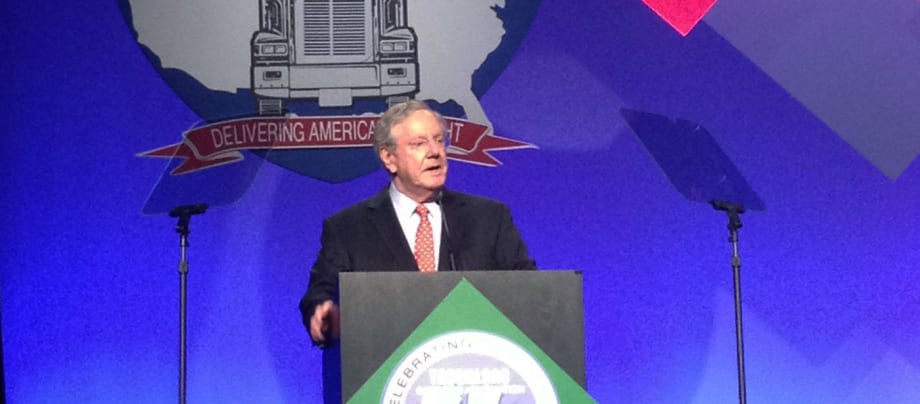

Many economists have called the slow 1.5% to 2% GDP growth "the new normal." But Steve Forbes, chairman and editor in chief of Forbes Media, calls it "the new abnormal" and believes a few significant policy changes would turn things around.
Speaking during the Monday General Session of the Truckload Carriers Association's annual convention in Las Vegas, Forbes laid out four reasons our economy is recovering so sluggishly from the Great Recession.
1. Monetary Policy
Forbes said the problem with monetary policy is that "it is the most boring subject in the world," as well as an intimidating subject. That, he said, may be why the Federal Reserve doesn't get as much Congressional scrutiny as it should.
If you see Federal Reserve Chairman Ben Bernanke testifying on Capitol Hill, he said, you can tell most senators and representatives are asking questions prepped for them by their staff, without really understanding the question or the answer.
"They get an answer, bob their head, and go on to the next question." The thinking, he said, must be, "He must be brilliant – I don't understand a word he's saying."
Yet monetary policy is critical to our economy, Forbes said, comparing it to an engine (at least an older non-electronic one) – too little fuel and it stalls out. Too much fuel and it floods.
"What is money?" Forbes asked. "Money simply makes it easy to buy and sell with each other. In the old days we had barter.
"Imagine what your life would be like if Washington did to the clock what it does to the dollar. Imagine if that fluctuated each day, if there were 60 minutes in an hour one day, 48 the next, 96 the next."
Forbes pointed specifically to the Federal Reserve's continued practice of keeping interest rates near zero.
"What the Federal Reserve is doing now by suppressing interest rates is the equivalent of rent control or any other price control," he said. "When a price is suppressed, you get less of the product. Cities with rent control have less housing."
The main beneficiary of a near-zero-percent interest rate, he said, is the federal government, so it helps keep its deficit costs down.
"That's a critical reason why we have this punk economy. You start trashing the value of money, you get less real growth. The blunt truth is, a weak dollar always means a weak recovery."

Forbes predicted that within a few years, the dollar would be relinked to the gold standard.
"More than any other product in the world, gold keeps its intrinsic value. It's like Polaris, the North Star, something you can fix on. We did it for 180 years and it worked pretty well.
"Who would you rather trust? Washington politicians or gold?"
2. Overtaxation
Turning to the tax reforms he promoted during his runs for President in 1996 and 2000, Forbes cited high taxes as his second reason for the lackluster economy. He pointed to the Eurozone, where companies such as Greece are in economic ruin yet keep raising taxes. "5,000 businesses have moved from Greece to Bulgaria, where there's a simple 10% flat tax," he said.[PAGEBREAK]
The good news, he said, is that a number of states have been lowering taxes.
"Major changes in our country start on the state level. We saw it in welfare reform in the early 1980s, when Wisconsin made changes showing you could make changes and not hurt people. By the mid 1990s Bill Clinton signed it into federal law."
Forbes pointed out that Abraham Lincoln's Gettysburg address was all of 272 words. The Declaration of Independence was 1,300 words. The Bible, 773,000 words. The federal income tax code and all the attendant rules and regulations? Nine million words and rising.
"And nobody knows what's in it. The IRS doesn't know what's in it." If you call their hotline, he said, they often give you the wrong answer, and then hold you responsible.
Even a bipartisan tax reform commission appointed by President Obama, he said, determined that if you simplify the tax code you could cut taxes across the board. But just simplifying is not so easy.
"The tax code has been changed 14,000 times since the mid 1980s. Half the lobbying in Washington revolves around the code.
"When you look at an abomination like this, it's clear it is beyond redemption, beyond repair."
3. Government Spending
The third economic headwind, Forbes contended, is government spending.
"Once you realize where real money is created, not by governments, but by you doing transactions with each other, you start to see the folly of those who say more government spending will stimulate the economy. Where do the resources come from? They come from you, or from borrowing or printing money."
4. Regulation
Calling regulation another form of taxation, Forbes zeroed in on healthcare as an example.
The reason our country has a healthcare crisis, he contends, is because it's not a free market. The consumers of health care aren't buying from the producers – it's the third-party insurers and the government who are actually setting the price.
"If you go to a doctor or hospital and you ask in advance what it costs, you're going to get a very strange look," Forbes said, "because it means either you're uninsured or you're a lunatic. Yet imagine ordering a bottle of wine at lunch and saying it doesn't matter what it costs, let Blue Cross/Blue Shield take care of it."
Forbes called for allowing more free markets, while keeping in place some sort of safety net for the poor, much like we currently do with food stamps. For instance, he said, you should be allowed to shop nationwide for health insurance, pointing out that he could buy a healthcare policy in neighboring Pennsylvania that costs him half as much as in his home state of New Jersey, but it would be illegal for him to do so.
He pointed to cosmetic surgery, which in most cases is not paid for by insurance. "You scope it out like anything else, you ask friends for advice. In the last 15 years, the demand for cosmetic surgery has gone up six fold, there have been huge advances in technology, and you haven't had the same kind of inflation there you have had in health care. Markets work."
More Fleet Management

AUCTION OF EQUITY INTEREST IN HEAVY HAUL TRUCKING COMPANY!!
Mark your calendar: June 30, 2026 (10:00 a.m. PDT). MagnaTrans, LLC, a California limited liability company doing business as Magna Transportation Group is going to auction! Bid on a 37.5% ownership interest in this Rancho Cucamonga-based heavy haul and over-dimensional trucking company operating across California, Oregon, and Arizona. The equity interest will be sold to the highest bidder or bidders under Article 9 of the Uniform Commercial Code at 10:00 a.m. PDT.
Read More →
Volvo Trucks Adds Unattended Over-the-Air Software Update Capabilities
The latest evolution of Volvo’s over-the-air update technology allows software updates to run while trucks are parked, helping fleets keep vehicles current without disrupting operations.
Read More →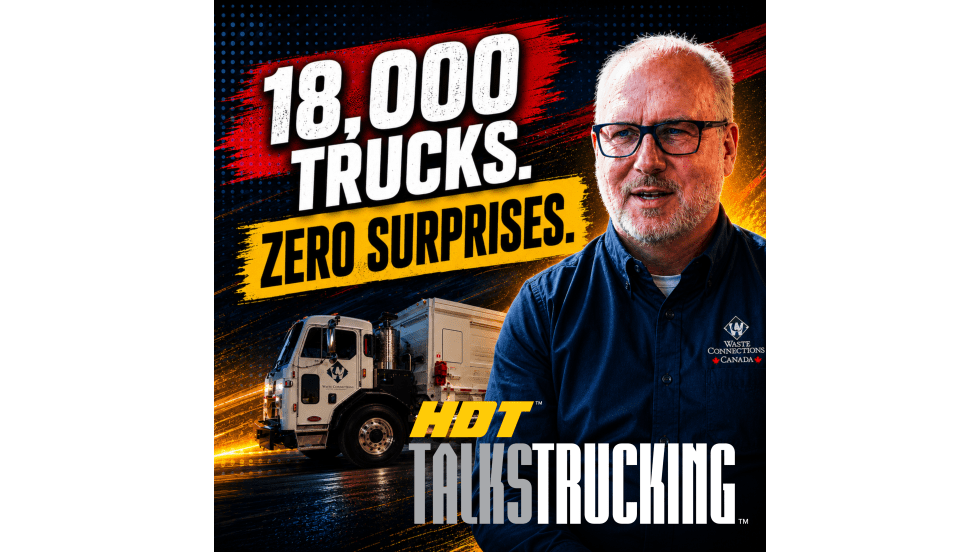
How Waste Connections is Using Data, Telematics, and AI
How do you manage and maintain more than 18,000 connected trucks? Data. Lots of it.
Read More →

Why Fleet Data Matters More Than Ever at Waste Connections [Watch]
Waste Connections' Chuck Palmer explains how telematics, predictive maintenance, safety analytics, and AI help keep vehicles on the road and drivers safe in this episode of HDT Talks Trucking.
Read More →
NMFTA Launches Free, Anonymous Cybersecurity Threat Report Portal
Organizations are encouraged to anonymously report freight fraud, cargo crime, and cyber threats while gaining visibility into incidents reported across the transportation sector.
Read More →
AI Can Optimize a Fleet. Can It Replace Human Judgment?
Fleets fear falling behind if they don’t adopt AI quickly enough. They also fear what happens if the technology makes the wrong decision.
Read More →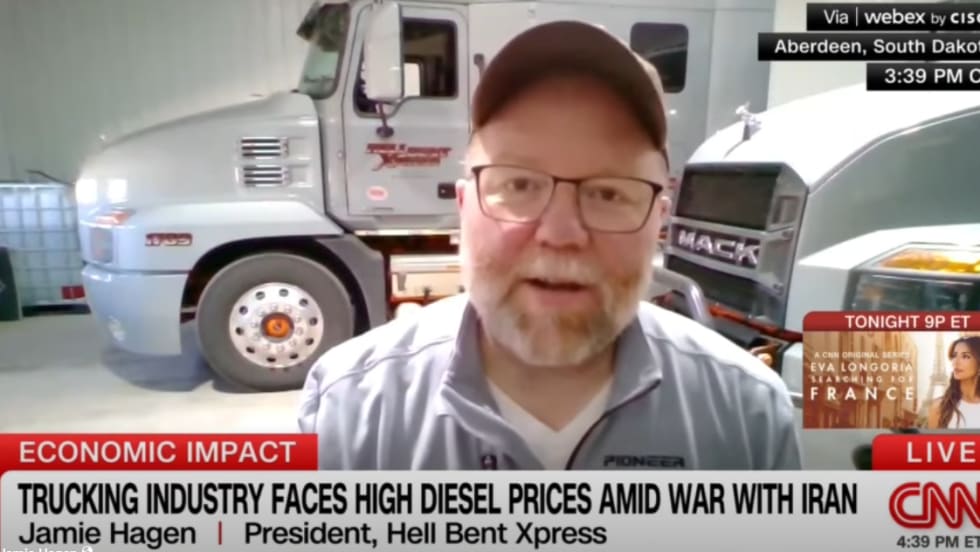
Jamie Hagen Gets Real About Running a Small Fleet in an Uncertain Economy
Small fleet owner Jamie Hagen says new legal risks, volatile fuel prices, and a changing freight market are forcing small carriers to rethink how they operate — and what they can afford.
Read More →
Jamie Hagen Gets Real About Freight, Fuel Prices, Safety, and Small-Fleet Survival
Running a small trucking fleet right now isn’t easy, especially right now. And Jamie Hagen doesn’t sugarcoat it.
Read More →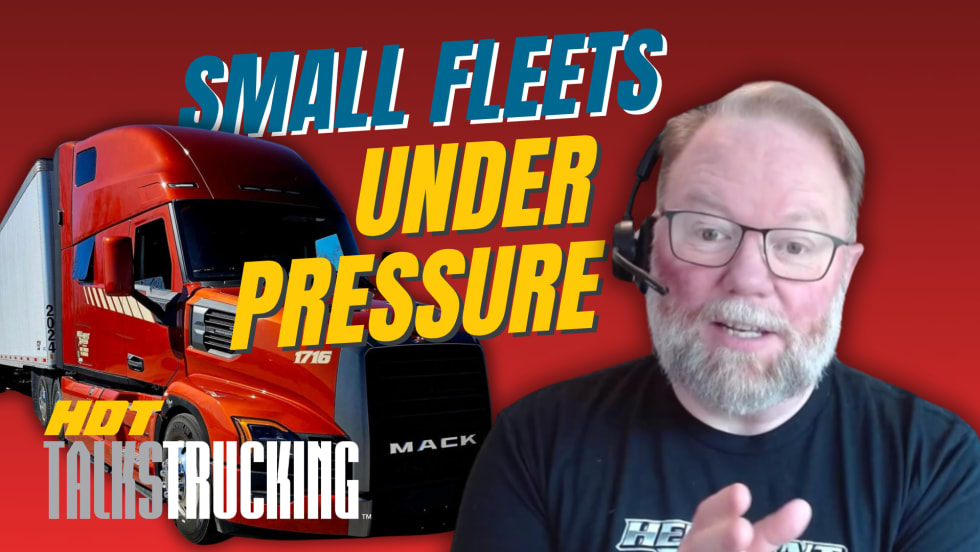
Jamie Hagen Gets Real About Freight, Fuel Prices, Safety, and Small-Fleet Survival
Running a small trucking fleet right now isn’t easy, especially right now. And Jamie Hagen doesn’t sugarcoat it.
Read More →
Data Lock‑In or Integration Lock‑Out?
Data fragmentation is costing dealerships, OEMs, fleets, and upfitters millions. Here’s why interoperability may be the fix the trucking industry needs.
Read More →