




NTSB Issues Safety Recommendations in Wake of 2011 Truck-Train Crash
The National Transportation Safety Board wants the FMCSA to make sweeping employment history changes in the wake of its investigation of a fatal 2011 truck-train crash in Nevada.
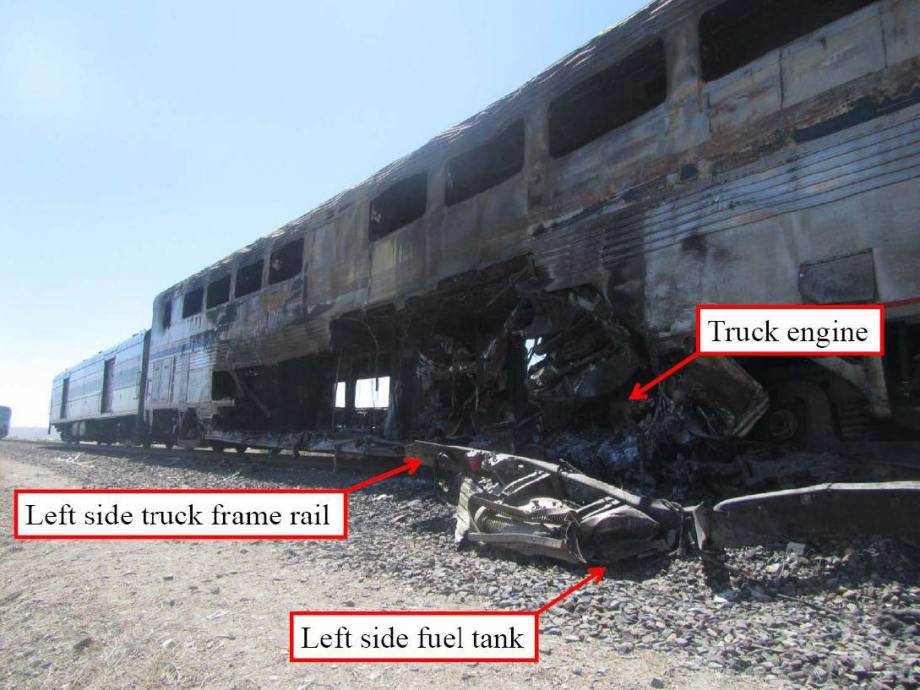
The National Transportation Safety Board has issued 19 safety recommendations to various U.S. Transportation Department agencies, as well as trucking groups and others, following its investigation of a truck striking a train in Nevada in June 2011.
Among them would be sweeping new changes, that if adopted, would require employers to check the employment history of new drivers for the last decade. However, reaction to from trucking has been skeptical.
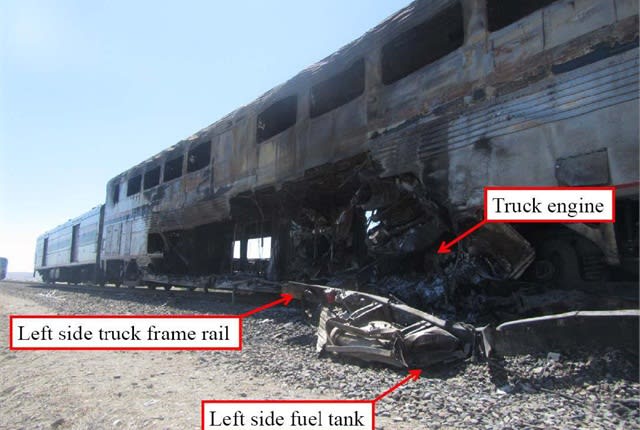
The recommendations are based on the agency’s investigation of a June 2011 crash in which a truck driver for John Davis Trucking hit an Amtrak train while traveling north on U.S. 95 at a crossing east of Reno, Nev. The crash killed six people, including the truck driver, and injured dozens of others.
NTSB investigators noted that the driver of the truck that collided with the Amtrak train had an “erratic” employment history including citations and crashes, leading to the NTSB's main recommendation on driver employment history.
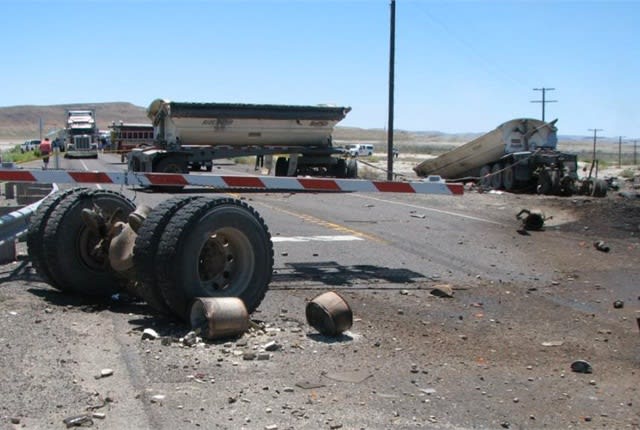
The board, which has powers to investigate and make recommendations but not to actually regulate, made four recommendations to the Federal Motor Carrier Safety Administration in a letter to FMCSA Administrator Anne Ferro. NTSB Chairwoman Deborah A.P. Hersman (who is reportedly being highly considered by the Obama administration to take over outgoing U.S. DOT secretary Ray LaHood’s job,) recommended the following:
Create a mechanism to gather and record commercial driving-related employment history information about all drivers who have a commercial driver’s license, and make this information available to all prospective motor carrier employers.
Using that mechanism to require motor carriers to conduct and document investigations into the employment records of prospective drivers for the 10 years that precede the application date.
Require motor carriers to retrieve records from the Commercial Driver’s License Information System and the National Driver Register for all driver applicants so that they can obtain a complete driving and license history of prospective drivers.
Inform commercial vehicle inspectors of (1) the importance of taking pushrod stroke measurements within the specified pressure range, (2) the relationship between pushrod stroke and specific air pressure, and (3) the consequence of taking measurements outside of this range
Hersman also had separate correspondence to several other DOT agency heads, as well as groups in trucking and law enforcement/safety.
A single recommendation was also made to the American Trucking Associations and the Owner Operator Independent Drivers Association:
Inform your members of the circumstances of this accident and encourage them to conduct proper maintenance on brake systems with automatic slack adjusters and to install onboard brake stroke monitoring systems on their commercial motor vehicles. (H-12-065)
So far there has been no official reaction from the American Trucking Associations. However, last year when NTSB made a similar call for 10-year records for new hire truck and bus drivers, in presenting its findings following a March 2011 bus crash in New York City that killed 15 people, ATA Vice President of Safety Policy Rod Abbott was quoted as saying he had doubts that adding seven years of checking truck driver backgrounds would affect hiring decisions.
OOIDA Executive Vice President Todd Spencer was quoted recently on the association’s website as being concerned about the recommendations, saying technology and regulations are no substitute for training and experience behind the wheel.
Among NTSB's other recommendations to the Commercial Vehicle Safety Alliance and the Nevada Highway Patrol was the need to inform commercial vehicle inspectors of (1) the importance of taking pushrod stroke measurements within the specified pressure range, (2) the relationship between pushrod stroke and specific air pressure, and (3) the consequence of taking measurements outside of this range.
To the carrier involved in the crash, John Davis Trucking, NTSB recommended the company revise its vehicle maintenance to follow recommended practices, particularly with regard to automatic slack adjusters and antilock braking systems.
NTSB also issued recommendations to National Highway Traffic Safety Administration that it develop minimum performance standards for onboard brake stroke monitoring systems for all air-braked commercial vehicles and require that all newly manufactured air-braked commercial vehicles be equipped with onboard brake stroke monitoring systems.
NTSB also recommended that the Federal Highway Administration work with the Federal Railroad Administration to develop a model grade crossing action plan that can be used as a resource document by all states and update its website on the annual reporting requirements for railway–highway crossings.
There were five recommendations to the Federal Railroad Administration regarding developing side-impact crashworthiness standards for passenger railcars and requiring passenger railcars to be designed to keep fire and smoke from spreading from car to car.
By Evan Lockridge, Senior Contributing Editor
More Fleet Management

Why Private Fleets Are Taking More Freight
Private fleets are putting their own trucks on demanding customers and high-cost lanes as companies seek greater control over service, costs, and capacity.
Read More →
Color Match Smarter: Tools That Restore & Perform
For fleet managers and collision repair professionals keeping heavy-duty trucks on the road, getting the color right the first time isn't just about appearance — it's about efficiency, turnaround time, and bottom-line results. Discover how today's digital color tools are transforming the repair process from guesswork to precision.
Read More →
FMCSA Pauses Biennial-Update Enforcement Amid Motus Transition
Carriers whose updates were due on or after June 1 have more time, while FMCSA works to stabilize its new registration system and warns of phishing sites impersonating its new carrier registration system, Motus.
Read More →


2026 Blueprint for Countering Smarter Supply Chain Theft
Cargo theft is no longer just the cost of doing business. It's a multi-billion-dollar criminal enterprise exploiting vulnerabilities across your fleet, drivers, and supply chain.
Read More →
How Telematics Improves Visibility, Control, and Performance in Refrigerated Fleets
Explore how telematics help refrigerated fleets improve visibility, uptime, efficiency, compliance, and cargo protection across connected cold chain operations.
Read More →
What the U.S.-Canada Trade War Means for Trucking
Escalating U.S.-Canada tariffs could disrupt cross-border freight, reduce truck volumes, raise costs, and create new uncertainty for carriers on both sides of the border.
Read More →
What Are Trucking’s Top Concerns for 2026?
The American Transportation Research Institute wants to know what's worrying trucking fleet managers, drivers, and other stakeholders in its annual Industry Issues survey.
Read More →
American Trucking Associations Looks for a New Leader
ATA President and CEO Chris Spear abruptly left his job at the association on August 21, at a pivotal time for the trucking industry.
Read More →
Public Wi-Fi Cybersecurity Risks: How Truck Drivers and Fleets Can Protect Their Data
Public Wi-Fi can expose truck drivers and fleets to credential theft, malware, and other cyber threats. Here’s how to reduce the risk on the road.
Read More →
For Nicky Cupp, Fleet Innovation Starts With Frustration
HDT Truck Fleet Innovator Nicky Cupp turns everyday pain points at Fraley & Schilling into opportunities for better technology and smarter processes.
Read More →