




Supreme Court to Hear Challenge of LA Ports' Clean Trucks Program
The U.S. Supreme Court will hear the American Trucking Associations' suit against the Port of Los Angeles' Clean Trucks Program, with a ruling expected by July
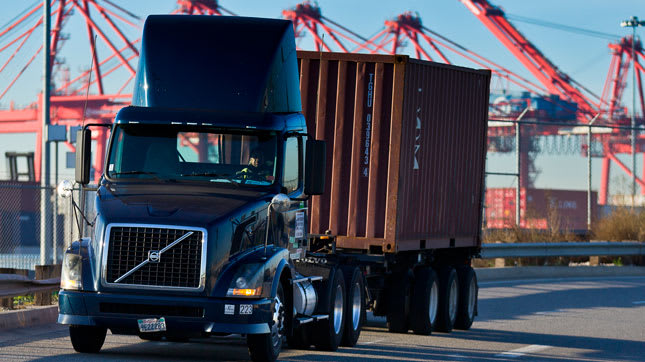
The U.S. Supreme Court will hear the American Trucking Associations' suit against the Port of Los Angeles' Clean Trucks Program, with a ruling expected by July.
The case has been making its way through the court system ever since the program went into effect more than four years ago. ATA challenged the program, arguing that federal law prohibits the locally run port from making rules that impede interstate commerce.
The Clean Truck Program, set up in 2008, established criteria for providers of drayage services at the Port, including a requirement to commit to using only employee drivers, rather than the independent contractors typically working the ports, by 2013 in a phased-in schedule. The plan would allow the port to hold those companies accountable for maintaining trucks and employing properly credentialed drivers.
The Port of Long Beach had a similar program that did not include the owner-operator ban. The ATA later settled its suit with Long Beach.
ATA released a statement saying it is pleased with the court's decision to hear the case.
"The Port's rules challenged by ATA, which range from a requirement that carriers display Port-mandated information on the sides of trucks entering and leaving the Port, to a requirement that trucks conform to the Port's off-street parking rules even when not on Port property, have nothing to do with improving air quality," ATA President and CEO Bill Graves said. "We are pleased the Supreme Court will review the erroneous decision of the appellate court."
Although U.S. District Judge Christina Snyder in Los Angeles originally granted ATA's request for a preliminary injunction against certain concessions in the plan, in 2010, she rejected the trucking industry's challenge. Last year, the U.S. 9th Circuit Court of Appeals affirmed her decision and upheld all the regulations -- except the rule restricting independent contractors.
"A container port like the Port of Los Angeles is akin to a publicly managed transportation infrastructure, like a highway or a bridge," U.S. Solicitor General Donald Verrilli Jr. told the justices in a brief filed in November, reports the LA Times. He said it could pose a problem at ports and other facilities across the nation if cities were free to impose restrictions on truckers who operate in publicly owned facilities.
The U.S. Chamber of Commerce also urged the court to hear the case, supporting the ATA's view.
Environmental groups, however, accuse the trucking industry of trying to weaken a program that delivers environmental and public health benefits.
"This continues to be a hard-fought battle against an industry clinging to its polluting practices," said Melissa Lin Perrella, senior attorney with NRDC. "The clean truck program at the Port of LA has dramatically reduced harmful air pollution from port trucking, but it won't stay that way unless trucking companies step up and shoulder the necessary costs of upkeep and care. The Ports clean truck program requires just that."
ATA begs to differ.
"Our objections to the Port's program have always been business-related, and not, as certain reactionary groups have asserted, out of a desire to cling to polluting ways," said Graves.
ATA notes that the Clean Trucks Program, "without these onerous restrictions, has improved air quality, a fact environmental groups have repeatedly conceded."
"Under the Clean Truck Program, industry and the Port have succeeded in working together to replace outdated equipment with new, efficient trucks," Graves said. "We are proud to have participated in a program that improved air quality.
"That success means there is no need to interfere with Congress' intention that the motor carrier industry be shaped by the forces of competition, under a uniform federal regulatory environment, and not by state and local governments that have their own ideas about how the industry should be structured."
Related Stories
7/20/2011 Judge Rules ATA-Long Beach Settlement Broke State Law
8/27/2010 Judge Upholds Controversial Port Plan to Ban Owner-Operators
7/29/2008 ATA Files Suit to Block Los Angeles and Long Beach Ports Concession Plans
5/19/2008 LA Port to Ban Owner-Operators
More Fleet Management

AUCTION OF EQUITY INTEREST IN HEAVY HAUL TRUCKING COMPANY!!
Mark your calendar: June 30, 2026 (10:00 a.m. PDT). MagnaTrans, LLC, a California limited liability company doing business as Magna Transportation Group is going to auction! Bid on a 37.5% ownership interest in this Rancho Cucamonga-based heavy haul and over-dimensional trucking company operating across California, Oregon, and Arizona. The equity interest will be sold to the highest bidder or bidders under Article 9 of the Uniform Commercial Code at 10:00 a.m. PDT.
Read More →
Volvo Trucks Adds Unattended Over-the-Air Software Update Capabilities
The latest evolution of Volvo’s over-the-air update technology allows software updates to run while trucks are parked, helping fleets keep vehicles current without disrupting operations.
Read More →
How Waste Connections is Using Data, Telematics, and AI
How do you manage and maintain more than 18,000 connected trucks? Data. Lots of it.
Read More →

Why Fleet Data Matters More Than Ever at Waste Connections [Watch]
Waste Connections' Chuck Palmer explains how telematics, predictive maintenance, safety analytics, and AI help keep vehicles on the road and drivers safe in this episode of HDT Talks Trucking.
Read More →
NMFTA Launches Free, Anonymous Cybersecurity Threat Report Portal
Organizations are encouraged to anonymously report freight fraud, cargo crime, and cyber threats while gaining visibility into incidents reported across the transportation sector.
Read More →
AI Can Optimize a Fleet. Can It Replace Human Judgment?
Fleets fear falling behind if they don’t adopt AI quickly enough. They also fear what happens if the technology makes the wrong decision.
Read More →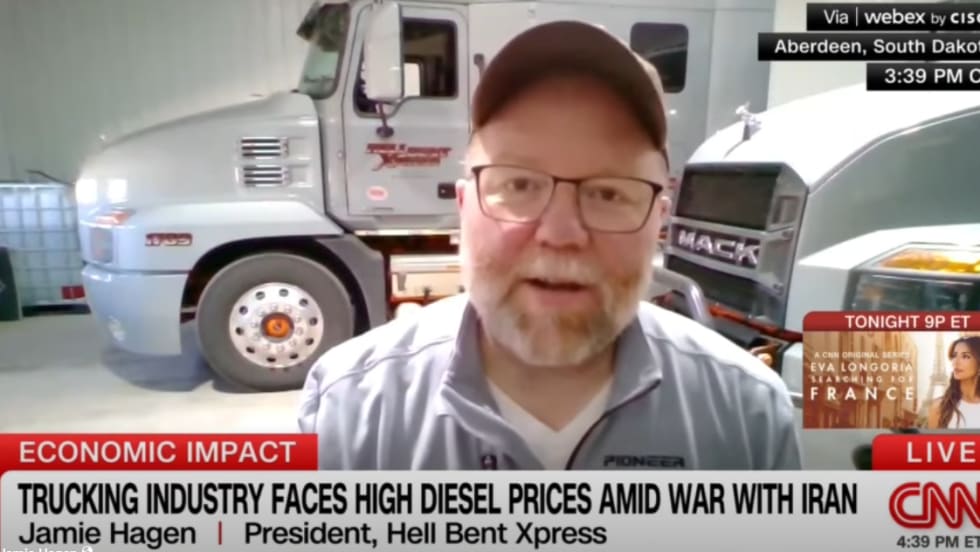
Jamie Hagen Gets Real About Running a Small Fleet in an Uncertain Economy
Small fleet owner Jamie Hagen says new legal risks, volatile fuel prices, and a changing freight market are forcing small carriers to rethink how they operate — and what they can afford.
Read More →
Jamie Hagen Gets Real About Freight, Fuel Prices, Safety, and Small-Fleet Survival
Running a small trucking fleet right now isn’t easy, especially right now. And Jamie Hagen doesn’t sugarcoat it.
Read More →
Jamie Hagen Gets Real About Freight, Fuel Prices, Safety, and Small-Fleet Survival
Running a small trucking fleet right now isn’t easy, especially right now. And Jamie Hagen doesn’t sugarcoat it.
Read More →
Data Lock‑In or Integration Lock‑Out?
Data fragmentation is costing dealerships, OEMs, fleets, and upfitters millions. Here’s why interoperability may be the fix the trucking industry needs.
Read More →