




Economy is in Expansion, but New Normal Dampens Enthusiasm
LAS VEGAS -- Although business investment has slowed due to uncertainty over fiscal negotiations in Washington, the economy is not in any imminent danger of sliding into a recession, said economist Bob Dieli during Heavy Duty Aftermarket Dialogue Monday the day before Heavy Duty Aftermarket Week
LAS VEGAS -- Although business investment has slowed due to uncertainty over fiscal negotiations in Washington, the economy is not in any imminent danger of sliding into a recession, said economist Bob Dieli during Heavy Duty Aftermarket Dialogue Monday the day before Heavy Duty Aftermarket Week.
He noted that the business cycle goes through expansion, boom, peak, recession, trough, recovery, and then expansion again. We actually are in the early stages of expansion, said Dieli, president and founder of RDLB Inc, an economic research and management consulting firm baed in Lombard, Ill.
"Recovery is the most difficult phase of the cycle," Dieli told a crowd at the Fator Theater at the Mirage. "You have positive news and negative news, which leads some people to believe there is no such thing as a recovery."
The National Bureau of Economic Research is the arbiter of recessions, and it says we are not in one, Dieli said and if you look at their website, they hint that they don't think we are going to be in one.
"The word recession today is like ringing the doorbell in a house with a dog," Dieli said. "Every time someone says recession, you get distracted. The likelihood of a recession in the near term is quite low."
"In the absence of an imminent recession, the best assumption to make it that we will continue to make forward progress." Sustained downturns, he said, "only occur with the active cooperation of the Federal Reserve. And they are not acting like they want to start a recession. Just the reverse."
Dieli pointed to two key economic indicators that are a good indicator of the business cycle: Total nonfarm payroll employment, and truck transportation payroll employment.
Looking at nonfarm employment, Diesi noted, "We lost almost 9 million jobs over the course of the recession, which put us back to the same level of employment we had in July of 1999. We're not recovering from just one recession; we're getting to do over everything we did following the 2001 recession. That's another reason this new normal feels so different."
We have been adding jobs since the end of the recession, he noted; we now have made it back to July of 2005.
Truck transportation employment drops fairly significantly during recessions, Dieli explained. Between January 2007 and March 2010, trucking lost 218,000 jobs, a decline of 15%. That's more than double total employment numbers, which dropped by 6%.
MacKay & Co. has another indicator it calls Truckable Economic Activity. Right now it's running at close to 5% year over year, which is consistent with a recession recovery.
One of the most important factors that will affect the growth of TEA and the general economy this year, Dieli said, is investment. "It's at 90% of where it was at the cycle peak and where we think the fiscal cliff is having the most impact," he says. "Investment plans have been put on hold as we wait for the government to make up its mind. We're not sure they ever will, and we're not sure if we will be pleased when they do."
So why doesn't it feel like we're out of the recovery?
The U.S. economy simply does not grow a fast as it once did, Dieli said. From the mid '50s to the '80s, the nominal gross domestic product grew at an average rate of 7.9%.
"In the early '80s, two things happened," Dieli explained. "The Federal Reserve became much less tolerant of inflation. But the more important changes came with deregulation of trucking, of the railroads, of the airlines, of the energy sector, of the telecommunications sector. And this began to change the way the economy worked at a very fundamental level."
In addition, he said, the housing market crash was unlike anything in previous recessions. And stubborn long-term unemployment, expected to maybe be down to 6% by the end of 2015, is another factor.
The stock market, Dieli said, is the absolute worst way to try to predict what the economy will do. "The stock market has correctly predicted 14 of the last nine recessions," he quipped.
Heavy Duty Aftermarket Dialogue was put on by the Heavy Duty Manufacturers Association and MacKay & Co.
More Fleet Management
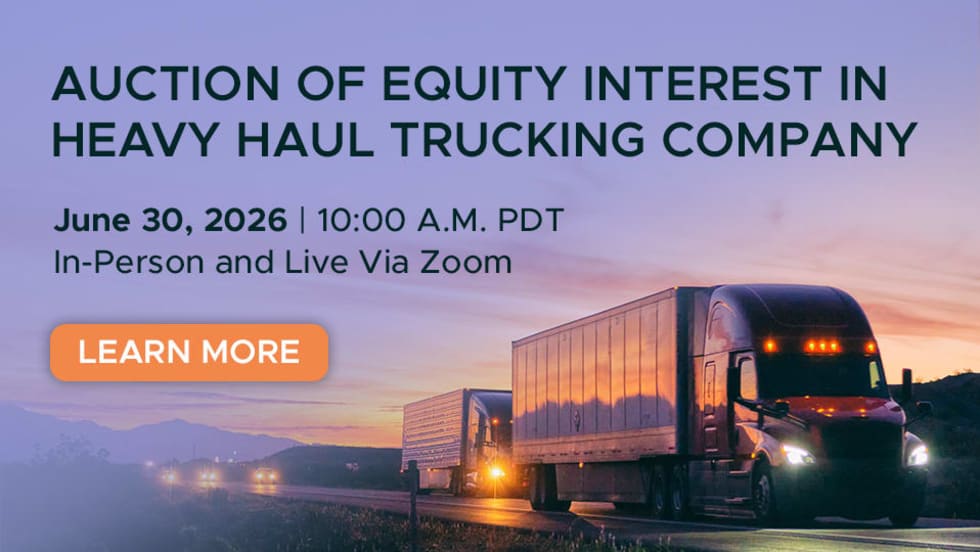
AUCTION OF EQUITY INTEREST IN HEAVY HAUL TRUCKING COMPANY!!
Mark your calendar: June 30, 2026 (10:00 a.m. PDT). MagnaTrans, LLC, a California limited liability company doing business as Magna Transportation Group is going to auction! Bid on a 37.5% ownership interest in this Rancho Cucamonga-based heavy haul and over-dimensional trucking company operating across California, Oregon, and Arizona. The equity interest will be sold to the highest bidder or bidders under Article 9 of the Uniform Commercial Code at 10:00 a.m. PDT.
Read More →
Volvo Trucks Adds Unattended Over-the-Air Software Update Capabilities
The latest evolution of Volvo’s over-the-air update technology allows software updates to run while trucks are parked, helping fleets keep vehicles current without disrupting operations.
Read More →
How Waste Connections is Using Data, Telematics, and AI
How do you manage and maintain more than 18,000 connected trucks? Data. Lots of it.
Read More →
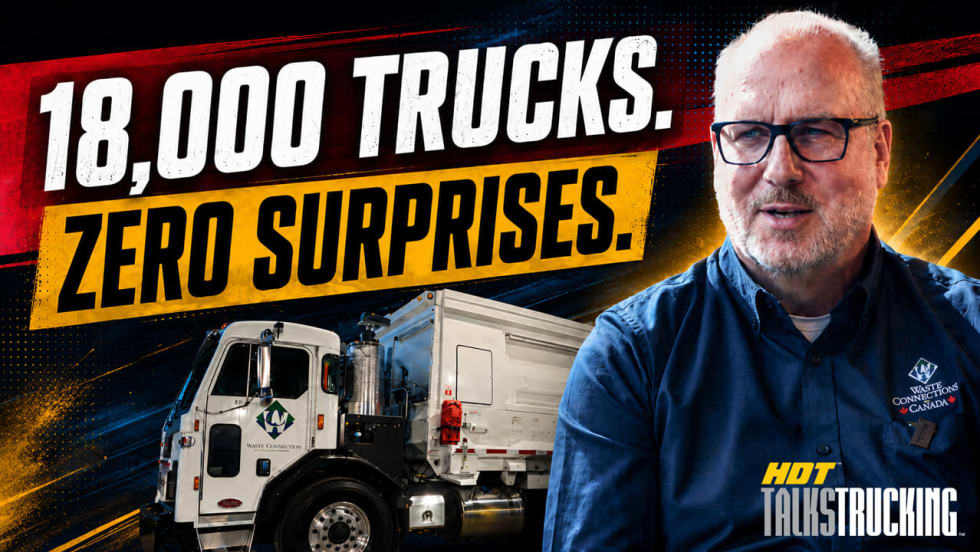
Why Fleet Data Matters More Than Ever at Waste Connections [Watch]
Waste Connections' Chuck Palmer explains how telematics, predictive maintenance, safety analytics, and AI help keep vehicles on the road and drivers safe in this episode of HDT Talks Trucking.
Read More →
NMFTA Launches Free, Anonymous Cybersecurity Threat Report Portal
Organizations are encouraged to anonymously report freight fraud, cargo crime, and cyber threats while gaining visibility into incidents reported across the transportation sector.
Read More →
AI Can Optimize a Fleet. Can It Replace Human Judgment?
Fleets fear falling behind if they don’t adopt AI quickly enough. They also fear what happens if the technology makes the wrong decision.
Read More →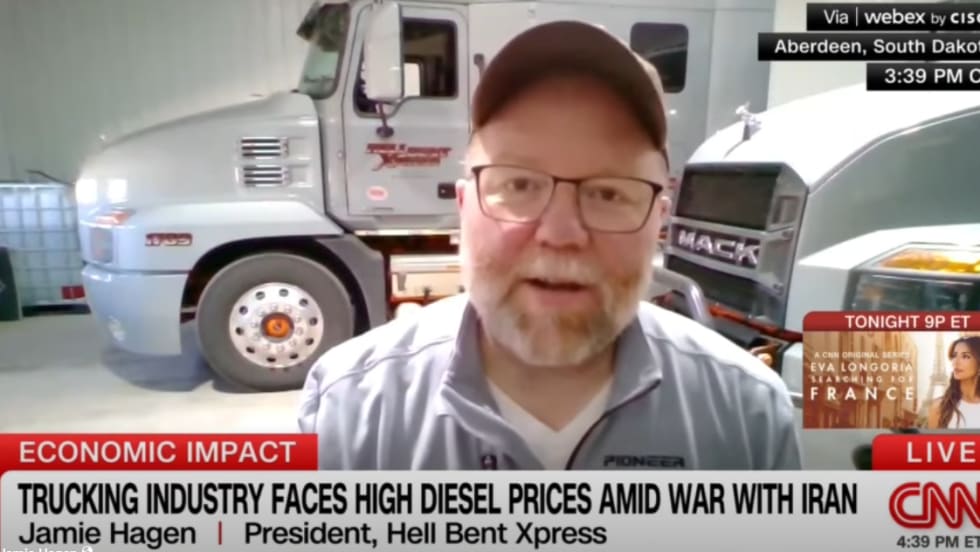
Jamie Hagen Gets Real About Running a Small Fleet in an Uncertain Economy
Small fleet owner Jamie Hagen says new legal risks, volatile fuel prices, and a changing freight market are forcing small carriers to rethink how they operate — and what they can afford.
Read More →
Jamie Hagen Gets Real About Freight, Fuel Prices, Safety, and Small-Fleet Survival
Running a small trucking fleet right now isn’t easy, especially right now. And Jamie Hagen doesn’t sugarcoat it.
Read More →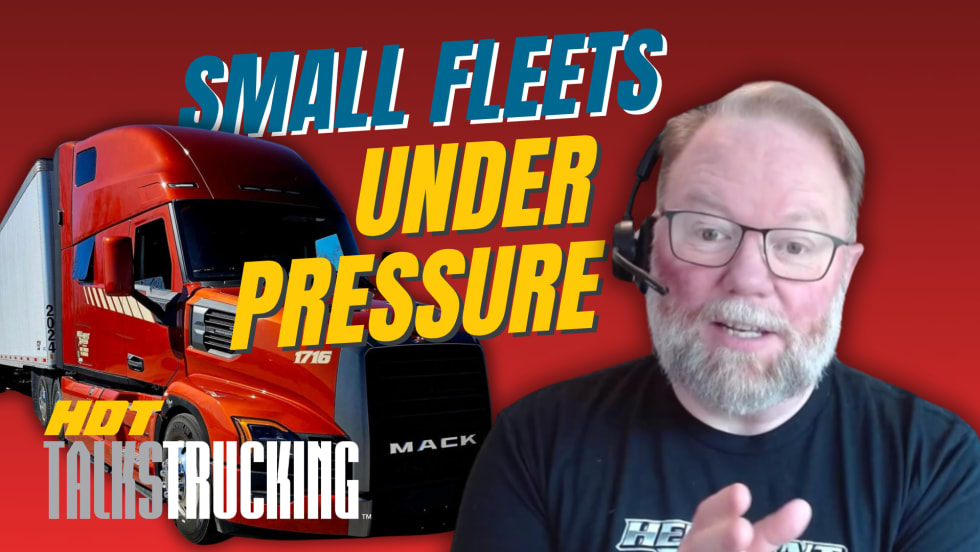
Jamie Hagen Gets Real About Freight, Fuel Prices, Safety, and Small-Fleet Survival
Running a small trucking fleet right now isn’t easy, especially right now. And Jamie Hagen doesn’t sugarcoat it.
Read More →
Data Lock‑In or Integration Lock‑Out?
Data fragmentation is costing dealerships, OEMs, fleets, and upfitters millions. Here’s why interoperability may be the fix the trucking industry needs.
Read More →