




NTSB Recommends 10-Year Driving Record, Use of Safety Technology Following Bus Crash
The National Transportation Safety Board called for states to provide a 10-year driving history on prospective employees of motor carriers, along with onboard safety monitoring and speed limiting systems in commercial vehicles, as part of its report on a 2011 bus crash in New York, N.Y
The National Transportation Safety Board called for states to provide a 10-year driving history on prospective employees of motor carriers, along with onboard safety monitoring and speed limiting systems in commercial vehicles, as part of its report on a 2011 bus crash in New York, N.Y.
Fifteen passengers were killed and 17 injured on March 12, 2011, when a motorcoach traveling southbound on Interstate 95 left the roadway, struck a guardrail and turned over onto its side, followed by a collision with an overhead vertical highway signpost that ripped the roof from the bus.
"This crash, one of three fatal U.S. bus crashes in rapid succession last year, is one of the deadliest bus accidents the NTSB has ever investigated," said NTSB Chairman Deborah A. P. Hersman.
The board concluded that the driver was impaired by fatigue due to sleep deprivation, poor sleep quality, and circadian factors. His lack evasive braking or corrective steering as the bus drifted off the roadway was consistent with fatigue-induced performance impairment.
An examination of the driver's work schedule, sleep times and cell phone use, revealed that his opportunity for sleep in the 72 hours prior to the crash would have been limited to short periods of three hours or less resulting in what the NTSB described as "acute sleep loss and cumulative sleep debt."
By providing a 10-year driving history on prospective employees, the board said, states could better assist motor carriers in identifying problem commercial drivers and reduce the number of commercial motor vehicle accidents and fatalities.
Current federal regulations requiring a motor carrier to inquire into an applicant's driving history for the most recent three years "are insufficient to make an informed hiring decision and result in the motor carrier not having access to sufficient safety-related information prior to hiring drivers," the board said.
The NTSB also pointed to several technologies that could have prevented or lessened the crash:
* Had the motorcoach been equipped with in-vehicle technologies such as a lane departure warning system or drowsy driver warning system, the agency says, the driver would have been alerted and had the opportunity to stop driving before the accident occurred.
* If the company, World Wide Travel, used an onboard safety monitoring system to track the driver's performance, company management would have had the opportunity to detect his unsafe behavior and use that information to remediate the behavior or remove him from his position.
• The use of in-vehicle technologies to prevent drivers from exceeding the speed limit would be beneficial in reducing both the instances and severity of accidents involving heavy vehicles. The NTSB determined that the motorcoach, which had reached speeds as high as 78 mph in the 60 seconds prior to the crash, was traveling at least 64 mph in the 50 mph speed zone for at least 10 seconds before it struck the guardrail. Investigators said if the motorcoach been traveling at the speed limit, it might not have overturned.
The motorcoach operator was cited as contributing to the accident because of its lax safety oversight of the driver, which stemmed from what the NTSB called "a corporate culture that fostered indifference to passenger safety." Shortly after the crash, World Wide Travel was placed out of service by the Federal Motor Carrier Safety Administration. Most of the officials, supervisory personnel and dispatchers continued to work for its sister company, Great Escapes, which is currently operating.
The NTSB does not have any rulemaking power on its own. It investigates accidents and makes recommendations to appropriate government agencies on ways to prevent similar crashes in the future.
As a result of its 15-month-long investigation, the NTSB made a total of 16 safety recommendations to the Federal Carrier Motor Carrier Safety Administration, the National Highway Traffic Safety Administration, the Federal Highway Administration, the American Association of State Highway Transportation Officials, and motorcoach associations.
To read the NTSB's summary report, click here.
More Safety & Compliance

How Waste Connections is Using Data, Telematics, and AI
How do you manage and maintain more than 18,000 connected trucks? Data. Lots of it.
Read More →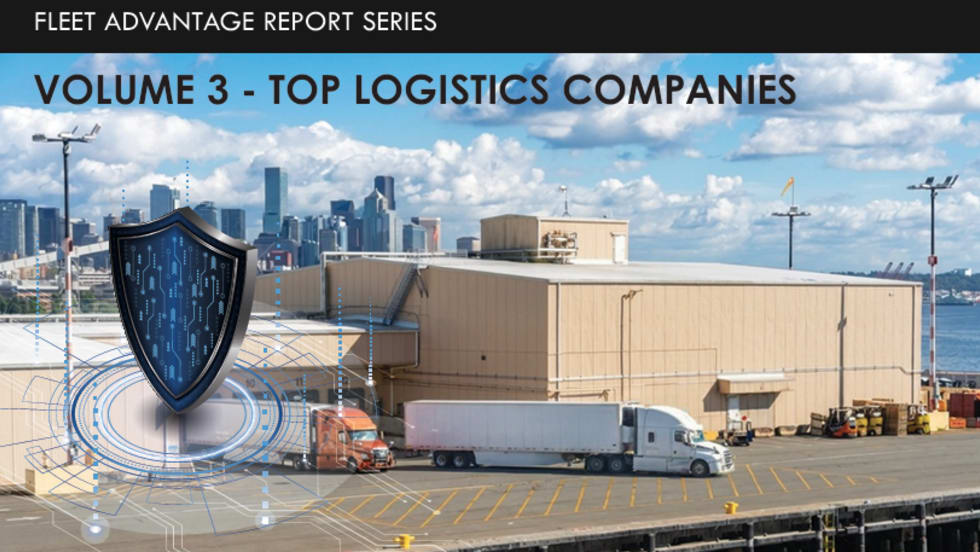
Fleet Advantage: Top Logistics Fleets Outperform National Safety Benchmarks
Fleet Advantage's latest TRUST Safety Index found leading logistics fleets maintained significantly lower out-of-service rates and stronger safety scores than national averages, while highlighting persistent challenges related to tires, brakes, and unsafe driving behaviors.
Read More →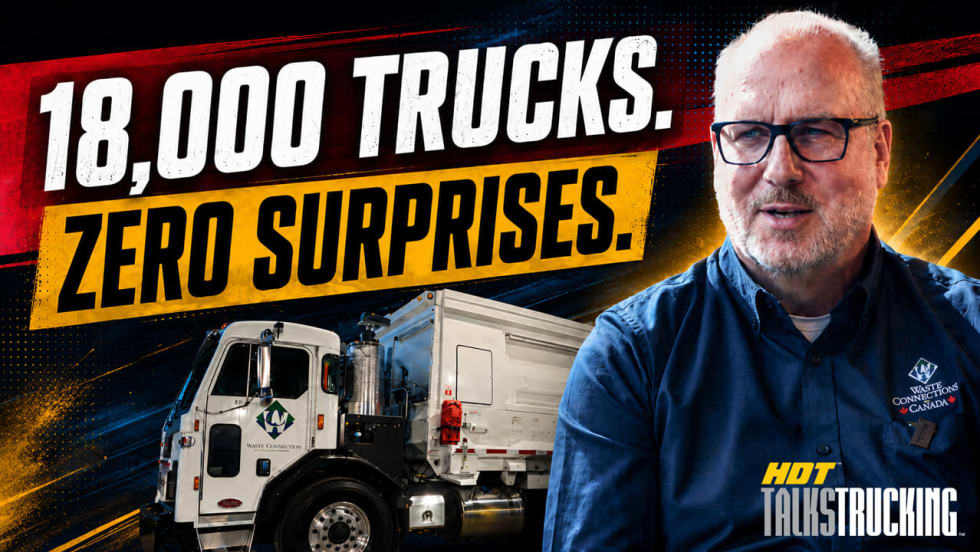
Why Fleet Data Matters More Than Ever at Waste Connections [Watch]
Waste Connections' Chuck Palmer explains how telematics, predictive maintenance, safety analytics, and AI help keep vehicles on the road and drivers safe in this episode of HDT Talks Trucking.
Read More →
Short Takes: How K&B is Using AI
Fleets need to "get on board the train" with AI, says Lance Evans of K&B Transportation in this HDT Talks Trucking Short Takes episode.
Read More →
Short Takes: Inside K&B’s Truck Safety Tech
Listen to learn how K&B Transportation uses cellphone-blocking technology, speed management systems, weather geofencing, bridge avoidance tools, and more to improve driver safety.
Read More →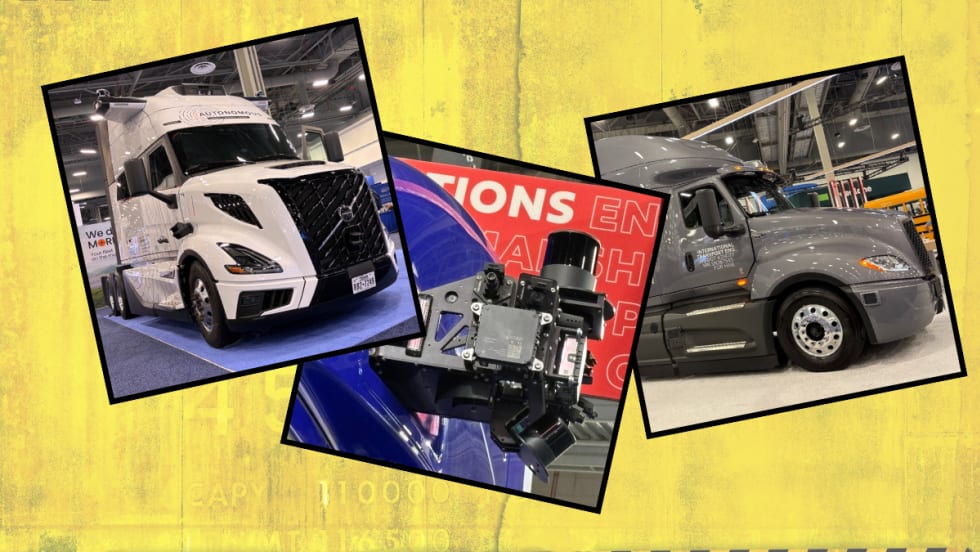
The Biggest Gap in Driverless Trucking Isn’t Tech. It’s Safety Validation
Nauto’s Stefan Heck says autonomous trucks are advancing quickly but proving they’re safe enough for large-scale deployment may be the industry’s hardest challenge.
Read More →
Truck Crash Rates Are Down. So Why Do Insurance Costs Keep Rising?
ATRI’s latest research points to litigation, social inflation, and soaring claims costs as key drivers behind record-high liability premiums for trucking fleets. But there are things motor carriers can do.
Read More →
FMCSA Removes More Than a Dozen ELDs from Registered List
The FMCSA continues its efforts to fight electronic logging devices that don't meet federal requirements, removing more than a dozen from the registered ELD list in May.
Read More →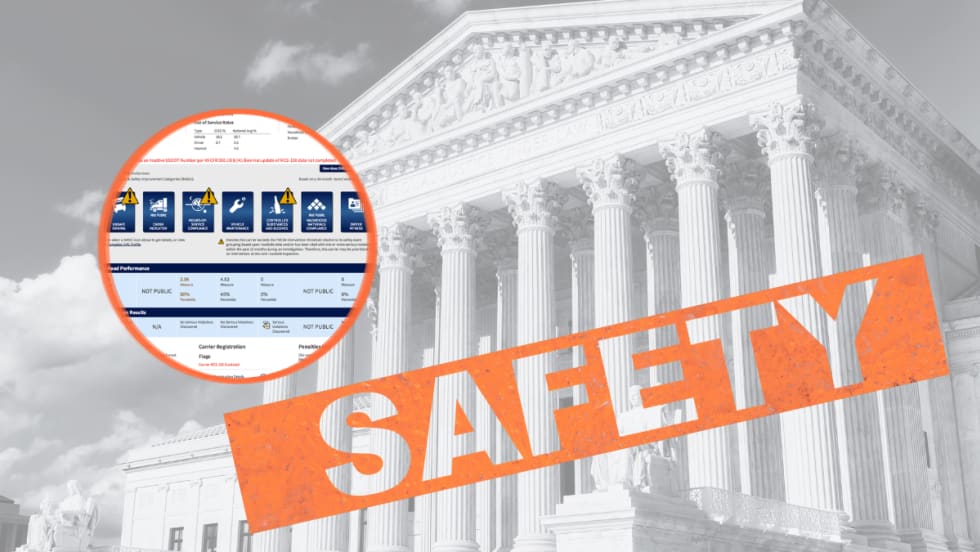
How the Supreme Court Broker Liability Ruling Could Reshape Trucking’s Safety Landscape
The Supreme Court’s May 11 broker-liability ruling may not radically rewrite transportation law overnight. But industry experts say it will intensify pressure on brokers, carriers, and shippers to prove they are prioritizing safety.
Read More →
Recall of Fontaine Fusion Flatbeds Warns Owners Not to Use the Trailers
Some Fontaine Fusion flatbed trailer manufactured between February 2025, and March 2026 could have mainbeams weakened by hydrogen embrittlement because of a problem in the galvanizing process.
Read More →