




NHTSA Unveils Proposed Stability Control Mandate
The National Highway Traffic Safety Administration today proposed a first-ever federal motor vehicle safety standard to require electronic stability control (ESC) systems on large commercial trucks and buses
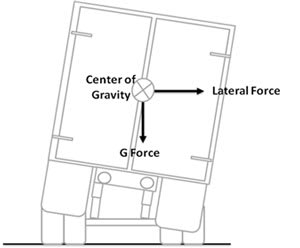
The National Highway Traffic Safety Administration today proposed a first-ever federal motor vehicle safety standard to require electronic stability control (ESC) systems on large commercial trucks and buses.
The rule would affect vehicles with a gross vehicle weight rating of more than 26,000 pounds. As proposed, the rule would take effect between two and four years after the standard is finalized, depending on the type of vehicle. The proposal also includes standards for performance testing of the technology.
Agency research shows the technology could prevent up to 56% of rollover crashes each year and another 14% of loss-of-control crashes.
An extensive NHTSA research program to determine how available stability control technologies affect crashes involving commercial vehicles found ESC systems to be the most effective tool for reducing the propensity for heavy vehicles to rollover or lose control.
NHTSA estimates that a standard requiring ESC on the nation's large trucks and large buses would prevent up to 2,329 crashes, eliminate an estimated 649 to 858 injuries, and prevent between 49 and 60 fatalities a year.
"We've already seen how effective stability control can be at reducing rollovers in passenger vehicles-the ability for this type of technology to save lives is one reason it is required on cars and light-duty trucks beginning with model year 2012," said NHTSA Administrator David Strickland. "Now, we're expanding our efforts to require stability enhancing technology on the many large trucks, motorcoaches, and other large buses on our roadways."
RSC vs. ESC
Today's proposal answers the big question that industry observers have wondered about the proposal: Would the agency proposal call for ESC, or the less-expensive roll stability control (RSC)?
Both systems perform a similar function: if sensors detect the risk of rollover or instability, the control module slows the vehicle by cutting back the throttle and applying the brakes automatically.
The difference is that RSC is triggered only when the system detects roll instability, which might occur when a truck is going too fast into a turn or maneuvers too quickly. ESC reacts to both roll instability and yaw instability, such as a skid that could lead to a jackknife. In addition to slowing the vehicle to prevent a rollover, it applies the brakes on the wheel that needs to be slowed to counteract the skid.
Studies have demonstrated that both systems are effective, but not equally so. In 2009 the University of Michigan Transportation Institute concluded that if all 5-axle tractor-trailers had RSC, there would be 3,489 fewer crashes and 106 fewer deaths each year. If all of these trucks had ESC, there would be 4,659 fewer crashes and 126 fewer deaths.
The other difference is cost. ESC is more expensive. Costs range from $800 to $1,600 for RSC, while ESC might go for $1,800 to $2,300. But discounts are common and prices should go down due to economies of scale after the mandate takes effect.
Already in Use
Many carriers already have adopted stability control systems. Major suppliers Bendix Commercial Vehicle Systems and Meritor Wabco Vehicle Control Systems estimate that as many as 25% of new trucks have these controls. It's especially common in the tank truck industry. The Owner-Operator Independent Drivers Association will likely oppose it because of the cost burden.
While many truck tractors and large buses can currently be ordered with this technology, the proposed standard would require ESC systems as standard equipment on these types of vehicles.
The agency's Notice of Proposed Rulemaking is being published in the Federal Register and members of the public will have the opportunity to comment on the proposal for 90 days. NHTSA will also hold a public hearing on the proposed safety standard to solicit further public comment. The date and location of that hearing will be published in the coming weeks.
You can download the complete proposal here.
More Safety & Compliance
How Waste Connections is Using Data, Telematics, and AI
How do you manage and maintain more than 18,000 connected trucks? Data. Lots of it.
Read More →
Fleet Advantage: Top Logistics Fleets Outperform National Safety Benchmarks
Fleet Advantage's latest TRUST Safety Index found leading logistics fleets maintained significantly lower out-of-service rates and stronger safety scores than national averages, while highlighting persistent challenges related to tires, brakes, and unsafe driving behaviors.
Read More →
Why Fleet Data Matters More Than Ever at Waste Connections [Watch]
Waste Connections' Chuck Palmer explains how telematics, predictive maintenance, safety analytics, and AI help keep vehicles on the road and drivers safe in this episode of HDT Talks Trucking.
Read More →
Short Takes: How K&B is Using AI
Fleets need to "get on board the train" with AI, says Lance Evans of K&B Transportation in this HDT Talks Trucking Short Takes episode.
Read More →
Short Takes: Inside K&B’s Truck Safety Tech
Listen to learn how K&B Transportation uses cellphone-blocking technology, speed management systems, weather geofencing, bridge avoidance tools, and more to improve driver safety.
Read More →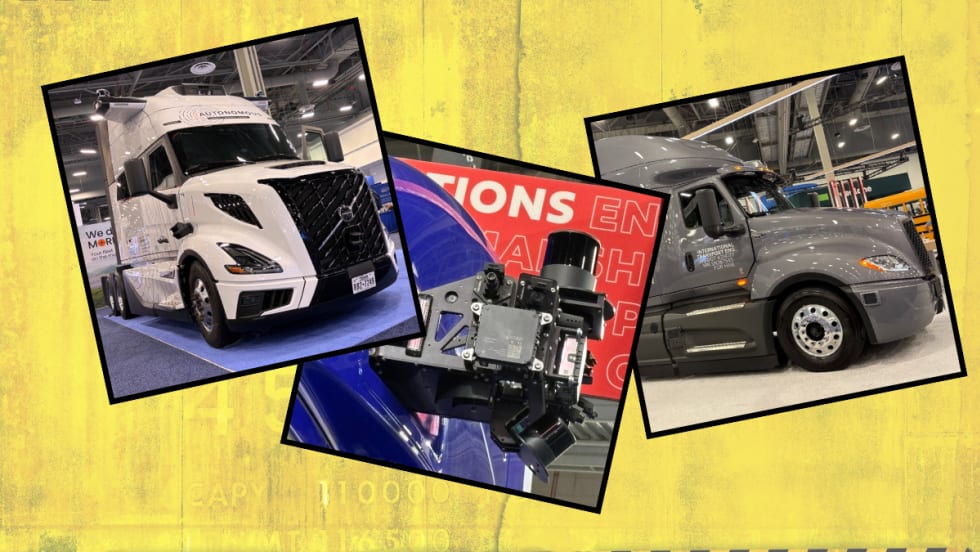
The Biggest Gap in Driverless Trucking Isn’t Tech. It’s Safety Validation
Nauto’s Stefan Heck says autonomous trucks are advancing quickly but proving they’re safe enough for large-scale deployment may be the industry’s hardest challenge.
Read More →
Truck Crash Rates Are Down. So Why Do Insurance Costs Keep Rising?
ATRI’s latest research points to litigation, social inflation, and soaring claims costs as key drivers behind record-high liability premiums for trucking fleets. But there are things motor carriers can do.
Read More →
FMCSA Removes More Than a Dozen ELDs from Registered List
The FMCSA continues its efforts to fight electronic logging devices that don't meet federal requirements, removing more than a dozen from the registered ELD list in May.
Read More →
How the Supreme Court Broker Liability Ruling Could Reshape Trucking’s Safety Landscape
The Supreme Court’s May 11 broker-liability ruling may not radically rewrite transportation law overnight. But industry experts say it will intensify pressure on brokers, carriers, and shippers to prove they are prioritizing safety.
Read More →
Recall of Fontaine Fusion Flatbeds Warns Owners Not to Use the Trailers
Some Fontaine Fusion flatbed trailer manufactured between February 2025, and March 2026 could have mainbeams weakened by hydrogen embrittlement because of a problem in the galvanizing process.
Read More →