




Research Could Lead to Fewer Accident-Prone Intersections
The difference between an intersection controlled by flashing lights and one controlled by a stop sign can play a big role in accident prevention, according to a new study by researchers at The University of Texas at Austin
The difference between an intersection controlled by flashing lights and one controlled by a stop sign can play a big role in accident prevention, according to a new study by researchers at The University of Texas at Austin.
The presence of flashing lights increases the probability of an accident by more than threefold, and intersections on frontage roads are among the most crash-prone for motorists.
The study, led by Cockrell School of Engineering Professor Chandra Bhat and his graduate students, Marisol Castro and Rajesh Paleti, examines which types of intersections are most dangerous for drivers, and its findings could lead to improved guidelines on how to design and construct safer intersections.
Bhat's study, which will be presented at the annual National Transportation Research Board Meeting in Washington, D.C., Jan. 22-26, used crash data collected by the Texas Department of Transportation.
One fatality occurs on U.S. roadways every 16 minutes, and the frequency of crashes typically increases over the holiday season. December and January are the months with the highest rates (per vehicle mile traveled) of traffic crashes, Bhat said.
"Intersection and intersection-related crashes account for roughly 40 percent of all crashes," said Bhat, a leading authority on transportation engineering and a professor in the school's Department of Civil, Architectural and Environmental Engineering. "Understanding their causes should be a priority for transportation and safety professionals, so that we can develop countermeasures to reduce the high incidence of crashes and resulting deaths and injuries at intersections."
Bhat said drivers may be confused about how to respond to flashing lights, or the results could be linked to the fact that flashing lights are typically installed at intersections that can be dangerous to begin with, such as on roads with high speeds or at intersection approaches with a poor line of sight.
Until now intersection crashes have been typically viewed by researchers as isolated events unrelated related to the surrounding roadway system. Bhat's study is the first of its kind to comprehensively connect the cause-and-effect relationship among the crashes at different intersections.
A positive finding of his research -- and an outcome of studying the interconnectivity of intersection crashes -- is that making improvements at one intersection can have a ripple effect on reducing crashes at neighboring intersections.
"Improving just one intersection could have broader region-wide benefits," Bhat said. "If you don't account for this dependence, which is what almost all earlier studies have done, you underestimate the value of roadway and traffic control improvements."
Bhat's study also introduces a unique way to capture the effect of the traffic volume splits on major and minor roadways at intersections. The study found that when the amount of traffic on a minor roadway is close to the amount of traffic on an intersecting major roadway, the chances of a crash are significantly increased. If the traffic volume is disproportionate, however, (with the smaller roadway having far less traffic than a heavily traveled, major road) crash risks are reduced.
Intersections along frontage roads also pose the greatest risks for crashes, attributable to drivers not slowing enough upon exiting a freeway or because drivers may need to switch lanes quickly as they approach the intersection.
Signal controlled intersections pose the lowest risk for crashes because of reduced traffic conflicts, but it is more difficult to prevent a crash at these intersections as one starts to develop.
"Drivers have less of an out," Bhat said. "Say you have two left-turning lanes and to avoid a crash you have to veer out of your lane. For drivers in this scenario, they face hitting the vehicle next to them or swerving into lanes already occupied by other traffic."
According to the study, almost 8 percent of intersections do not have any traffic control or only minimal forms, such as turn marks and marked lanes. Such intersections are common in residential areas, where Bhat said crash risks could be underestimated and need further study.
More Drivers
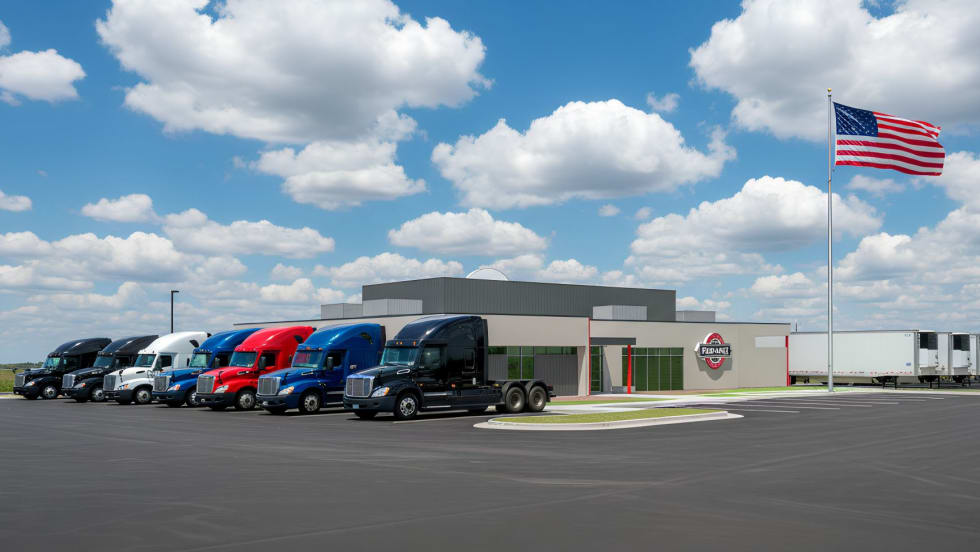
Prime Inc. to Open $7.9M Flagship Used-Truck Dealership
A new driver-focused facility to sell Prime Inc's used trucks and trailers will be the first purpose-built location in the company's history.
Read More →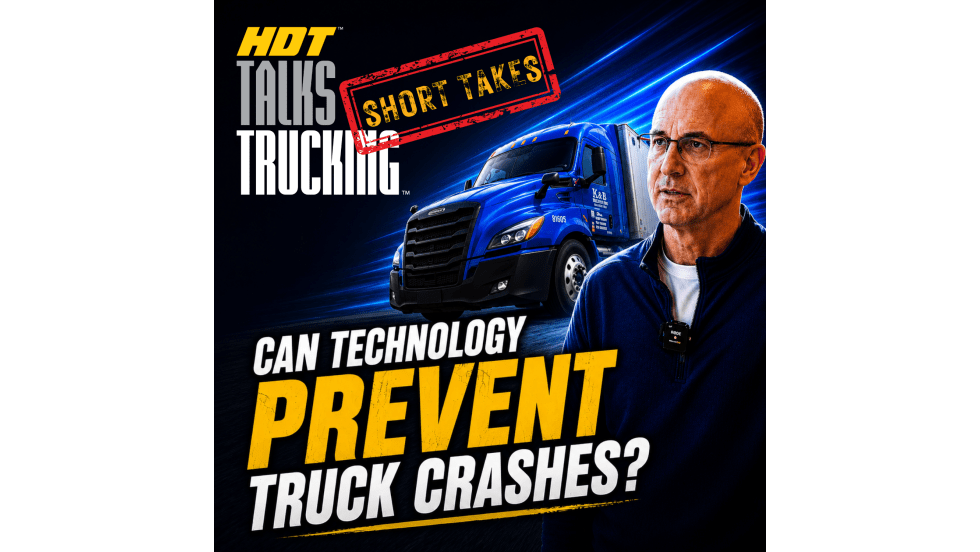
Short Takes: Inside K&B’s Truck Safety Tech
Listen to learn how K&B Transportation uses cellphone-blocking technology, speed management systems, weather geofencing, bridge avoidance tools, and more to improve driver safety.
Read More →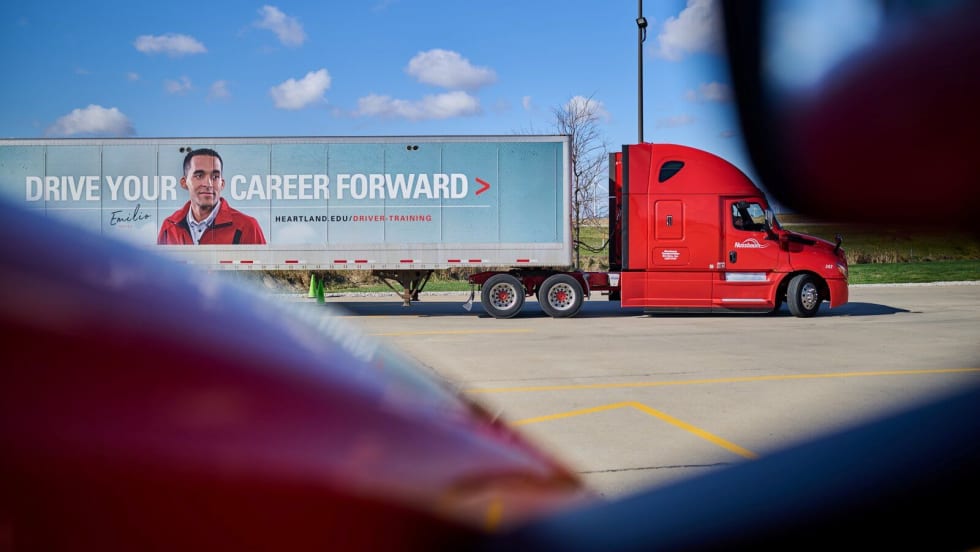
Nussbaum Expands Driver Compensation with Pay Raises, Profit Sharing
Nussbaum Transportation said its latest compensation package could push first-year driver earnings above $90,000 in key hiring markets.
Read More →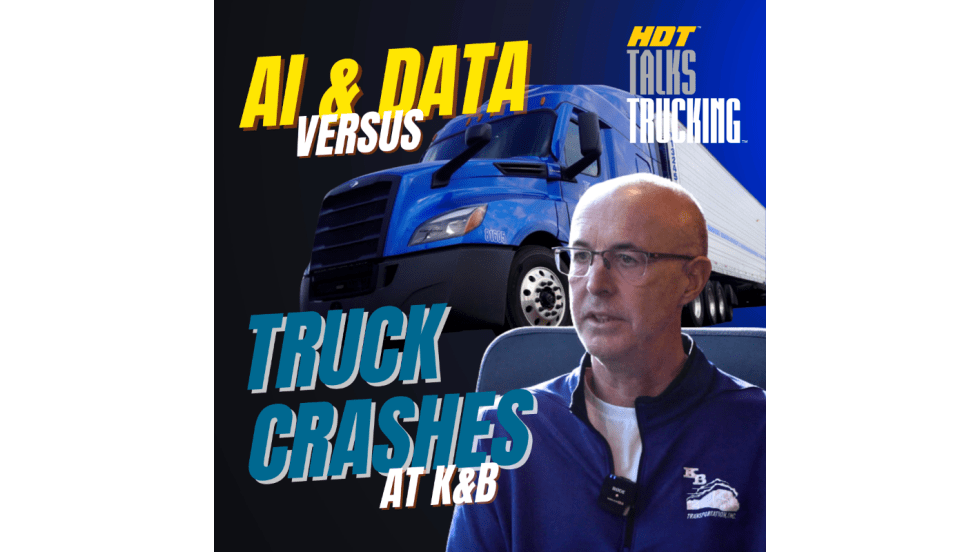
Listen: Inside Modern Fleet Safety: AI, Cameras & Speed Control at K&B Transportation
Fleet safety is evolving fast—and technology is at the center of it. Learn how a former commercial vehicle enforcement officer turned director of safety at K&B Transportation is embracing real-world safety technology.
Read More →
Maverick Announces 2026 Driver Pay Raises
New raises for Maverick Transportation drivers will take effect on May 31, 2026.
Read More →
Illinois Trucker Indicted for Nearly $22,000 in Ohio Turnpike Toll Evasion
Authorities say an Illinois trucker avoided paying tolls for two years, and now faces felony charges, possible prison time, and forfeiture of his Freightliner tractor.
Read More →
New Trojan Driver Cargo Theft Scam Bypasses Carrier Vetting Systems
Cargo theft rings plant operatives as drivers inside legitimate, fully vetted carriers, then execute coordinated thefts that look like a traditional straight theft from the outside.
Read More →
WIM, Trucker Path Name Top 3 Women-Friendly Truck Stops
ATA’s Women In Motion Council and Trucker Path highlight three truck stops that meet all seven safety-focused criteria and rank highest among female drivers.
Read More →
FMCSA Extends Paper Medical Card Exemption … Again
Five states still aren't ready to accept commercial driver medical exam information directly from the medical examiner's registry.
Read More →
Mack Launches Digital Driver Guide for Chassis-Specific Truck Info
Mack’s new, virtual owner’s manual delivers VIN-based, on-demand guidance for vehicle systems via web, app, and soon in-cab displays.
Read More →