




Virginia Adding Truck Parking in Pilot Program
A pilot program in virginia will use undeveloped Virginia Department of Transportation properties as "truck safety rest areas" for truck parking
A pilot program in virginia will use undeveloped Virginia Department of Transportation properties as "truck safety rest areas" for truck parking.
The first site, along Interstate 66 in Warren County, will begin to provide additional parking for truckers on November 8. The pilot location is an unused paved lot along the eastbound lanes. It was purchased decades ago for future rest area development and will be temporarily opened as a truck-only rest area.
"Truckers are the lifeline of our economy, carrying food, manufactured products, clothes, and everything imaginable and necessary for our daily lives," said Virginia Gov. Bob McDonnell. "To ensure they drive safely, truckers need secure places to park and rest. Anyone who has passed our full service rest areas at night or the early morning can see that many are filled to capacity with trucks. This pilot project will look to use undeveloped properties at minimal cost to the Commonwealth."
The pilot period will last 90 days followed by a 60-day evaluation period. The truck rest area will continue operations during the 60-day evaluation period.
This I-66 rest area location is near mile marker four and has a paved lot. The rest area will open on the morning of November 8 and remain available for use 24 hours a day, seven days a week. Electronic message boards will be placed in the area notifying the public.
The Warren County Board of Supervisors approached the Virginia Department of Transportation (VDOT) with concerns about overnight truck parking. This plan should reduce trucks parking at interchanges and at local businesses, according to the announcement from the governor's office. VDOT anticipates the new rest area will also provide trucks with a place to get off the roads during inclement weather.
In preparing the rest area, the ramps will be repaved to reduce rumble strip noise and reinforce pavement strength. Signs and pavement markings will be installed. Portable toilets and trash receptacles will be installed and serviced. There will be no rest area building constructed. No additional lighting is planned at this time for this location.
The Warren County sheriff's office and Virginia State Police have agreed to monitor the I-66 truck rest area.
A similar rest area is currently in use on I-64 in Alleghany County. Pending the results of this pilot, additional truck parking facilities will be considered on or near other interstates.
The American Trucking Associations and the Virginia Trucking Association praised the program.
"We are very appreciative of Gov. McDonnell for continuing to recognize the essential role of America's trucking industry and for his commitment to highway safety on the important issue of safety rest areas," ATA President and CEO Bill Graves said. "ATA encourages other states with similar truck parking shortages to follow Virginia's lead and look for similar opportunities to quickly expand parking at a minimal cost."
ATA and VTA strongly urged McDonnell during his campaign for governor to reopen the 19 safety rest areas and welcome centers shuttered by the previous administration because of funding cuts. McDonnell responded by promising that he would, if elected, reopen the safety rest areas within three months of taking office. On April 14, McDonnell and the VDOT officially reopened the remaining safety rest areas, beating the April 15 deadline McDonnell imposed when he took office in January.
More Safety & Compliance

How Waste Connections is Using Data, Telematics, and AI
How do you manage and maintain more than 18,000 connected trucks? Data. Lots of it.
Read More →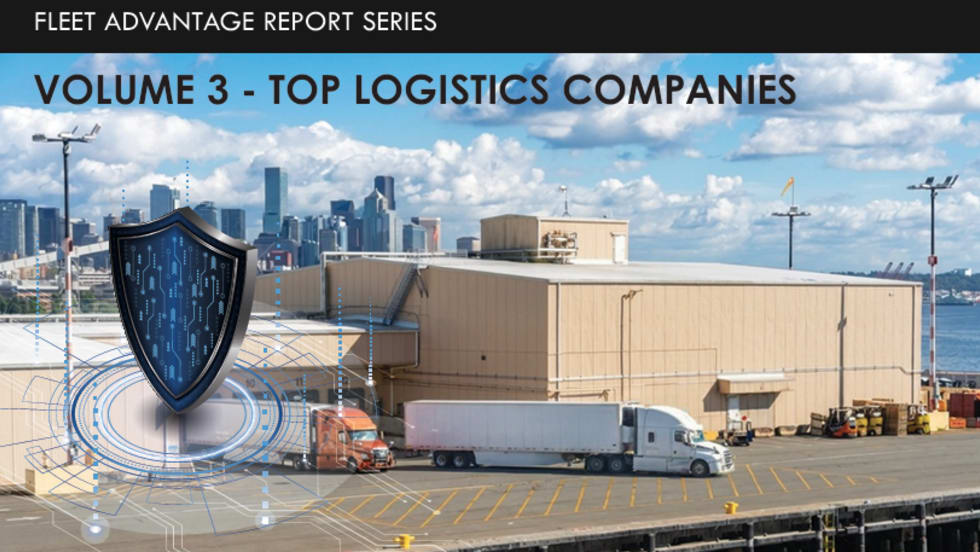
Fleet Advantage: Top Logistics Fleets Outperform National Safety Benchmarks
Fleet Advantage's latest TRUST Safety Index found leading logistics fleets maintained significantly lower out-of-service rates and stronger safety scores than national averages, while highlighting persistent challenges related to tires, brakes, and unsafe driving behaviors.
Read More →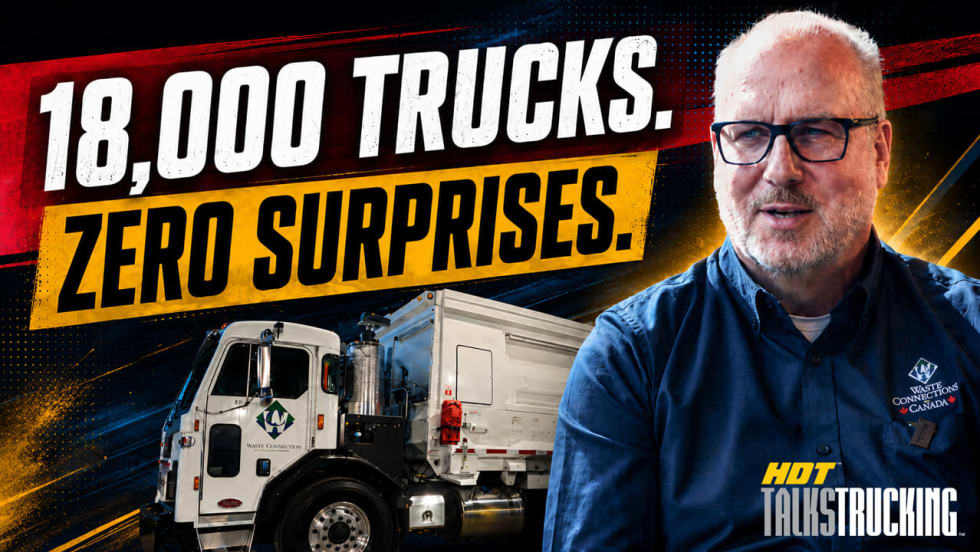
Why Fleet Data Matters More Than Ever at Waste Connections [Watch]
Waste Connections' Chuck Palmer explains how telematics, predictive maintenance, safety analytics, and AI help keep vehicles on the road and drivers safe in this episode of HDT Talks Trucking.
Read More →
Short Takes: How K&B is Using AI
Fleets need to "get on board the train" with AI, says Lance Evans of K&B Transportation in this HDT Talks Trucking Short Takes episode.
Read More →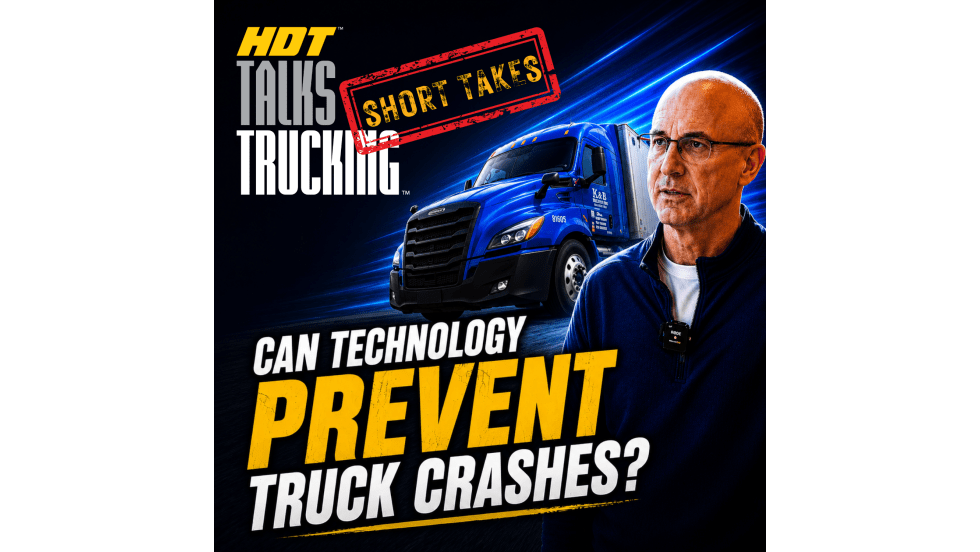
Short Takes: Inside K&B’s Truck Safety Tech
Listen to learn how K&B Transportation uses cellphone-blocking technology, speed management systems, weather geofencing, bridge avoidance tools, and more to improve driver safety.
Read More →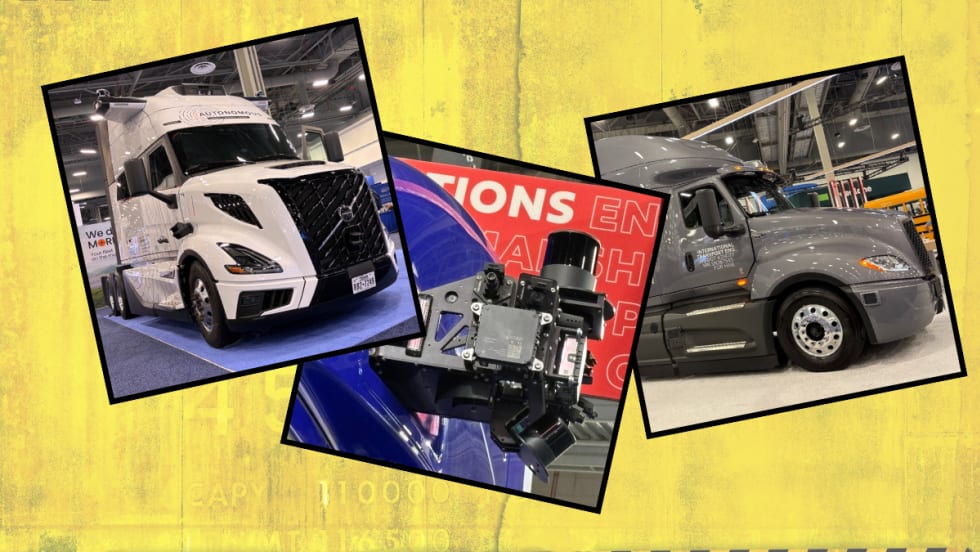
The Biggest Gap in Driverless Trucking Isn’t Tech. It’s Safety Validation
Nauto’s Stefan Heck says autonomous trucks are advancing quickly but proving they’re safe enough for large-scale deployment may be the industry’s hardest challenge.
Read More →
Truck Crash Rates Are Down. So Why Do Insurance Costs Keep Rising?
ATRI’s latest research points to litigation, social inflation, and soaring claims costs as key drivers behind record-high liability premiums for trucking fleets. But there are things motor carriers can do.
Read More →
FMCSA Removes More Than a Dozen ELDs from Registered List
The FMCSA continues its efforts to fight electronic logging devices that don't meet federal requirements, removing more than a dozen from the registered ELD list in May.
Read More →
How the Supreme Court Broker Liability Ruling Could Reshape Trucking’s Safety Landscape
The Supreme Court’s May 11 broker-liability ruling may not radically rewrite transportation law overnight. But industry experts say it will intensify pressure on brokers, carriers, and shippers to prove they are prioritizing safety.
Read More →
Recall of Fontaine Fusion Flatbeds Warns Owners Not to Use the Trailers
Some Fontaine Fusion flatbed trailer manufactured between February 2025, and March 2026 could have mainbeams weakened by hydrogen embrittlement because of a problem in the galvanizing process.
Read More →