




New Driver Distraction Study Looks at Cell Phone Use in the Cab
The amount of visual distraction is a key factor in whether in-cab technology increases crash risk for commercial drivers, according to a new study conducted by the Virginia Tech Transportation Institute

New study finds activities like dialing and reaching for phone while driving are more risky than simply talking or listening on phone. (Photo by Jim Park)
The amount of visual distraction is a key factor in whether in-cab technology increases crash risk for commercial drivers, according to a new study conducted by the Virginia Tech Transportation Institute.
In fact, talking on a hands-free phone appears to actually decrease the odds of a safety-related event - it's the reaching and dialing type of functions that are associated with increased risk odds.
The study, commissioned by the Federal Motor Carrier Safety Administration, also found that fleet cell phone policies cut risks more than state cell phone laws.
Data was collected over a one-year period and included 1,085 crashes, 8,375 near crashes, 30,661 "crash-relevant conflicts," and 211,711 baselines. The data set was collected by DriveCam, a vendor of onboard safety monitoring systems aimed at reducing risky driving behaviors. The data from the DriveCam onboard safety monitoring system captured video of the driver's face and forward road view from fleets in real-world operations.
The results from this study support results from a previous FMCSA-funded study also conducted by VTTI.
As was found in the previous study, using a cell phone to text, e-mail or access the Internet while driving is in a category of risk all by itself, with drivers 163 times more likely to be involved in a safety-critical event. This is higher even than the previous study, where the odds were found to be 23 times higher. (One difference is the previous study only looked at tractor-trailer drivers, whereas this new study included a wider range of commercial vehicles.)
The study also found that truck and bus drivers in the study who dialed a cell phone while driving significantly increased their odds of involvement in a safety-critical event by 3.51 times.
While any cell phone use was found to be 1.14 times more risky, further analysis found big differences between what exactly drivers were doing with the phones.
The cell phone task was segmented into sub-tasks that included reaching, dialing, and talking/listening. The study found that reaching and dialing have a high degree of risk, but talking/listening does not. In other words, although talking on the cell phone did not show an increased risk, a driver must take several risk-increasing steps in order to use the electronic device for conversation.
In fact, the odds for being involved in a safety-critical event actually dropped for drivers talking and listening on a hands-free phone. The odds for a tractor-trailer driver talking on a hands-free phone were 42 percent less. (The 2009 study was even more dramatic, with a 66 percent less risk.)
Even drivers talking and listening on a hand-held phone increased their risk so slightly it was not regarded as a significant difference by the researchers.
This is an important finding, said researchers, suggesting that much of this risk may be addressed through improved system interface design.
The study also looked at the effectiveness of fleet cell phone policies and state cell phone laws regarding cell phone use while driving. Drivers' odds of using a cell phone while driving were 17 percent less likely under a fleet cell phone policy compared to no fleet cell phone policy. However, the state cell phone law did not significantly impact drivers' likelihood in using their cell phone while driving.
As has been found in other naturalistic driving studies, non-driving tasks that take the driver's eyes away from the roadway had the greatest risk, -- texting, e-mailing, accessing the Internet, dialing a cell phone, reaching for cell phone, and reaching for a headset/earpiece.
It appears that a key difference between these high-risk and low-risk non-driving
tasks involves the amount of visual distraction, researchers conclude. Non-driving tasks associated with high visual attention have the highest odds of involvement in a safety-critical event.
Rich Hanowski, director of VTTI's Center for Truck & Bus Safety, notes that "the take-away message is that drivers must keep their eyes on the road and tasks or activities that divert eyes from the road are risky."
More info: http://www.vtti.vt.edu
More Safety & Compliance

How Waste Connections is Using Data, Telematics, and AI
How do you manage and maintain more than 18,000 connected trucks? Data. Lots of it.
Read More →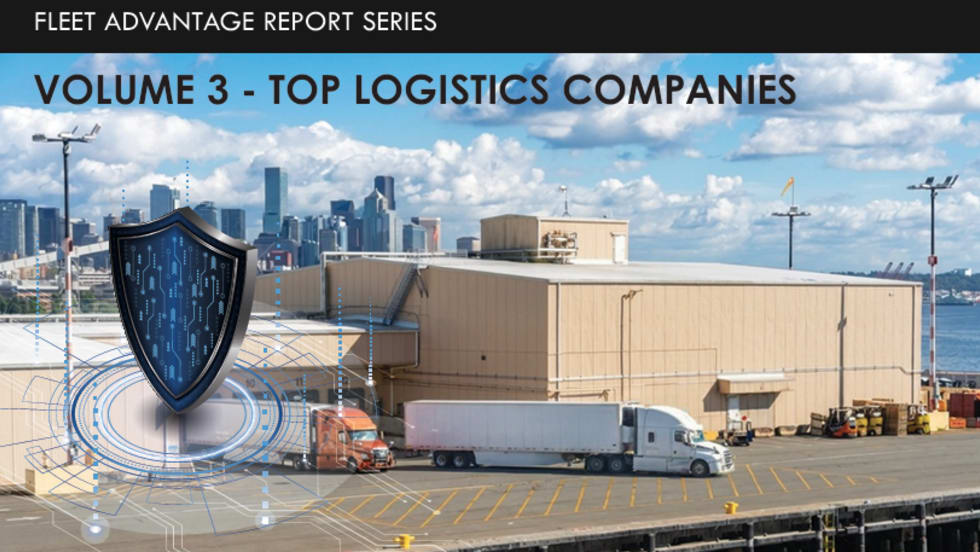
Fleet Advantage: Top Logistics Fleets Outperform National Safety Benchmarks
Fleet Advantage's latest TRUST Safety Index found leading logistics fleets maintained significantly lower out-of-service rates and stronger safety scores than national averages, while highlighting persistent challenges related to tires, brakes, and unsafe driving behaviors.
Read More →
Why Fleet Data Matters More Than Ever at Waste Connections [Watch]
Waste Connections' Chuck Palmer explains how telematics, predictive maintenance, safety analytics, and AI help keep vehicles on the road and drivers safe in this episode of HDT Talks Trucking.
Read More →
Short Takes: How K&B is Using AI
Fleets need to "get on board the train" with AI, says Lance Evans of K&B Transportation in this HDT Talks Trucking Short Takes episode.
Read More →
Short Takes: Inside K&B’s Truck Safety Tech
Listen to learn how K&B Transportation uses cellphone-blocking technology, speed management systems, weather geofencing, bridge avoidance tools, and more to improve driver safety.
Read More →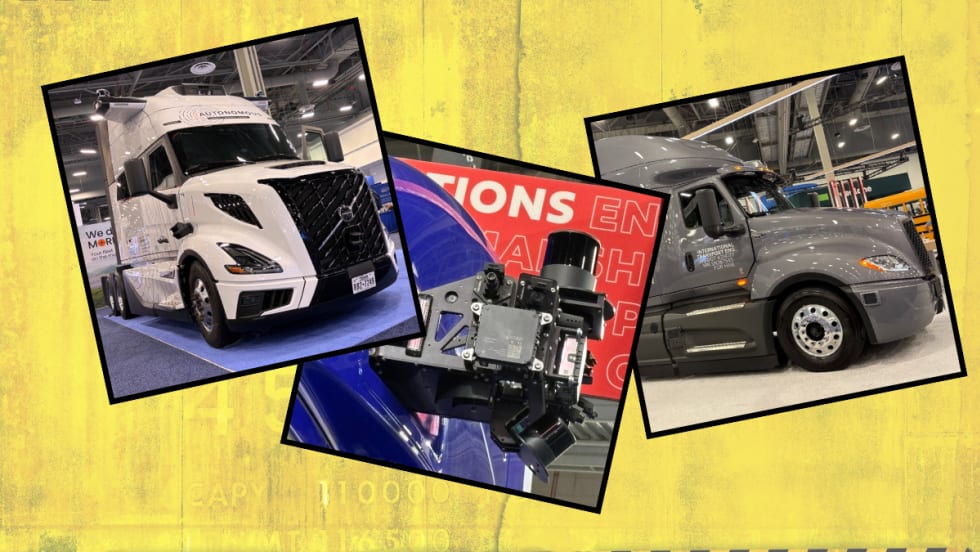
The Biggest Gap in Driverless Trucking Isn’t Tech. It’s Safety Validation
Nauto’s Stefan Heck says autonomous trucks are advancing quickly but proving they’re safe enough for large-scale deployment may be the industry’s hardest challenge.
Read More →
Truck Crash Rates Are Down. So Why Do Insurance Costs Keep Rising?
ATRI’s latest research points to litigation, social inflation, and soaring claims costs as key drivers behind record-high liability premiums for trucking fleets. But there are things motor carriers can do.
Read More →
FMCSA Removes More Than a Dozen ELDs from Registered List
The FMCSA continues its efforts to fight electronic logging devices that don't meet federal requirements, removing more than a dozen from the registered ELD list in May.
Read More →
How the Supreme Court Broker Liability Ruling Could Reshape Trucking’s Safety Landscape
The Supreme Court’s May 11 broker-liability ruling may not radically rewrite transportation law overnight. But industry experts say it will intensify pressure on brokers, carriers, and shippers to prove they are prioritizing safety.
Read More →
Recall of Fontaine Fusion Flatbeds Warns Owners Not to Use the Trailers
Some Fontaine Fusion flatbed trailer manufactured between February 2025, and March 2026 could have mainbeams weakened by hydrogen embrittlement because of a problem in the galvanizing process.
Read More →