




Proper Paperwork Is Key to Being Environmentally, Safety Compliant
"If you can't show you did it, you didn't do it," said Nick Bujeaud, district manager at KPA, which provides compliance and risk management services. During KPA's Recordkeeping 101: EPA and OSHA Required Paperwork Webinar last week, Bujeaud could not stress enough the importance of maintaining the necessary paperwork required to stay compliant with Environmental Protection Agency and Occupational Safety and Health Administration rules

(Photo by Corcentric)
"If you can't show you did it, you didn't do it," said Nick Bujeaud, district manager at KPA, which provides compliance and risk management services. During KPA's Recordkeeping 101: EPA and OSHA Required Paperwork Webinar last week, Bujeaud could not stress enough the importance of maintaining the necessary paperwork required to stay compliant with Environmental Protection Agency and Occupational Safety and Health Administration rules.
According to Bujeaud, OSHA has been shifting its approach to include increased enforcement. The agency plans to add 100 more regulators this year, and it hopes to take in four times as much revenue from citations. "The penalties are big, and they are out there," he said.
"You need to watch your back, protect your assets, and do the right thing."
While Bujeaud covered a number of regulations and compliance issues, at the end of the presentation, he gave a list of top five things companies should be doing now to ensure compliance.
They are:
1. If you have over 1,320 gallons of petroleum, you need to have a Spill Prevention, Control, and Countermeasures Plan (SPCCP) in place. This is an EPA regulation that requires companies to recertify that plan every five years. If elements of the plan change, the company must have a new plan. Companies should also be visually inspecting these petroleum tanks on a monthly basis; this needs to be documented!
2. Hazard Assessment and PPE (Personal Protective Equipment) Selection: This OSHA rule requires companies to document hazard assessment and equipment selection. First, see if you can eliminate any hazards at the facility, Bujeaud said. Then, see if there's any equipment that can get rid of the hazard, such as ventilation. Next, see if any administrative controls can reduce the exposure of the hazard to the employee. Companies need to keep this paperwork current and updated as new hazards are introduced into the work area.
3. Employee training is key because these regulatory agencies will interview your employees about your practices. Bujeaud recommends including all environmental, health and safety training in new employee orientation sessions. Most regulations require training upon initial assignment, such as emergency response, hazard communication, PPE, forklift, respiratory protection, respirator fit-testing and hazardous waste management, to name a few.
4. Centralize and organize all your documents in one location, preferably in the business or human resources office, Bujeaud said. Organize waste streams by type and group by year. Keep all training records behind an updated employee list with hire dates. Break down other folders by category. Clearly identify responsibility for compliance stuff, and empower that employee to do it. Budget time and financial resources for compliance. Any dollar you spend on safety compliance will pay you back three- to six-fold, he said.
5. Lastly, obtain certificates of insurance for all outside contractors. They need to be covered for workers' compensation insurance, so you're not stuck paying if an incident occurs.
If you have any questions about OSHA and EPA regulations and whether you're in compliance, seek out environmental, health and safety counsel in your area.
More Safety & Compliance

How Waste Connections is Using Data, Telematics, and AI
How do you manage and maintain more than 18,000 connected trucks? Data. Lots of it.
Read More →
Fleet Advantage: Top Logistics Fleets Outperform National Safety Benchmarks
Fleet Advantage's latest TRUST Safety Index found leading logistics fleets maintained significantly lower out-of-service rates and stronger safety scores than national averages, while highlighting persistent challenges related to tires, brakes, and unsafe driving behaviors.
Read More →
Why Fleet Data Matters More Than Ever at Waste Connections [Watch]
Waste Connections' Chuck Palmer explains how telematics, predictive maintenance, safety analytics, and AI help keep vehicles on the road and drivers safe in this episode of HDT Talks Trucking.
Read More →
Short Takes: How K&B is Using AI
Fleets need to "get on board the train" with AI, says Lance Evans of K&B Transportation in this HDT Talks Trucking Short Takes episode.
Read More →
Short Takes: Inside K&B’s Truck Safety Tech
Listen to learn how K&B Transportation uses cellphone-blocking technology, speed management systems, weather geofencing, bridge avoidance tools, and more to improve driver safety.
Read More →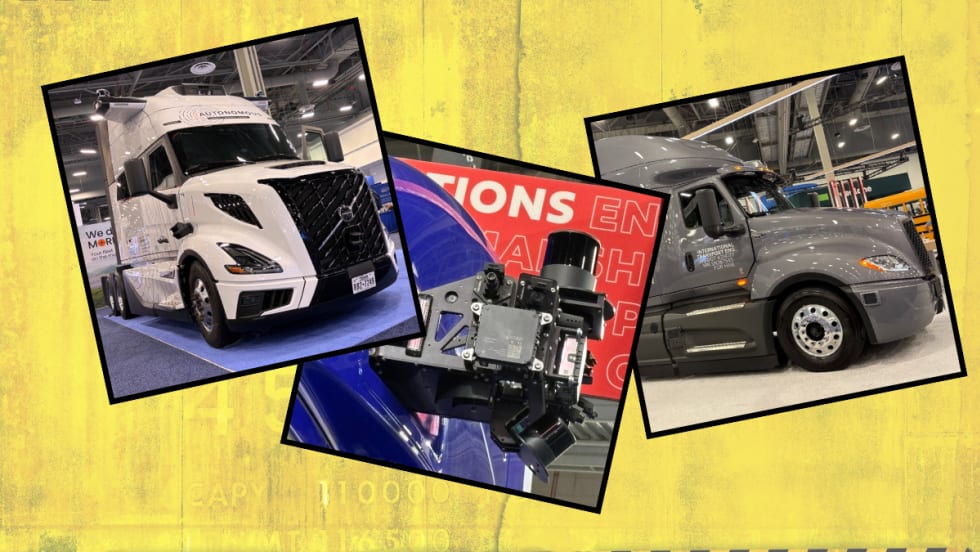
The Biggest Gap in Driverless Trucking Isn’t Tech. It’s Safety Validation
Nauto’s Stefan Heck says autonomous trucks are advancing quickly but proving they’re safe enough for large-scale deployment may be the industry’s hardest challenge.
Read More →
Truck Crash Rates Are Down. So Why Do Insurance Costs Keep Rising?
ATRI’s latest research points to litigation, social inflation, and soaring claims costs as key drivers behind record-high liability premiums for trucking fleets. But there are things motor carriers can do.
Read More →
FMCSA Removes More Than a Dozen ELDs from Registered List
The FMCSA continues its efforts to fight electronic logging devices that don't meet federal requirements, removing more than a dozen from the registered ELD list in May.
Read More →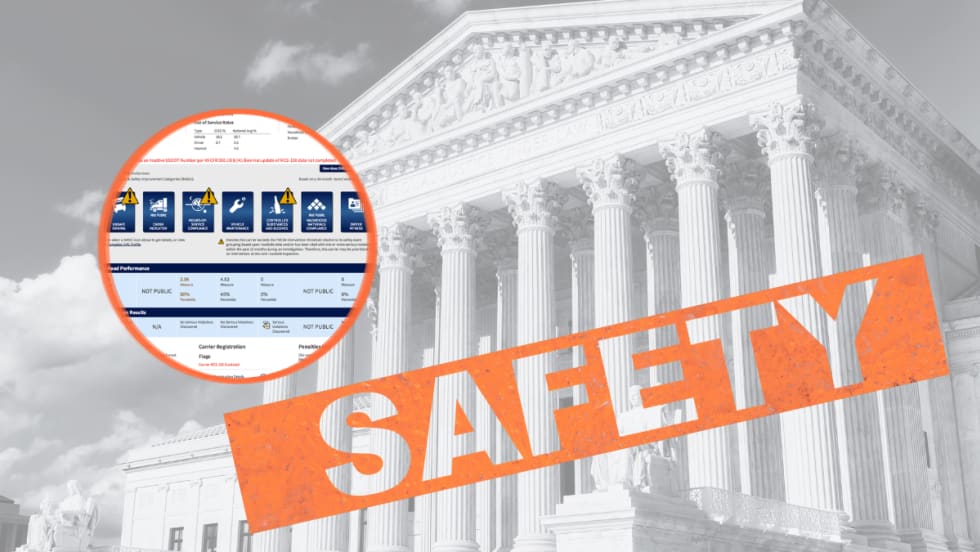
How the Supreme Court Broker Liability Ruling Could Reshape Trucking’s Safety Landscape
The Supreme Court’s May 11 broker-liability ruling may not radically rewrite transportation law overnight. But industry experts say it will intensify pressure on brokers, carriers, and shippers to prove they are prioritizing safety.
Read More →
Recall of Fontaine Fusion Flatbeds Warns Owners Not to Use the Trailers
Some Fontaine Fusion flatbed trailer manufactured between February 2025, and March 2026 could have mainbeams weakened by hydrogen embrittlement because of a problem in the galvanizing process.
Read More →