




Smithfield Foods Reduces Accidents with SmartDrive
SmartDrive Systems announced that Smithfield Foods, Inc. has deployed the SmartDrive video-based safety program across its entire fleet of nearly 600 Armour and Eckrich branded refrigerated box trucks following a competitive review and pilot program.
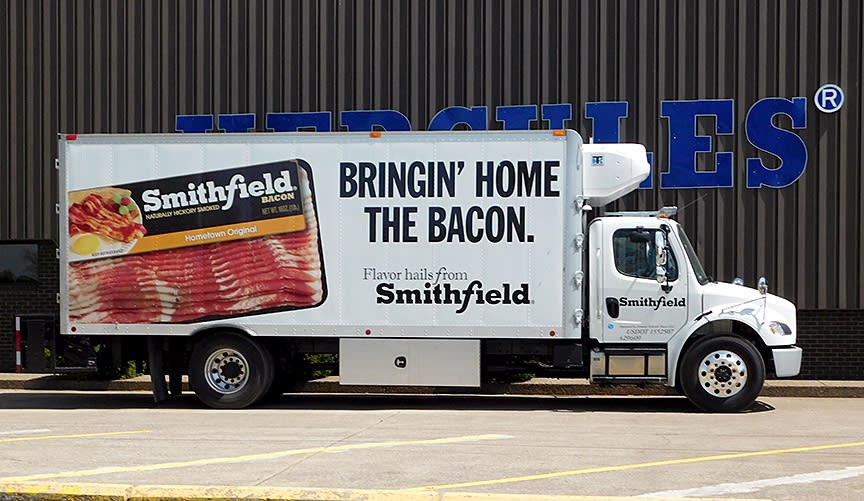
Photo courtesy of Smithfield and SmartDrive
SmartDrive Systems announced that Smithfield Foods, Inc. has deployed the SmartDrive video-based safety program across its entire fleet of nearly 600 Armour and Eckrich branded refrigerated box trucks following a competitive review and pilot program. Armour and Eckrich are brands of Smithfield Foods.
“We found ourselves reacting to accidents and situations, rather than training our drivers to get ahead of them,” commented James Michael, senior operations manager at Smithfield Foods. “There was a growing concern and some anxiety over the question, ‘what if the next accident is worse than the last?’ We knew we needed an effective way to reduce risk, and the SmartDrive program was the perfect solution.”
To improve its safety record, Smithfield embarked on a side-by-side comparison pilot of two video-based safety systems in its vehicles across the country.
“The SmartDrive results were overwhelmingly positive,” continued Michael. “Soon after deploying the SmartDrive program, we went from 20 preventable accidents on the roadway where we lost two trucks to accidents, to only eight preventable accidents and no truck losses during the same time period the following year. In addition, the online dashboard, coaching workflow and client support convinced us that the SmartDrive program would be the most beneficial solution for our fleet.”
Smithfield Foods executives were involved in the purchasing decision and, after seeing the results from the pilot, quickly agreed the SmartDrive program was the right choice.
“We have 40 branches across the country, both union and non-union facilities,” explained Michael. “We engaged our drivers in a conversation so they understood the program and how it works. Once it was clear to them that video is only recorded if a risky maneuver or external G-force is detected, many drivers made a personal commitment to avoid causing a trigger by driving safely each and every time they hit the road. The results speak for themselves.”
The SmartDrive system installed in the Armour and Eckrich branded trucks includes both cab-facing and road-facing event recorders, in order to provide clear insight into risk factors that occur both behind the wheel and from other motorists on the road.
“Like many companies that are dedicated to the highest safety standards, Smithfield realized video-based safety is the only way to have full visibility into risk when drivers are on the road,” said Steve Mitgang, CEO of SmartDrive. “The SmartDrive program not only shows fleet managers exactly where their risk lies but also how to address it to prevent collisions before they happen.”
Being able to see what drivers were doing during risky maneuvers and having the ability to coach them on needed skills has already yielded positive results for the fleet.
“Some companies are worried about having a video-based system due to liability issues in case a driver actually is at fault in an incident,” concluded Michael. “However, the benefits—including being able to exonerate drivers when not at fault and being able to prevent accidents—far outweigh the risks. As a private fleet, we want to ensure our brand is synonymous with safety. Leveraging the SmartDrive video-based platform is a key tool for us to protect our drivers, the motoring public, and our reputation.”
More Safety & Compliance

FMCSA Pauses Biennial-Update Enforcement Amid Motus Transition
Carriers whose updates were due on or after June 1 have more time, while FMCSA works to stabilize its new registration system and warns of phishing sites impersonating its new carrier registration system, Motus.
Read More →
ZF Expands Commercial Vehicle Push in North America
ZF is expanding its North American commercial-vehicle presence with new transmission applications, electrification, trailer technology and autonomous-driving systems.
Read More →
Truck Drivers Need More Than Another Alert
Fleets have more visibility into truck health, safety events, and driver activity than ever. The next challenge is turning all that information into useful guidance for the person who has to decide what to do next.
Read More →
Tesla Wants a Self-Driving Semi. Are Cameras Enough?
Could Tesla’s camera-only autonomous driving technology work on an 80,000-pound Semi? In this commentary, HDT's Deborah Lockridge takes a look at Tesla, Cybercab, and how autonomous trucks see the road.
Read More →
What DOT’s Automated Vehicle Strategy Means for Trucking
The U.S. Department of Transportation issued a new automated-vehicle strategy that outlines plans for driverless-truck regulations, cross-state freight corridors, and federal safety standards.
Read More →
NYC Expands Speed, Pedestrian Safety Tech Across Fleet
New York City is expanding intelligent speed assistance and pedestrian-alert systems across its municipal fleet, moving the technologies from pilot programs into vehicle procurement and retrofit requirements.
Read More →
FMCSA Removes 110 Truck Driver Training Schools from Certified ELDT List
Federal regulators also are targeting more than 160 additional training providers and launching a nationwide audit of third-party CDL skills testers as part of a broader crackdown on trucking fraud.
Read More →
Beyond DOT Compliance: What Makes a Trucking Fleet Truly Safe?
A trucking fleet can follow every rule and still make unsafe decisions. The real test comes when safety conflicts with freight, productivity, or cost.
Read More →
Hours of Service Pilot Programs: FMCSA Readies for 2027 Rollout
Two pilot programs could eventually reshape hours-of-service rules, giving truck drivers options to pause their 14-hour clock or use longer split sleeper rest periods.
Read More →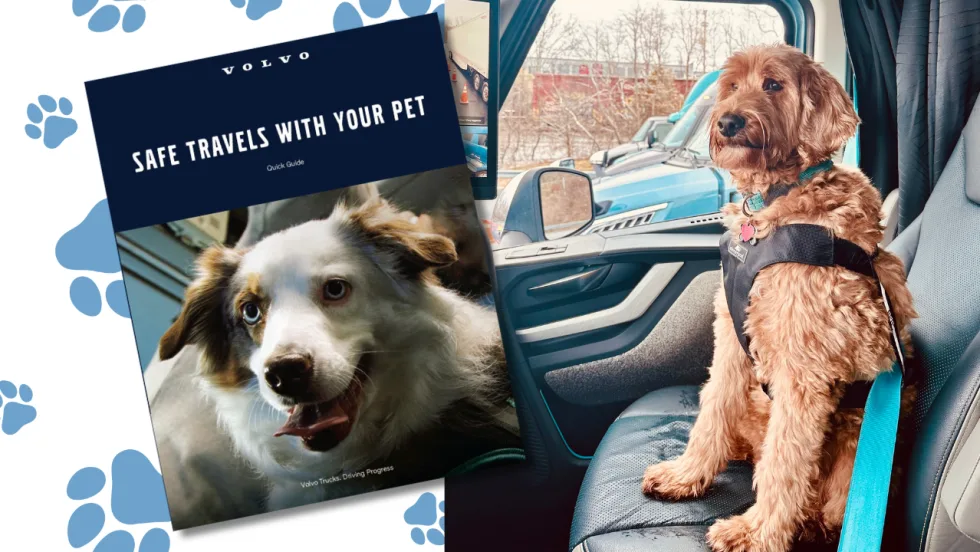
New Guide Offers Pet Safety Tips for Truck Drivers
Hundreds of thousands of pets travel in truck cabs. A new safety guide from Volvo Trucks and the Center for Pet Safety offers practical advice for truck drivers who bring dogs and cats along for the ride.
Read More →