




OOIDA Vows to Continue Fight Against Mandatory ELDs
The Owner-Operator Independent Drivers Association says it’s not giving up on its battle against mandatory electronic logging devices, despite its failure to get the Supreme Court to review the constitutionality of the ELD mandate that goes into effect this December.
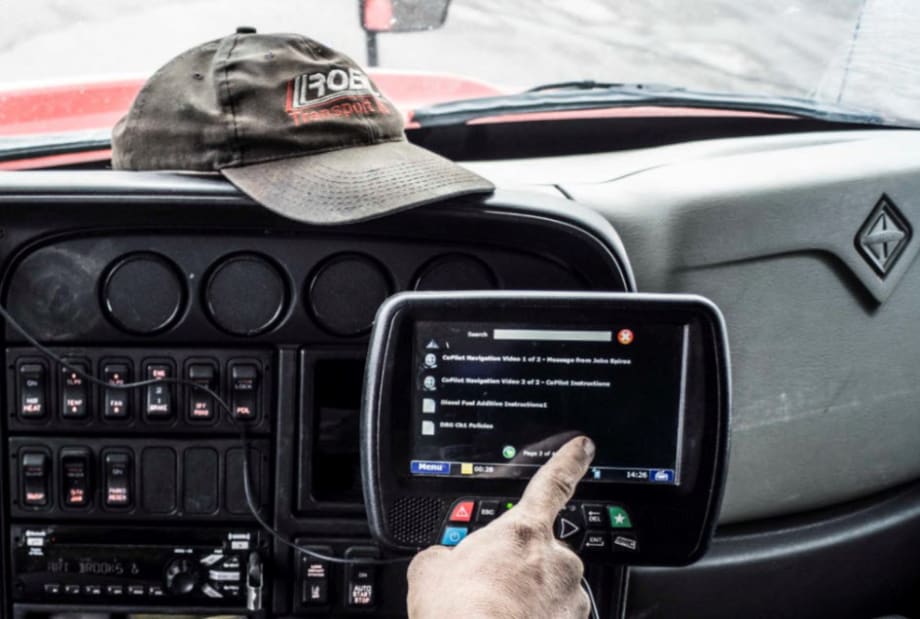
OOIDA claims ELDs aren't any more effective at preventing crashes than paper logs. Photo: Roehl
The Owner-Operator Independent Drivers Association says it’s not giving up on its battle against mandatory electronic logging devices, despite its failure to get the Supreme Court to review the constitutionality of the ELD mandate that goes into effect this December.
The U.S. Supreme Court announced Monday that OOIDA's appeal to the high court will not be reviewed.
OOIDA contends that a mandate to electronically track commercial truck drivers was never about safety and that the government was never able to demonstrate how such a mandate would improve safety.
“We are extremely disappointed that the Supreme Court does not see the merit in reviewing our case with so many questions about its constitutionality,” said Jim Johnston, president and CEO of OOIDA.
Johnston said OOIDA will continue to pursue the issue on the congressional side as part of its “Knock Out Bad Regs” campaign and will continue to communicate with the Trump administration about this and other regulations.
OOIDA had filed the petition seeking a review of a ruling from the U.S. Court of Appeals for the Seventh Circuit regarding the electronic logging device mandate. The court had ruled against the association last year on its lawsuit against the Federal Motor Carrier Safety Administration.
OOIDA says mandating electronic logging devices is the equivalent of warrantless surveillance of truckers and that the government’s weak excuses for doing so fail to justify violating drivers’ Fourth Amendment rights.
The association also says there are still many questions about the technical specifications and enforcement aspects of the mandate.
“The mandate has everything to do with large, economically motivated entities using the government to impose their will on small businesses which comprise the majority of the trucking industry. Until the government is able to answer many fundamental and basic questions about the mandate, they should at least delay its implementation,” said Johnston.
OOIDA contends that requiring electronic monitoring devices on commercial vehicles does not advance safety. Because ELDs can only track movement and location of a vehicle and still require driver input to determine on-duty and off-duty status, OOIDA says, they are no more reliable than paper logbooks for recording compliance with hours-of-service regulations.
In its petition to the Supreme Court, OOIDA asked the court to determine whether the ELD rule violated the Fourth Amendment by failing to establish a regulatory structure at the state and federal levels that serves as a substitute for a warrant.
More Safety & Compliance
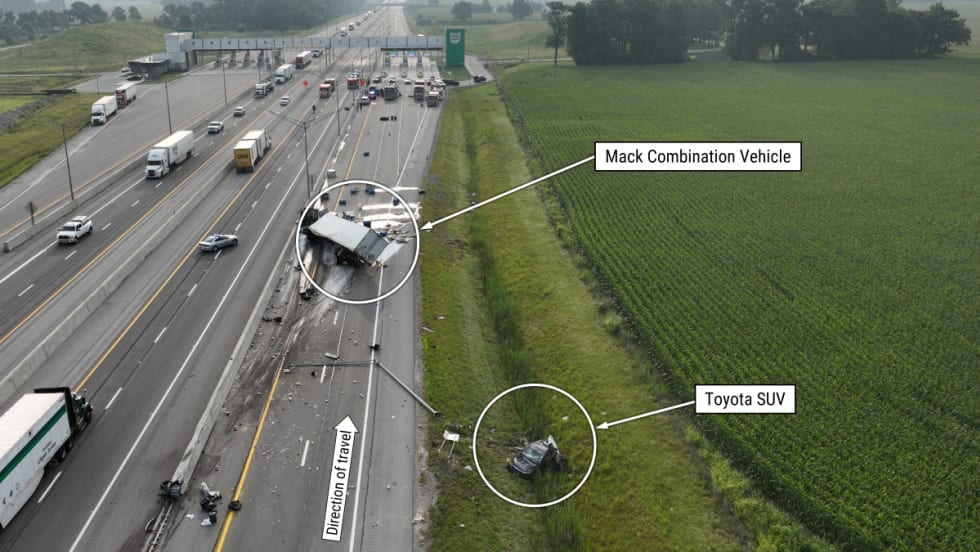
Fatal Crash Exposes Toll Plaza Risks
An NTSB investigation found that last-minute lane changes and large speed differences at an Ohio toll plaza created a hazard the truck driver couldn't avoid in time.
Read More →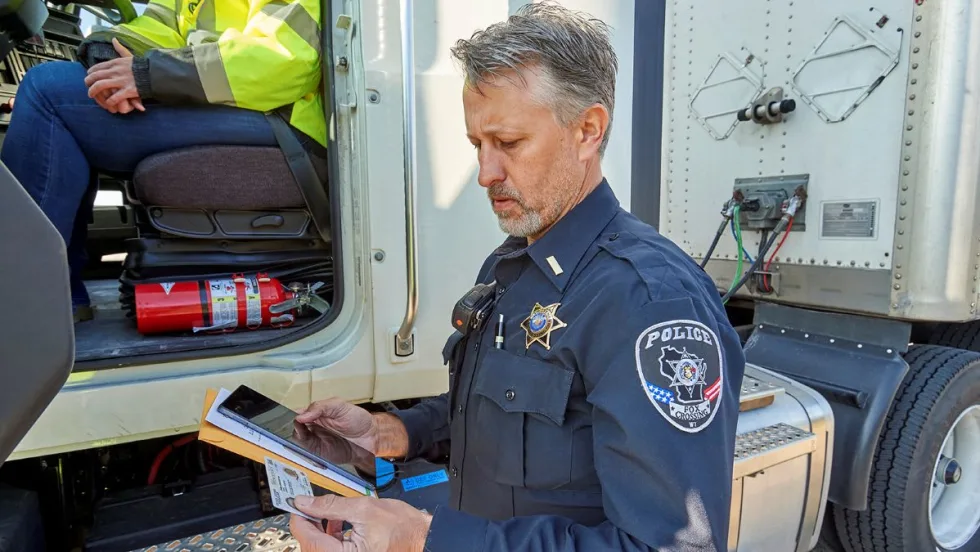
When Language Stops the Truck: The Return of ELP Out-of-Service Orders
English language proficiency rules for commercial drivers aren’t new, but renewed out-of-service enforcement has raised the stakes. Here’s what carriers need to know before a driver reaches a roadside inspection.
Read More →
A Camera Isn't a Safety Program. Here's What Brokers Are Screening for Now
Footage alone may not be enough to pass broker vetting processes. Here's what counts as a defensible safety program now.
Read More →

Marijuana and Trucking’s Drug-Testing Dilemma
Marijuana is getting stronger, laws are changing, and drug tests still can’t reliably establish impairment. What does that mean for truck drivers and the fleets that employ them?
Read More →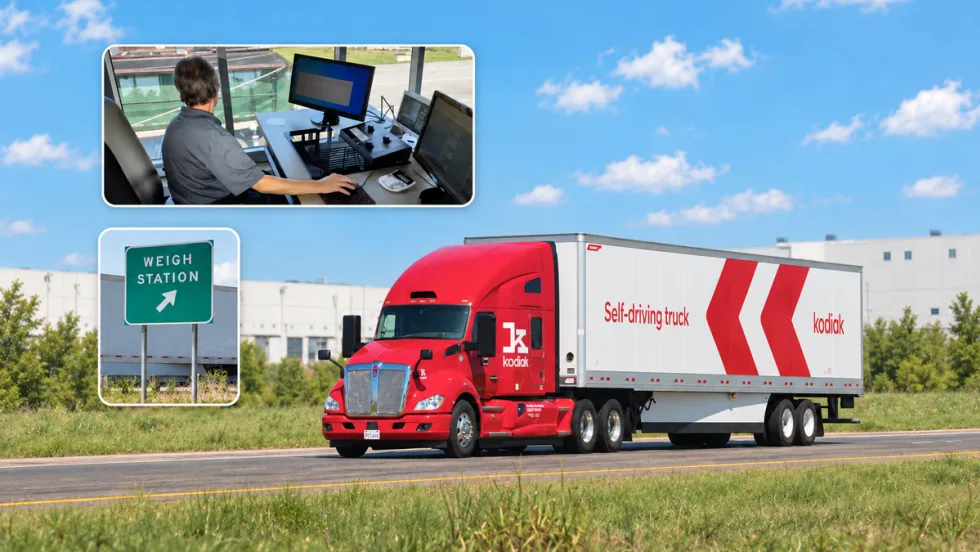
PrePass, Kodiak Connect Driverless Trucks to Roadside Enforcement
The system will allow enforcement agencies to verify Enhanced Inspection information and decide whether Kodiak’s autonomous trucks can bypass roadside screening sites.
Read More →
From One Generation to the Next: How Mentorship Builds Safer Truck Drivers
After three decades in trucking, Harold Perry shares what he's learned about driver safety, mentorship, and helping the next generation build confidence behind the wheel.
Read More →
FMCSA Pauses Biennial-Update Enforcement Amid Motus Transition
Carriers whose updates were due on or after June 1 have more time, while FMCSA works to stabilize its new registration system and warns of phishing sites impersonating its new carrier registration system, Motus.
Read More →
ZF Expands Commercial Vehicle Push in North America
ZF is expanding its North American commercial-vehicle presence with new transmission applications, electrification, trailer technology and autonomous-driving systems.
Read More →
Truck Drivers Need More Than Another Alert
Fleets have more visibility into truck health, safety events, and driver activity than ever. The next challenge is turning all that information into useful guidance for the person who has to decide what to do next.
Read More →
Tesla Wants a Self-Driving Semi. Are Cameras Enough?
Could Tesla’s camera-only autonomous driving technology work on an 80,000-pound Semi? In this commentary, HDT's Deborah Lockridge takes a look at Tesla, Cybercab, and how autonomous trucks see the road.
Read More →