





Related from the archives: Bill Language Could Put 34-Hour Restart at Risk
Congress Completes Hours-of-Service Fix
Special legislation that contains language to fix the legislative glitch that threatened use of a 34-hour restart as part of the hours-of-service rule for truck drivers passed the Senate late Friday night, Dec. 9.
December 12, 2016

Photo: Haldex
3 min to read

Photo: Haldex
Special legislation, in the form of a Continuing Resolution, that contains language to fix the legislative glitch that threatened use of a 34-hour restart as part of the hours-of-service rule for truck drivers passed the Senate late Friday night, Dec. 9.
The 63-36 vote came less than an hour before the midnight deadline that would have triggered a government shutdown. President Obama signed the measure shortly after the Senate took action.
The House had passed the stopgap spending measure on Dec. 8, by a vote of 326-96. Senate passage was delayed by an eleventh-hour attempt by Sens. Joe Manchin (D-WV) and Sherrod Brown (D-OH) to secure Republican assent to a longer extension of expiring benefits for coal miners.
The trucking-specific provision within the C.R. requires that DOT “follow the existing 34-hour restart hours of service rule for truck drivers to ensure continuity in federal rest regulations, should the report on the rule (mandated in prior Acts) not meet the criteria set by Congress.”
The problem stemmed from a policy rider attached to a bill last year that was so poorly written it inadvertently added requirements to a Department of Transportation study on the effectiveness of the restart provisions. That study had been mandated earlier by Congress. The problematic legislation excised language on which HOS rule would apply if the goals to be weighed by the study were not met.
Because of the legislative glitch, if the DOT study — which is still underway — were to find that some restrictions on the restart imposed by DOT in 2013 do not provide specific health and safety benefits to drivers, the entire restart, not just the restrictions, could be eliminated. Those restrictions were suspended while the DOT performs the study.
Earlier this year, trucking advocates had pushed for Congress to simply restore the 2005 restart rules, which allow unlimited use of the restart provision and do not require two 1 a.m. to 5 a.m. periods in any restart. A 2015 mandate had suspended the 2013 restart until the aforementioned DOT study is completed.
The language in the C.R. should, pending the results of that same DOT study, restore the restart to what it was before July 2013, according to the American Trucking Associations. At that time, the Obama Administration restricted the use of the restart to only once every 168 hours and required that the restart period include the two overnight breaks.
“It is now our hope that, as an industry, we can put this issue firmly in the rearview mirror,” said ATA President and CEO Chris Spear. “Thanks to hard work by Congressional leaders of both parties and in both chambers, we are one step closer to having an hours-of-service restart rule that makes sense and puts safety first.
“The restart is an important tool for drivers, not to maximize driving time, but to have the flexibility to maximize off-duty time and time at home, and we are pleased that drivers will continue to have unrestricted access to it,” he added.
More Safety & Compliance

How Lance Evans Turns Enforcement Experience Into Better Fleet Safety
HDT Truck Fleet Innovator Lance Evans brings lessons from law enforcement to K&B Transportation’s approach to safety technology, data, driver coaching, and compliance.
Read More →
New FMCSA Chief Safety Officer Has Trucking Industry and Law Enforcement Experience
Steve Dowling joins FMCSA after serving as senior director of safety at Covenant Logistics and in leadership roles in commercial motor vehicle industry organizations.
Read More →
Driver Trust Can Make or Break the Success of Fleet Safety Technology
New Teletrac Navman research suggests that onboarding, transparency about driver data, and positive feedback can play a significant role in how commercial drivers respond to safety and coaching technology.
Read More →
FMCSA: Stop Using These 15 Electronic Logging Devices
Fleets and drivers must replace the revoked ELDs with ones on the FMCSA's registered device list of electronic logging devices.
Read More →
How HDT’s 2026 Truck Fleet Innovators Are Rethinking Fleet Operations
Meet five trucking leaders who are challenging assumptions, solving operational problems, and putting innovative ideas to work.
Read More →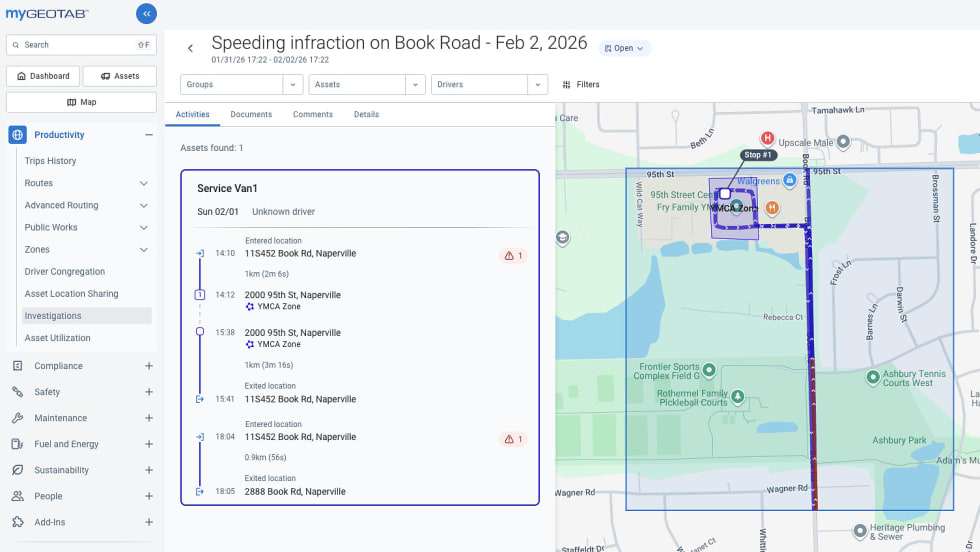
Geotab Launches Tool to Speed Fleet Incident Investigations
Geotab Investigations brings telematics data, video, photos, reports and other evidence into one case file to help fleets determine what happened and resolve incidents faster.
Read More →
FMCSA Moves to Codify English Language Requirements for Commercial Drivers
By changing regulations on English-language proficiency requirements for commercial drivers, rather than relying on a guidance memo, the FMCSA said future administrations won't be able to walk back the Trump administration's stricter enforcement with just a memo.
Read More →
Trump Administration Expands Homeland Security's Role in Trucking Enforcement
The administration's latest trucking crackdown goes beyond roadside inspections, expanding Homeland Security's role in commercial vehicle enforcement and investigations involving CDL training schools.
Read More →
Paccar Recalls 2027 Trucks Built This Summer for Possible Electrical Problem
The nearly 6,000 Kenworth and Peterbilt trucks in the recall could potentially lose engine power, among other things.
Read More →
Brake Safety Week to Focus on Drums and Rotors
Commercial vehicle inspectors are focusing on truck brakes during CVSA's Brake Safety Week, August 23-29.
Read More →