




DOT Finally Proposes Truck Speed-Limiter Rule
Federal safety regulators are proposing that heavy-duty vehicles be equipped with speed-limiting devices set to a specific maximum speed.


Image: FMCSA

Image: FMCSA
Federal safety regulators are proposing that heavy-duty vehicles be equipped with speed-limiting devices set to a specific maximum speed. A notice of proposed rulemaking was issued jointly on Aug. 26 by the National Highway Traffic Safety Administration and the Federal Motor Carrier Safety Administration.
The NPRM comes after a decade-long push by trucking and safety advocates to put such a requirement in place for trucks and other commercial vehicles.
For its part, NHTSA is calling for establishing a new Federal Motor Vehicle Safety Standard. This FMVSS would require that each new “multipurpose” vehicle with a GVWR over 26,000 pounds be equipped with a speed limiting device.
The proposed standard would also require each vehicle, as manufactured and sold, to have its device set to a speed not greater than a specified speed and to be equipped with means of reading the vehicle’s current speed setting and the two previous speed settings (including the time and date the settings were changed) through its onboard diagnostic connection.
FMCSA is proposing a complementary Federal Motor Carrier Safety Regulation that would require each commercial motor vehicle with a GVWR of more than 26,000 pounds be equipped with a speed limiting device meeting the requirements of the proposed FMVSS applicable to the vehicle at the time of manufacture, including the requirement that the device be set to a speed not greater than a specified speed.
In addition, carriers operating such vehicles in interstate commerce would be required to maintain the speed limiting devices for the service life of the vehicle.
However, no speed limit has been proposed yet for the proposed limiters. The Department of Transportation said only that the proposal “discusses the benefits of setting the maximum speed at 60, 65, and 68 miles per hour, but the agencies will consider other speeds based on public input.”
“This is basic physics,” said NHTSA Administrator Mark Rosekind. “Even small increases in speed have large effects on the force of impact. Setting the speed limit on heavy vehicles makes sense for safety and the environment.”
The speed-limiter NPRM was initiated way back in May of 2013. Seven years before that, the American Trucking Associations petitioned the two agencies to require speed limiters on all large trucks that would be set in order to electronically limit top speed to no more than 65 mph.
According to DOT, the two agencies’ review of the available data indicates that limiting the speed of heavy vehicles would reduce the severity of crashes involving these vehicles and reduce the resulting fatalities and injuries.
“We expect that, as a result of this joint rulemaking, virtually all of these vehicles would be limited to that speed,” stated DOT in its notice. DOT said that implementing the proposal safety “could save lives and more than $1 billion in fuel costs each year.”
“There are significant safety benefits to this proposed rulemaking,” said Secretary of Transportation Anthony Foxx. “In addition to saving lives, the projected fuel and emissions savings make this proposal a win for safety, energy conservation, and our environment.”
The American Trucking Associations “hailed” the NPRM “as a potential step forward for safety.” ATA President and CEO Chris Spear said the lobby was “pleased NHTSA and FMCSA have, almost 10 years after we first petitioned them, released this proposal to mandate the electronic limiting of commercial vehicle speeds. Speed is a major contributor to truck accidents and by reducing speeds, we believe we can contribute to a reduction in accidents and fatalities on our highways.”
Spear added that carriers that are already using speed limiters voluntarily “have found significant safety, as well as fuel efficiency and equipment lifespan benefits with little to no negative impact on productivity. We will be carefully reviewing and commenting upon today’s proposal.”
Among those comments will be ATA’s position on the maximum speed setting and tamper-proofing of the devices.
ATA said its 2006 petition seeking this rulemaking sought a maximum speed of 68 mph and that the association’s safety agenda calls for a national speed limit for all vehicles of 65 mph.
“In their proposal, the agencies say setting the speed at 68 could save 27 to 96 lives per year; setting it at 65 could save 63 to 214 lives annually and at 60 could save 162 to 498 lives,” ATA said in a statement, “but notes that they do not have the same confidence about the data for the 60 mph alternative as the other two options.”
The association also said the proposed rule “despite ATA’s initial request does not mandate the limiters be tamper-proof, instead it proposes requiring motor carriers to maintain the speed limiting devices at a set speed within the range permitted by the Federal Motor Vehicle Safety Standards.”
While ATA has long been a proponent of speed limiters, the Owner-Operator Independent Drivers Association responded to the NPRM by calling it a “dangerous mandate.”
OOIDA contends that use of “such devices create speed differentials that lead to more crashes and promote road rage among other motorists.”
OOID also argues that speed limiters “actually take control out of the hands of drivers in that there are a number of scenarios that require drivers to accelerate in order to avoid danger.”
“Highways are safest when all vehicles travel at the same relative speed,” said OOIDA Executive Vice President Todd Spencer. “This wisdom has always been true and has not ever changed. “No technology can replace the safest thing to put in a truck, which is a well-trained driver."
DOT will seek public comment on the proposed rule for 60 days after it is published in the Federal Register, which is likely to occur during the week of Aug. 29. Comments should be addressed to these DOT docket numbers: NHTSA-2016-0087 and FMCSA-2014-008.
Once the comment period opens, comments may be submitted by any of the following methods:
Federal eRulemaking Portal. Follow the online instructions for submitting comments
Mail. Docket Management Facility. U.S. Department of Transportation, 1200 New Jersey Avenue S.E., West Building Ground Floor, Room W12-140, Washington, D.C. 20590-0001
Hand Delivery or Courier. 1200 New Jersey Avenue S.E., West Building Ground Floor, Room W12-140, between 9 a.m. and 5 p.m. ET, Monday through Friday, except Federal holidays
Fax. 202-493-2251
More Safety & Compliance
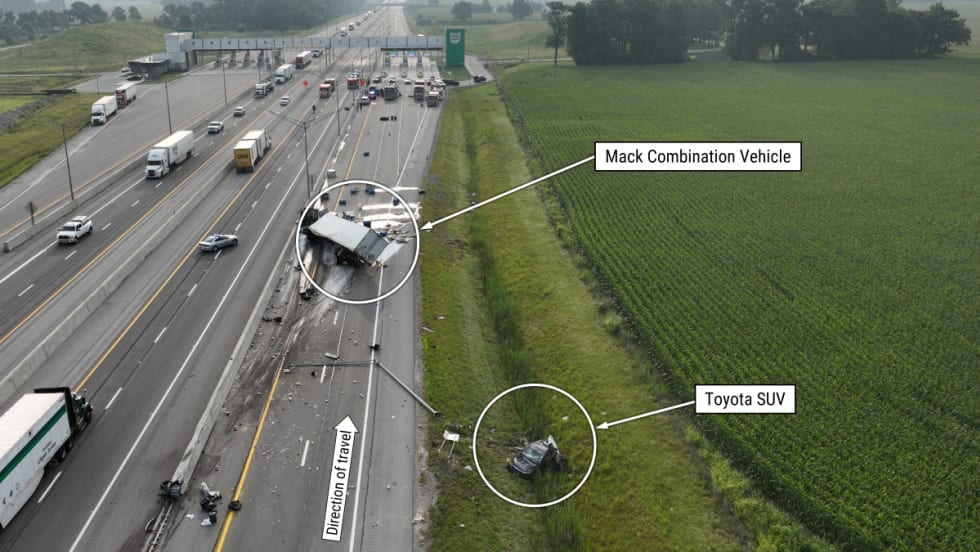
Fatal Crash Exposes Toll Plaza Risks
An NTSB investigation found that last-minute lane changes and large speed differences at an Ohio toll plaza created a hazard the truck driver couldn't avoid in time.
Read More →
When Language Stops the Truck: The Return of ELP Out-of-Service Orders
English language proficiency rules for commercial drivers aren’t new, but renewed out-of-service enforcement has raised the stakes. Here’s what carriers need to know before a driver reaches a roadside inspection.
Read More →
A Camera Isn't a Safety Program. Here's What Brokers Are Screening for Now
Footage alone may not be enough to pass broker vetting processes. Here's what counts as a defensible safety program now.
Read More →

Marijuana and Trucking’s Drug-Testing Dilemma
Marijuana is getting stronger, laws are changing, and drug tests still can’t reliably establish impairment. What does that mean for truck drivers and the fleets that employ them?
Read More →
PrePass, Kodiak Connect Driverless Trucks to Roadside Enforcement
The system will allow enforcement agencies to verify Enhanced Inspection information and decide whether Kodiak’s autonomous trucks can bypass roadside screening sites.
Read More →
From One Generation to the Next: How Mentorship Builds Safer Truck Drivers
After three decades in trucking, Harold Perry shares what he's learned about driver safety, mentorship, and helping the next generation build confidence behind the wheel.
Read More →
FMCSA Pauses Biennial-Update Enforcement Amid Motus Transition
Carriers whose updates were due on or after June 1 have more time, while FMCSA works to stabilize its new registration system and warns of phishing sites impersonating its new carrier registration system, Motus.
Read More →
ZF Expands Commercial Vehicle Push in North America
ZF is expanding its North American commercial-vehicle presence with new transmission applications, electrification, trailer technology and autonomous-driving systems.
Read More →
Truck Drivers Need More Than Another Alert
Fleets have more visibility into truck health, safety events, and driver activity than ever. The next challenge is turning all that information into useful guidance for the person who has to decide what to do next.
Read More →
Tesla Wants a Self-Driving Semi. Are Cameras Enough?
Could Tesla’s camera-only autonomous driving technology work on an 80,000-pound Semi? In this commentary, HDT's Deborah Lockridge takes a look at Tesla, Cybercab, and how autonomous trucks see the road.
Read More →