




CVSA Upbeat on FAST Act Impact on Carrier Safety
As the Commercial Vehicle Safety Association sees it, the FAST Act highway bill included numerous provisions that, once implemented, will improve motor carrier safety.

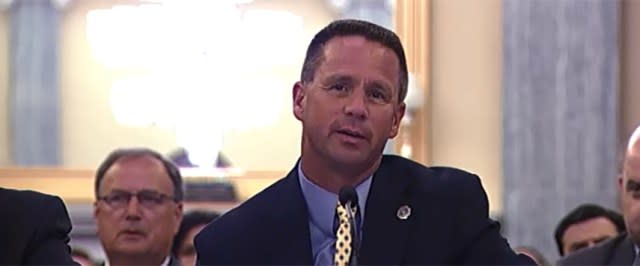
Jay Thompson testifying before U.S. Senate panel. Image: CVSA
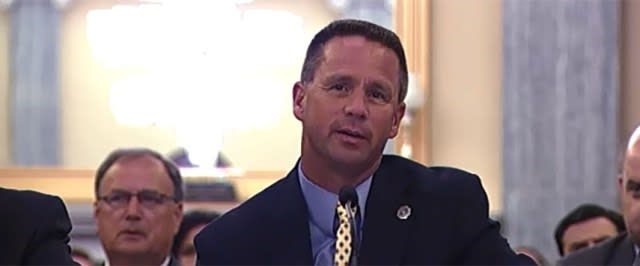
Jay Thompson testifying before U.S. Senate panel.Image: CVSA
As the Commercial Vehicle Safety Association sees it, the FAST Act highway bill passed late last year included numerous provisions that, once implemented, will improve motor carrier safety.
“Increased funding means states can improve their programs and reach more in industry,” stated Maj. Jay Thompson of the Arkansas Highway Police, in testimony he delivered on Capitol Hill this week in his role as president of CVSA.
Thompson went on to tell members of the Senate Subcommittee on Surface Transportation and Merchant Marine Infrastructure, Safety, and Security that changes the bill will bring to the Motor Carrier Safety Assistance Program “will cut out unnecessary administrative burdens and help focus funds where they will be most effective.”
In addition, he testified that changes to the regulatory process mandated by the FAST Act will “help streamline” regulations and improve their clarity and transparency.
Thompson also contended that mandated improvements to data quality and information technology systems will ensure that states and the Federal Motor Carrier Safety Administration will “have the information they need to continue to improve the effectiveness of MCSAP.”
On the other hand, Thompson advised that Congress and stakeholders “still have work to do. A long-term funding mechanism must be identified to ensure MCSAP continues to grow with the industry. Enforcement and industry must come together to identify a responsible, practical approach to exemptions and we must address deficiencies related to passenger carrier enforcement in order to keep our roadways safe for the people traveling on them.”
While he said that “the good news is the Motor Carrier Safety Assistance Program works,” he also remarked that “there are a number of challenges the states are dealing with that diminish the effectiveness of the program. The FAST Act, however, included a number of requirements that, once completed, will improve motor carrier safety and CVSA looks forward to working with Congress, DOT, industry and other stakeholders” on that implementation.
“CVSA strongly supported the changes to MCSAP implemented in the FAST Act,” Thompson said. “The changes, most of which are effective beginning in fiscal year 2017, will provide states with additional flexibility in how they spend their MCSAP grant funds, streamline the grant application process, eliminate redundancies between overlapping programs, and reduce the administrative burden on states, allowing them to spend more time doing the work of the program and less time on administrative activities.”
He called that flexibility critical, contending that it will give states “the ability to design a comprehensive CMV safety program that utilizes creative solutions to address issues unique to each state, while also meeting all program requirements.”
Despite delivering a largely positive message about FAST Act reforms, Thompson was realistic about the task ahead to deliver on the law’s intent. “Implementing these changes is going to be a long and involved undertaking.”
He added that FMCSA has already begun making the necessary changes in preparation for fiscal year 2017, notifying the states of the new configuration and program requirements at the a MCSAP planning meeting that was held back in March.
“Because the changes are so significant and impact every facet of the program,” he added, “it is imperative that CVSA, the state jurisdictions and FMCSA work together to identify potential issues as they arise and identify the best working solution for all parties.”
More Safety & Compliance
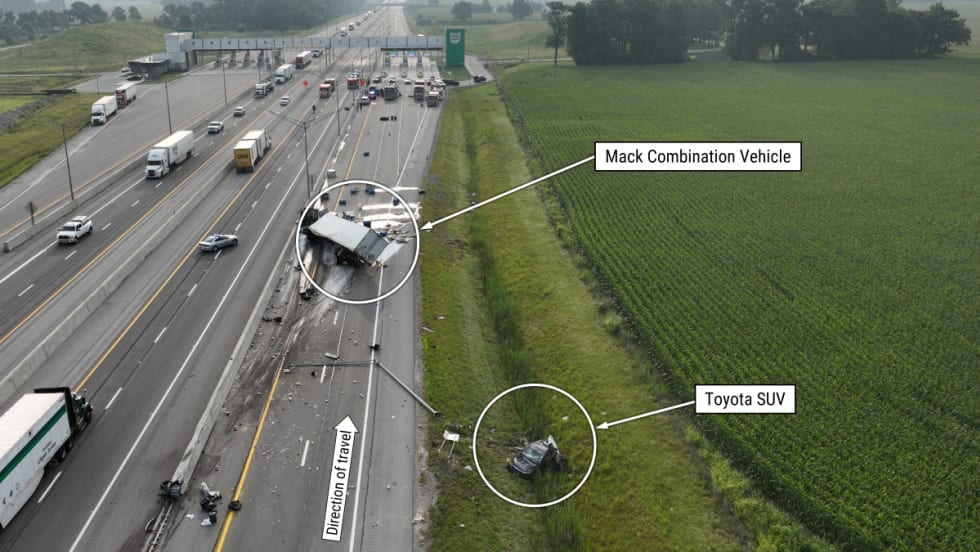
Fatal Crash Exposes Toll Plaza Risks
An NTSB investigation found that last-minute lane changes and large speed differences at an Ohio toll plaza created a hazard the truck driver couldn't avoid in time.
Read More →
When Language Stops the Truck: The Return of ELP Out-of-Service Orders
English language proficiency rules for commercial drivers aren’t new, but renewed out-of-service enforcement has raised the stakes. Here’s what carriers need to know before a driver reaches a roadside inspection.
Read More →
A Camera Isn't a Safety Program. Here's What Brokers Are Screening for Now
Footage alone may not be enough to pass broker vetting processes. Here's what counts as a defensible safety program now.
Read More →

Marijuana and Trucking’s Drug-Testing Dilemma
Marijuana is getting stronger, laws are changing, and drug tests still can’t reliably establish impairment. What does that mean for truck drivers and the fleets that employ them?
Read More →
PrePass, Kodiak Connect Driverless Trucks to Roadside Enforcement
The system will allow enforcement agencies to verify Enhanced Inspection information and decide whether Kodiak’s autonomous trucks can bypass roadside screening sites.
Read More →
From One Generation to the Next: How Mentorship Builds Safer Truck Drivers
After three decades in trucking, Harold Perry shares what he's learned about driver safety, mentorship, and helping the next generation build confidence behind the wheel.
Read More →
FMCSA Pauses Biennial-Update Enforcement Amid Motus Transition
Carriers whose updates were due on or after June 1 have more time, while FMCSA works to stabilize its new registration system and warns of phishing sites impersonating its new carrier registration system, Motus.
Read More →
ZF Expands Commercial Vehicle Push in North America
ZF is expanding its North American commercial-vehicle presence with new transmission applications, electrification, trailer technology and autonomous-driving systems.
Read More →
Truck Drivers Need More Than Another Alert
Fleets have more visibility into truck health, safety events, and driver activity than ever. The next challenge is turning all that information into useful guidance for the person who has to decide what to do next.
Read More →
Tesla Wants a Self-Driving Semi. Are Cameras Enough?
Could Tesla’s camera-only autonomous driving technology work on an 80,000-pound Semi? In this commentary, HDT's Deborah Lockridge takes a look at Tesla, Cybercab, and how autonomous trucks see the road.
Read More →