




House Committee Includes Restart Rollback in THUD Bill
The House Appropriations Committee passed a Fiscal Year 2017 transportation spending bill with some key trucking provisions Tuesday, including addressing problems in a previous bill that threatened the industry’s use of a 34-hour restart on driver hours of service.
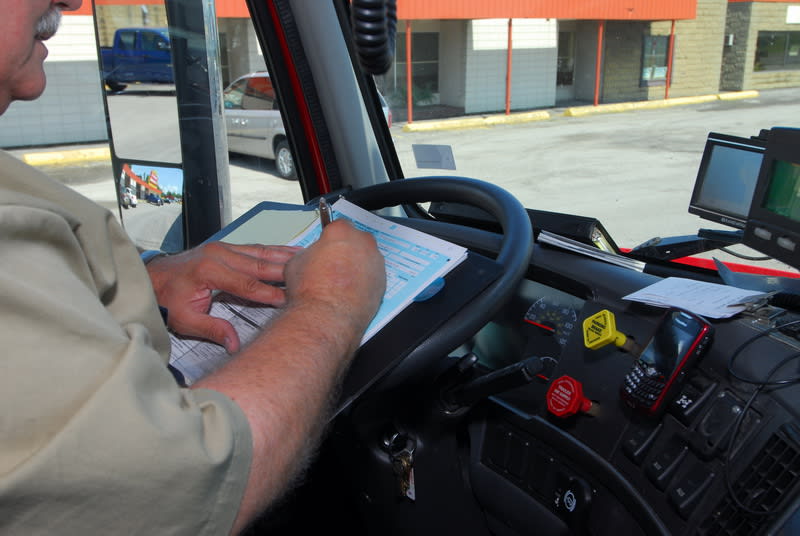

The House Appropriations Committee passed a Fiscal Year 2017 transportation spending bill with some key trucking provisions Tuesday, including addressing problems in a previous bill that threatened the industry’s use of a 34-hour restart on driver hours of service.
The Transportation, Housing and Urban Development funding bill, or THUD, would remove altogether the controversial 2011 restart provisions, which became effective on July 1, 2013, but were suspended by Congress in late 2014. This would restore the 2005 restart rules, which allow unlimited use of the restart provision and does not require two 1 a.m. to 5 a.m. periods in any restart as was called for in the 2011 rule.
The House bill would also require the Federal Motor Carrier Safety Administration to halt work on the Safety Fitness Determination rulemaking until the agency satisfies Congress that it had finished overhauling the CSA program as required by MAP-21. And it “facilitates interstate commerce by affirming a uniform hours of service trucking requirement,” according to a committee press release.
The legislation includes funding for the Department of Transportation, the Department of Housing and Urban Development, and other related agencies. The amount is nearly $5 billion below the request of the Obama administration.
“This bill invests in critical national infrastructure to help move our people and products as safely and efficiently as possible. It prioritizes important programs and projects, making the best use of every transportation dollar,” House Appropriations Chairman Hal Rogers said in a statement.
The bill allows $44 billion from the Highway Trust Fund to be spent on the Federal-aid Highways Program – $905 million above the fiscal year 2016 level. This funding mirrors the levels authorized in the Fixing America’s Surface Transportation Act (FAST Act), approved last year.
The Senate last Thursday passed its own version of the 2017 THUD bill. The Senate version ties the future of any 34-hour restart provision directly to the results of the FMCSA’s Congressionally mandated study on the 2011 restart provision.
American Trucking Associations praised the House Appropriations Committee action and urged the full House to take up and quickly pass the legislation and resolve the differences with the Senate version of the bill.
ATA President and CEO Bill Graves noted that, “in addition to allocating funding for important transportation projects, this legislation will ensure that commercial drivers can still utilize the 34-hour restart provision of the hours-of-service rules.”
This and the Senate bill both aim to fix a technical glitch in last year’s Omnibus appropriations bill that could eliminate the 34-hour restart. Because of the legislative glitch, if a study currently underway by the U.S. Department of Transportation finds that some controversial restrictions on the restart imposed by the DOT in 2013 do not provide specific health and safety benefits to drivers, the entire restart, not just the restrictions, could be eliminated. Those restrictions were suspended while the DOT performs the study.
If this language is not fixed, it would lead to “to millions of drivers being deprived of needed flexibility and forced to use a complex and antiquated system known as a ‘rolling recap’ to monitor their hours,” said Dave Osiecki, ATA executive vice president of national advocacy, in a Q&A on ATA’s website.
In addition, ATA noted that the House bill would “clarify Congress’ objective that interstate trucking be governed by the federal government, not individual states, in order to prevent a patchwork of regulations that needlessly complicates the lives of millions of professional drivers. Federal preemption of certain state laws, such as state rest break rules, helps to facilitate interstate commerce, benefitting consumers and the national economy, while also continuing to protect driver safety with uniform federal regulations.”
More Safety & Compliance

FMCSA Pauses Biennial-Update Enforcement Amid Motus Transition
Carriers whose updates were due on or after June 1 have more time, while FMCSA works to stabilize its new registration system and warns of phishing sites impersonating its new carrier registration system, Motus.
Read More →
ZF Expands Commercial Vehicle Push in North America
ZF is expanding its North American commercial-vehicle presence with new transmission applications, electrification, trailer technology and autonomous-driving systems.
Read More →
Truck Drivers Need More Than Another Alert
Fleets have more visibility into truck health, safety events, and driver activity than ever. The next challenge is turning all that information into useful guidance for the person who has to decide what to do next.
Read More →
Tesla Wants a Self-Driving Semi. Are Cameras Enough?
Could Tesla’s camera-only autonomous driving technology work on an 80,000-pound Semi? In this commentary, HDT's Deborah Lockridge takes a look at Tesla, Cybercab, and how autonomous trucks see the road.
Read More →
What DOT’s Automated Vehicle Strategy Means for Trucking
The U.S. Department of Transportation issued a new automated-vehicle strategy that outlines plans for driverless-truck regulations, cross-state freight corridors, and federal safety standards.
Read More →
NYC Expands Speed, Pedestrian Safety Tech Across Fleet
New York City is expanding intelligent speed assistance and pedestrian-alert systems across its municipal fleet, moving the technologies from pilot programs into vehicle procurement and retrofit requirements.
Read More →
FMCSA Removes 110 Truck Driver Training Schools from Certified ELDT List
Federal regulators also are targeting more than 160 additional training providers and launching a nationwide audit of third-party CDL skills testers as part of a broader crackdown on trucking fraud.
Read More →
Beyond DOT Compliance: What Makes a Trucking Fleet Truly Safe?
A trucking fleet can follow every rule and still make unsafe decisions. The real test comes when safety conflicts with freight, productivity, or cost.
Read More →
Hours of Service Pilot Programs: FMCSA Readies for 2027 Rollout
Two pilot programs could eventually reshape hours-of-service rules, giving truck drivers options to pause their 14-hour clock or use longer split sleeper rest periods.
Read More →
New Guide Offers Pet Safety Tips for Truck Drivers
Hundreds of thousands of pets travel in truck cabs. A new safety guide from Volvo Trucks and the Center for Pet Safety offers practical advice for truck drivers who bring dogs and cats along for the ride.
Read More →