




Mexican Trucking: More Professional Than You May Think
MEXICO CITY -- For some people in the United States, say "Mexican trucking company" and they envision ramshackle trucks, drivers who are reckless and fleets that don’t care about safety. A visit to one of the country's largest fleets shows a professional, safety-focused operation with a focus on drivers.

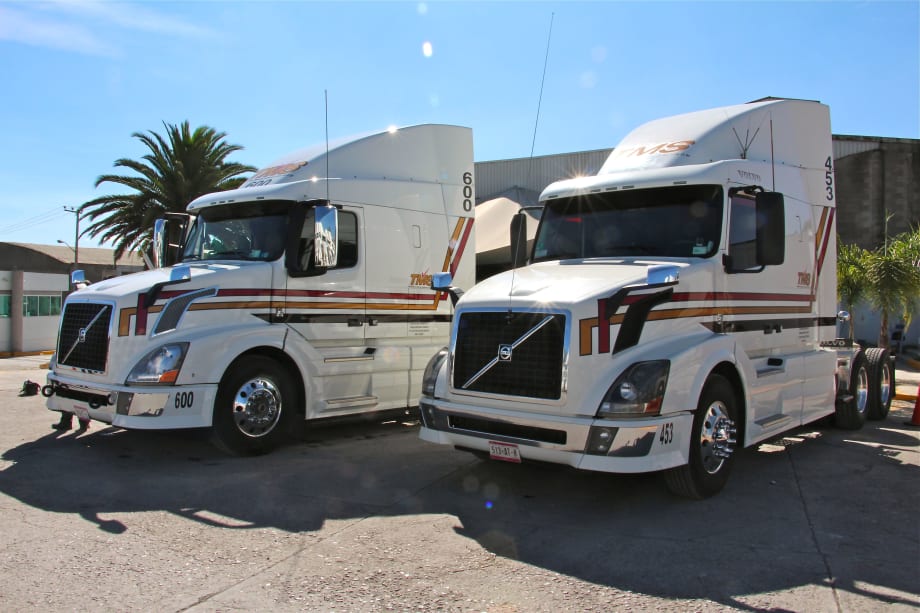
Two of the new Volvo VNL trucks with the I-Shift transmission at Transportes Monroy Schiavon. Photo: Evan Lockridge
MEXICO CITY -- For some people in the United States, say "Mexican trucking company" and they envision ramshackle trucks, drivers who are reckless and fleets that don’t care about safety.
They've likely never been south of the border to see what the operation of a Mexican trucking company really looks like.
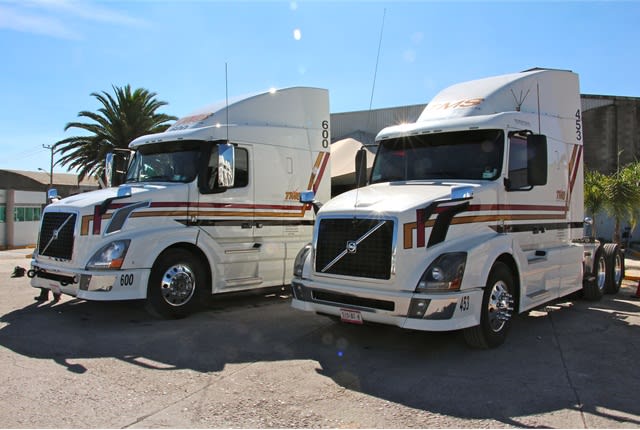
Two of the new Volvo VNL trucks with the I-Shift transmission at Transportes Monroy Schiavon. Photo: Evan Lockridge
A visit this week with the truckload carrier Transportes Monroy Schiavon, headquartered in Mexico City, revealed they are as professional as many of their U.S.-based counterparts -- and struggle with many of the same issues as carriers do north of the border.
Since its founding in 1979, TMS has grown from one truck and one driver to the 16th largest trucking operation in Mexico, with more than 500 power units. That's huge by Mexican standards, where only 100 trucking companies in the country have more than 100 power units.
Among its customers are household names such as Walmart, Proctor & Gamble, ExxonMobil and others. It works with several U.S.-based fleets in moving cargo between Mexico and the U.S., including Con-way, USA Truck, Landstar, Schneider and Celadon.
Driver Focused
TMS Director of Commercial Operations, Laura Mandujano Valdes, stressed in a meeting with reporters that one of the biggest challenges it is facing is one that U.S. carriers are dealing with: finding qualified drivers.

TMS Director of Commercial Operations, Laura Mandujano Valde. Photo: Evan Lockridge
“We believe drivers are our main asset,” she explained. “Our goal is to find professional drivers, not someone who wants to be a rebel.”
She said TMS’ recipe for finding qualified drivers involves checking prospects’ backgrounds going back five years, which is also done at the request of many customers.
In addition to making sure they have the proper licensing, the company also monitors the health of drivers each and every time they leave out from a company yard by having a nurse give them a brief exam and signing off they are healthy to drive. TMS says it also has established a maintenance program, legal support for drivers and security measures.
“Drivers are bad about believing they are supermen and nothing bad will happen to them,” she said.
Equipment Strategy
The company says it is extending its driver-centered approach to using technology to aid drivers. This strategy includes upgrading equipment, including employing high security measures such as satellite tracking. It also includes using new technology on its trucks through its purchase of Volvo’s VNL models, with most every one coming with the company’s propriety I-Shift automated manual transmission.
In fact, TMS has gotten the first trucks in Mexico with Volvo’s I-Shift transmission. When the delivery is completed, it will make TMS 100% Volvo when it comes to fifth-wheel-equipped trucks. Currently TMS also runs about three dozen Class 8 straight trucks from other truck makers, which it plans to keep.
Valdes says the addition of the I-Shift automated manual transmission is being done for many reasons. One of the biggest is driver comfort. The company believes the more comfortable a driver is, the better he or she will perform on the roadway. It's also being done for the sake of efficiency, or more specifically fuel efficiency. TMS says automated manuals clearly outperform pure traditional manuals.
Such concerns about the driver have led TMS to have a turnover rate that would make any long-haul fleet in the U.S. jealous: 25%. The overall Mexican truck fleet turnover rate is 60% to 70%. Currently, the annual turnover rate is around 100% for big truckload carriers in the U.S.
Of course, things aren't perfect at TMS or other Mexican trucking operations. TMS has problems with cargo thefts and fuel thefts, but it said such incidents are lessening.
According to Valdes, TMS plans to stay focused on buying new technology to improve its bottom line, rather than resorting to paying drivers less in a competitive market.
Related Story:
More Drivers

Truck Drivers Need More Than Another Alert
Fleets have more visibility into truck health, safety events, and driver activity than ever. The next challenge is turning all that information into useful guidance for the person who has to decide what to do next.
Read More →
FMCSA Removes 110 Truck Driver Training Schools from Certified ELDT List
Federal regulators also are targeting more than 160 additional training providers and launching a nationwide audit of third-party CDL skills testers as part of a broader crackdown on trucking fraud.
Read More →
Hours of Service Pilot Programs: FMCSA Readies for 2027 Rollout
Two pilot programs could eventually reshape hours-of-service rules, giving truck drivers options to pause their 14-hour clock or use longer split sleeper rest periods.
Read More →
Medical Cards, English Proficiency Reshape Roadcheck Violations
Medical-card violations jumped to the top of the driver out-of-service list during CVSA’s 2026 International Roadcheck, while English-language proficiency violations appeared among the leading violations for the first time.
Read More →
Driver Trust Can Make or Break the Success of Fleet Safety Technology
New Teletrac Navman research suggests that onboarding, transparency about driver data, and positive feedback can play a significant role in how commercial drivers respond to safety and coaching technology.
Read More →
EEOC Sues KLLM Over Alleged Sex Discrimination in Driver Training
KLLM is facing a federal sex-discrimination lawsuit over policies the EEOC alleges put female truck driver trainees at a disadvantage.
Read More →
FMCSA Moves to Codify English Language Requirements for Commercial Drivers
By changing regulations on English-language proficiency requirements for commercial drivers, rather than relying on a guidance memo, the FMCSA said future administrations won't be able to walk back the Trump administration's stricter enforcement with just a memo.
Read More →
Drivers Put Western Star Trucks to the Test at Star Nation Experience
Watch to get an inside look at the Western Star trucks, technology, and community behind the Star Nation Experience 2026!
Read More →
Trump Administration Looks to Put More Veterans Behind the Wheel
The Freedom Haulers program pulls together existing and expanded programs at several federal agencies to recruit veterans to drive commercial heavy-duty trucks and cut the red tape for them to get a CDL, training, and employment.
Read More →
Putting Mack’s Command Steer to the Test
A test drive of Mack’s Command Steer active steering system evaluates how it can make truck driving easier and less tiring.
Read More →