




Questions Continue about CSA; Logs, Lamps Top CSA Violations
“CSA has had an effect on safety, but people want to make sure their scores are correct and fair,” said Rob Abbott, vice president of safety policy, American Trucking Associations during an update on the program at the recent Zonar user’s conference held in San Antonio last week. Also part of the update, Commercial Vehicle Safety Alliance head Steve Keppler went over the top CSA violations.


Rob Abbott, vice president of safety policy, American Trucking Associations, discusses the CSA program during Zonar Systems' user conference May 16.

“CSA has had an effect on safety, but people want to make sure their scores are correct and fair,” said Rob Abbott, vice president of safety policy, American Trucking Associations, during an update on the program at the recent Zonar user’s conference held in San Antonio last week. Also part of the update, Commercial Vehicle Safety Alliance head Steve Keppler went over the top CSA violations.
CSA is the Federal Motor Carrier Safety Administration’s primary tool for identifying and targeting unsafe motor carriers and improving overall truck safety. It is probably a sufficient tool to improve safety, Abbott said, but he added that it’s inappropriate for shippers to make judgments based on individual scores and how they relate to crash rates.
But there are problems with the system. Some of these issues were addressed with changes made in December, which included:
Renaming the Fatigue BASIC to Hours-of Service
Changing Cargo BASIC to HazMat BACIS and pushing all cargo securement violations into vehicle maintenance.
Changing how CSA determines HazMat carriers.
More accurately identifying HazMat carriers and passenger carriers for lower thresholds.
Aligning violations in the SMS database with Commercial Vehicle Safety Alliance inspection levels (eliminated driver violations from vehicle-only inspections and vehicle violations from driver-only inspections.
Removing 1-5 mph speed violations since that’s the variance allowed in speedometer design.
Lowering the severity weight for speeding violations that do not designate how much over the speed limit the driver was driving.
Aligning the weight of paper and electronic log violations.
Currently the program is being audited by the Department of Transportation’s Inspector General’s office and the Government Accountability Office, the investigative arm of the U.S. Congress to access the effectiveness of the program.
A key issue, Abbott said, is whether or not there enough data within the system at this point and if the data covers enough fleets. The data for CSA comes from the 3.6 million commercial vehicle inspections performed by state and federal inspectors each year and from state crash reports.
He said only about 12% of carriers have scores in a least one BASIC category and only 3% have scores in all categories.
And the GAO says the FMCSA only has enough data to score 5.7% of small carriers (five or fewer trucks) in any basic.
While research shows a relationship between CSA scores and crash rates for some BASICs, there is no clear relationship between the HazMat scores and crash rates.
Another question, Abbott said, was the weighting that certain violations receive (some violations are counted higher than others based on their crash risk.)
While FMCSA says the severity weights reflect crash risk of the violation, a study by the University of Michigan Transportation Research Institute said it is unknown if the weights used in CSA are appropriate.
Another study, by the American Transportation Research Institute, said that it’s likely the severity weighting methodology places too much weight on safety-irrelevant violations and too little on safety-critical violations in the Drug/Alcohol BASIC.

Top 10 Violations
Steve Keppler, executive director of the Commercial Vehicle Safety Alliance, outlined the top driver and vehicle violations cited during roadside inspections:
Top Driver Violations
Log-form and manner
Record of duty status not current
No medical certificate in possession
Non-English speaking driver
Speeding 6-10 mph over limit
Failing to use seat belt
14-hour violation
Failure to obey traffic control device
False record of duty status
Expired medical examiners certificate
Top Vehicle Violations
Does not have required lamps
Defective lighting
Tire tread depth less than 2/32”
Inspection/repair and maintenance of parts and accessories
Brakes out of adjustment
Oil and or grease leak
Failing to secure brake hose
Operating a CMW without periodic inspection
No or a discharged fire extinguisher
Automatic brake adjuster, air brakes
More Fleet Management
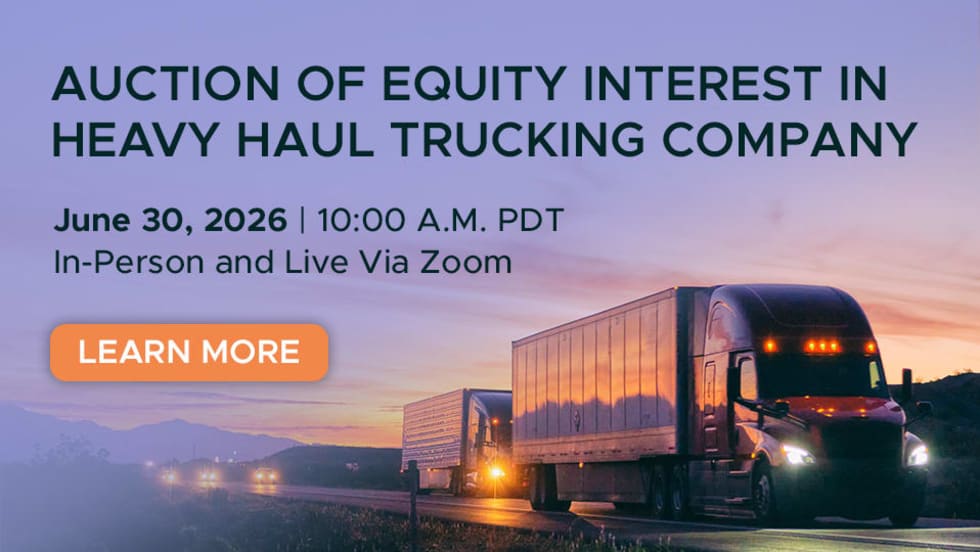
AUCTION OF EQUITY INTEREST IN HEAVY HAUL TRUCKING COMPANY!!
Mark your calendar: June 30, 2026 (10:00 a.m. PDT). MagnaTrans, LLC, a California limited liability company doing business as Magna Transportation Group is going to auction! Bid on a 37.5% ownership interest in this Rancho Cucamonga-based heavy haul and over-dimensional trucking company operating across California, Oregon, and Arizona. The equity interest will be sold to the highest bidder or bidders under Article 9 of the Uniform Commercial Code at 10:00 a.m. PDT.
Read More →
Volvo Trucks Adds Unattended Over-the-Air Software Update Capabilities
The latest evolution of Volvo’s over-the-air update technology allows software updates to run while trucks are parked, helping fleets keep vehicles current without disrupting operations.
Read More →
How Waste Connections is Using Data, Telematics, and AI
How do you manage and maintain more than 18,000 connected trucks? Data. Lots of it.
Read More →

Why Fleet Data Matters More Than Ever at Waste Connections [Watch]
Waste Connections' Chuck Palmer explains how telematics, predictive maintenance, safety analytics, and AI help keep vehicles on the road and drivers safe in this episode of HDT Talks Trucking.
Read More →
NMFTA Launches Free, Anonymous Cybersecurity Threat Report Portal
Organizations are encouraged to anonymously report freight fraud, cargo crime, and cyber threats while gaining visibility into incidents reported across the transportation sector.
Read More →
AI Can Optimize a Fleet. Can It Replace Human Judgment?
Fleets fear falling behind if they don’t adopt AI quickly enough. They also fear what happens if the technology makes the wrong decision.
Read More →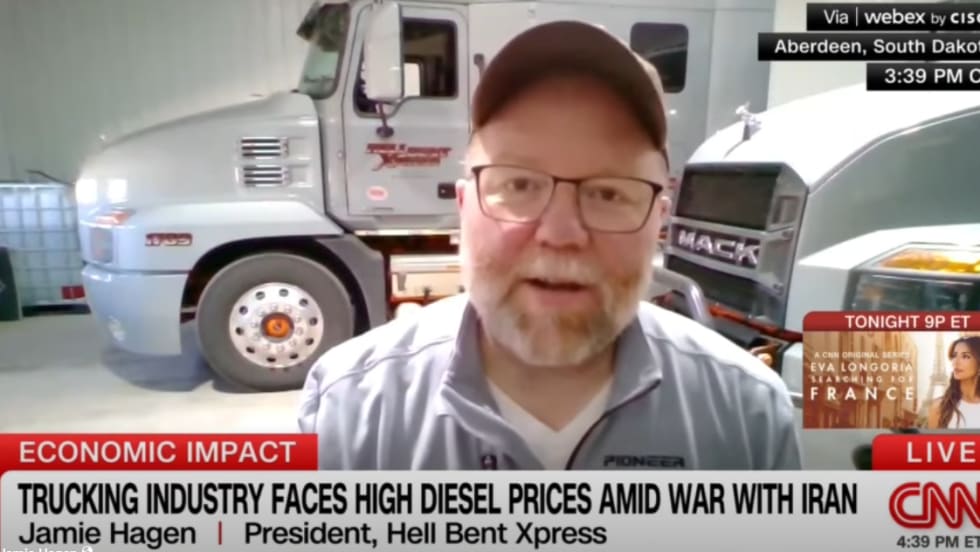
Jamie Hagen Gets Real About Running a Small Fleet in an Uncertain Economy
Small fleet owner Jamie Hagen says new legal risks, volatile fuel prices, and a changing freight market are forcing small carriers to rethink how they operate — and what they can afford.
Read More →
Jamie Hagen Gets Real About Freight, Fuel Prices, Safety, and Small-Fleet Survival
Running a small trucking fleet right now isn’t easy, especially right now. And Jamie Hagen doesn’t sugarcoat it.
Read More →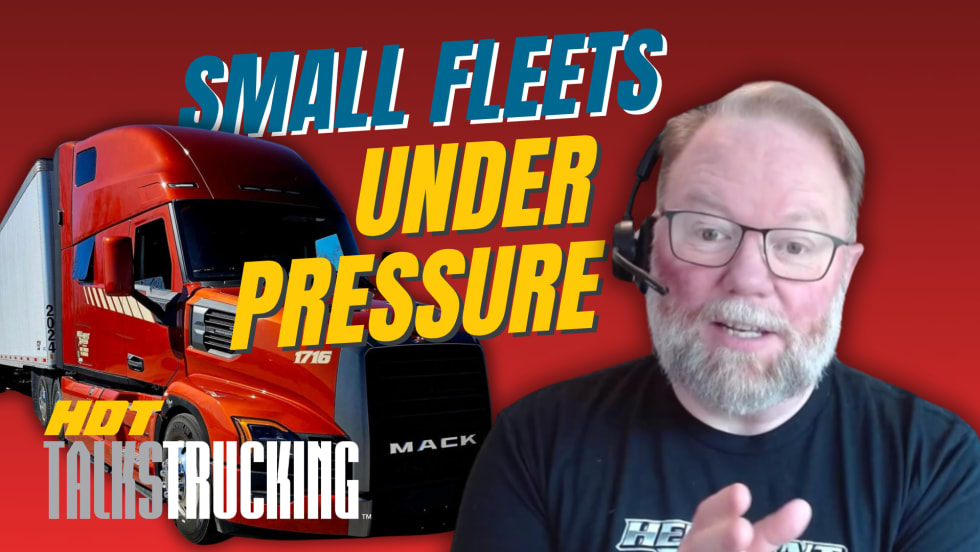
Jamie Hagen Gets Real About Freight, Fuel Prices, Safety, and Small-Fleet Survival
Running a small trucking fleet right now isn’t easy, especially right now. And Jamie Hagen doesn’t sugarcoat it.
Read More →
Data Lock‑In or Integration Lock‑Out?
Data fragmentation is costing dealerships, OEMs, fleets, and upfitters millions. Here’s why interoperability may be the fix the trucking industry needs.
Read More →