




AAA Study: Behind-the-Wheel Cell Phone Users More Likely to Speed and Drive Drowsy
Motorists who use cell phones while driving are more likely to engage in additional dangerous behaviors such as speeding, driving drowsy, driving without a seatbelt and sending texts or e-mails, according to a survey conducted by the AAA Foundation for Traffic Safety.


Motorists who use cell phones while driving are more likely to engage in additional dangerous behaviors such as speeding, driving drowsy, driving without a seatbelt and sending texts or e-mails, according to a survey conducted by the AAA Foundation for Traffic Safety.
Additionally, more than two-thirds (69%) of licensed drivers reported talking on a cell phone while driving within the past month, despite the fact that nearly nine in 10 respondents (89%) believe other drivers using cell phones are a threat to their personal safety.
"Ninety percent of respondents believe that distracted driving is a somewhat or much bigger problem today than it was three years ago, yet they themselves continue to engage in the same activities," said Peter Kissinger, president and CEO of the AAA Foundation for Traffic Safety.
"More work clearly is needed to educate motorists on the risks associated with using a cell phone while driving, especially given that most Americans believe this problem is becoming worse."
Motorists who fairly often or regularly used their cell phones over the past month also reported that they engaged in additional risky behaviors. The research shows:
- 65% also reported speeding.
- 44% also reported driving while drowsy.
- 53% also reported sending a text or e-mail.
- 29% also drove without a seatbelt.
Conversely, drivers that reported never using a cell phone were much less likely to report additional risky behaviors:
- 31% reported speeding.
- 14% reported driving drowsy.
- 3% reported sending a text or email.
- 16% drove without a seatbelt.
Despite the near-universal disapproval of texting and e-mailing while driving (95%), more than one in four licensed drivers (27%) reported sending a text or e-mail at least once in the past 30 days, and more than one-third (35%) said they read a text or e-mail while driving.
Young drivers age 16-24 were even more likely, with more than half (61%) reporting having read a text or e-mail while driving in the past month, while more than one in four (26%) reported checking or updating social media while driving.
"What concerns AAA is this pattern of risky behavior that even goes beyond cell phone use," said Kathleen Bower, AAA vice president of public affairs. "These same cell phone-using drivers clearly understand the risk of distraction, yet are still likely to engage in a wide range of dangerous driving activities."
Driver use of cell phones impairs reaction times and roughly quadruples crash risk. Additionally, the National Highway Traffic Safety Administration reports that more than 3,000 people are killed and nearly half a million are injured each year in crashes involving distraction.
This is likely an underestimate, given the challenges associated with determining the role of distraction in crashes.
AAA and the AAA Foundation for Traffic Safety have long been leading advocates in educating motorists about the risks of distracted driving. AAA recommends that motorists turn off their phone before driving or pull over to a safe place to talk, send texts or use e-mail.
AAA also has launched a legislative campaign to advocate for a text messaging ban in all 50 states. To date, 39 states and the District of Columbia have adopted this key traffic safety measure and AAA expects all 11 remaining states to consider this legislation in 2013.
The distraction data were collected as part of the AAA Foundation's "2012 Traffic Safety Culture Index," a nationally representative, probability-based survey of 3,896 U.S. residents ages 16 and older.
The sample is representative of all U.S. households reachable by telephone or by regular mail. The questionnaire was made available in English and Spanish, and respondents were able to complete it in the language of their choice.
The AAA Foundation for Traffic Safety provides additional details in the "2012 Traffic Safety Culture Index," and as part of a report called "Distracted and Risk-Prone Drivers."
More Safety & Compliance

How Waste Connections is Using Data, Telematics, and AI
How do you manage and maintain more than 18,000 connected trucks? Data. Lots of it.
Read More →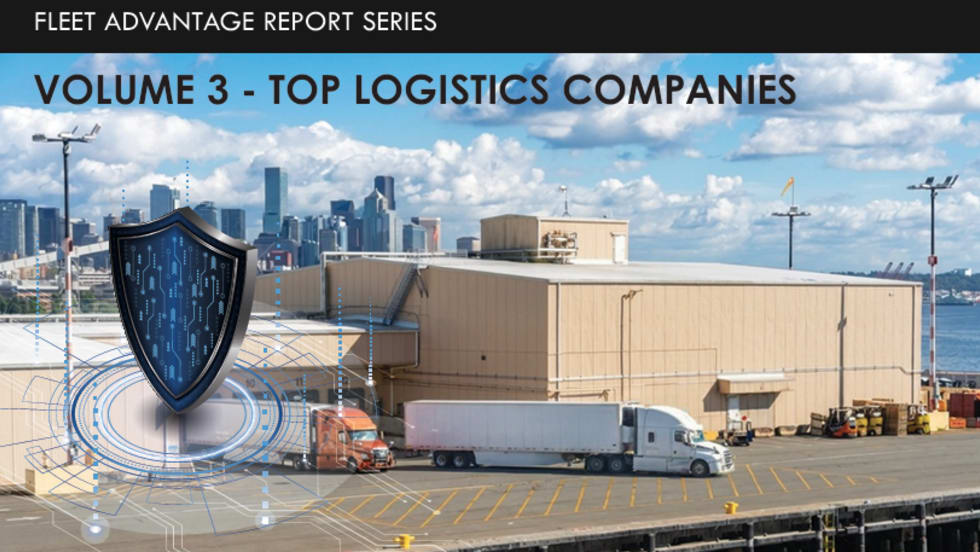
Fleet Advantage: Top Logistics Fleets Outperform National Safety Benchmarks
Fleet Advantage's latest TRUST Safety Index found leading logistics fleets maintained significantly lower out-of-service rates and stronger safety scores than national averages, while highlighting persistent challenges related to tires, brakes, and unsafe driving behaviors.
Read More →
Why Fleet Data Matters More Than Ever at Waste Connections [Watch]
Waste Connections' Chuck Palmer explains how telematics, predictive maintenance, safety analytics, and AI help keep vehicles on the road and drivers safe in this episode of HDT Talks Trucking.
Read More →
Short Takes: How K&B is Using AI
Fleets need to "get on board the train" with AI, says Lance Evans of K&B Transportation in this HDT Talks Trucking Short Takes episode.
Read More →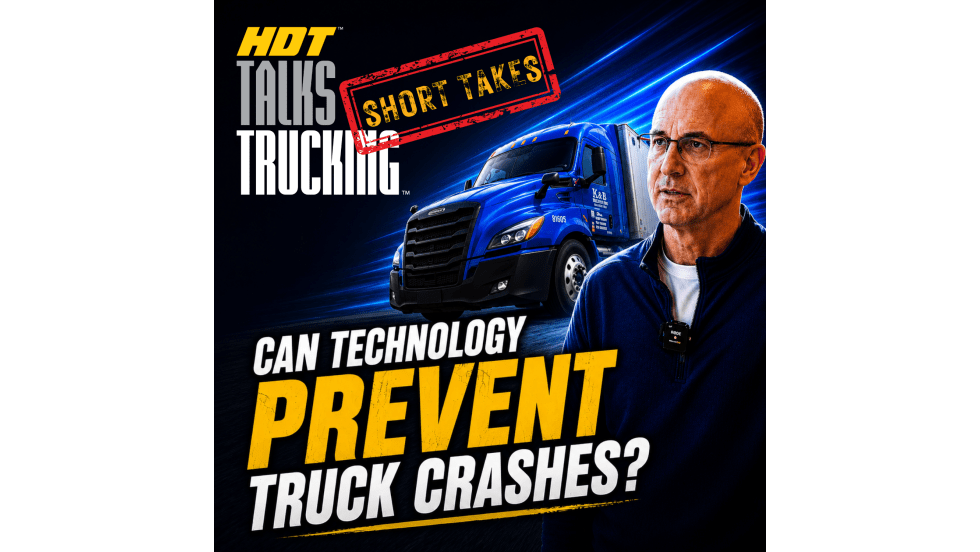
Short Takes: Inside K&B’s Truck Safety Tech
Listen to learn how K&B Transportation uses cellphone-blocking technology, speed management systems, weather geofencing, bridge avoidance tools, and more to improve driver safety.
Read More →
The Biggest Gap in Driverless Trucking Isn’t Tech. It’s Safety Validation
Nauto’s Stefan Heck says autonomous trucks are advancing quickly but proving they’re safe enough for large-scale deployment may be the industry’s hardest challenge.
Read More →
Truck Crash Rates Are Down. So Why Do Insurance Costs Keep Rising?
ATRI’s latest research points to litigation, social inflation, and soaring claims costs as key drivers behind record-high liability premiums for trucking fleets. But there are things motor carriers can do.
Read More →
FMCSA Removes More Than a Dozen ELDs from Registered List
The FMCSA continues its efforts to fight electronic logging devices that don't meet federal requirements, removing more than a dozen from the registered ELD list in May.
Read More →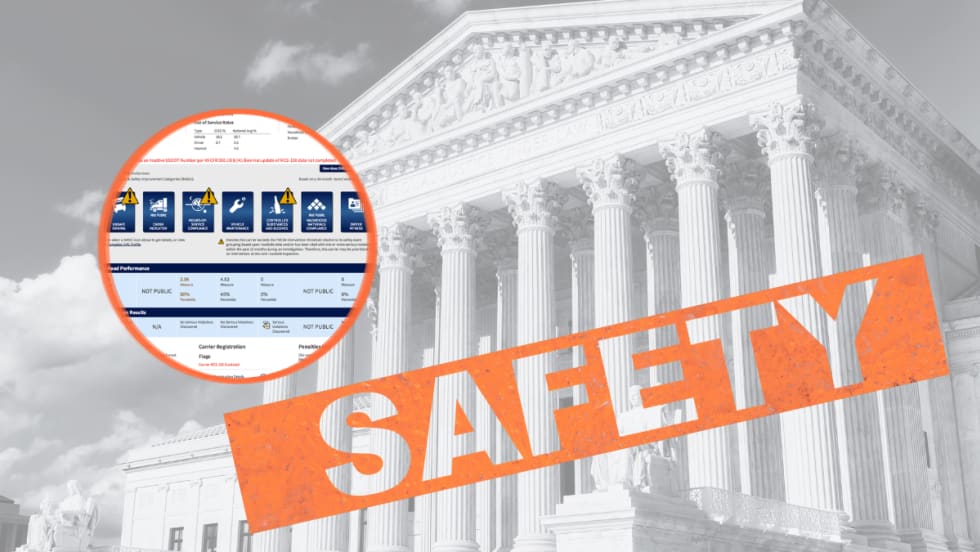
How the Supreme Court Broker Liability Ruling Could Reshape Trucking’s Safety Landscape
The Supreme Court’s May 11 broker-liability ruling may not radically rewrite transportation law overnight. But industry experts say it will intensify pressure on brokers, carriers, and shippers to prove they are prioritizing safety.
Read More →
Recall of Fontaine Fusion Flatbeds Warns Owners Not to Use the Trailers
Some Fontaine Fusion flatbed trailer manufactured between February 2025, and March 2026 could have mainbeams weakened by hydrogen embrittlement because of a problem in the galvanizing process.
Read More →