




Volvo Honors Safe Fleets
LAS VEGAS - Volvo Trucks honored two fleets with its 2012 Volvo Trucks Safety Award. Each recipient will receive $25,000 to be used toward safety-related activities
LAS VEGAS - Volvo Trucks honored two fleets with its 2012 Volvo Trucks Safety Award. Each recipient will receive $25,000 to be used toward safety-related activities.
The fleets were recognized during an awards ceremony at the American Trucking Associations Management Conference & Exhibition in Las Vegas. - Michelin Americas Truck Tires partnered with Volvo for the 2012 Volvo Trucks Safety Award again this year. To be considered, fleets had to operate at least five Class 8 trucks, and at least one of those had to be a Volvo.
"Safety has been a core value for Volvo since the company was founded in 1927," said Magnus Koeck, Volvo Trucks vice president, marketing and brand management. "Both companies showed dedication to running the safest operations. The whole company is committed to safety; resources are dedicated to the effort. Investment in drivers is another criteria. Skilled dedicated drivers make all the difference. We also take into consideration a focus on prevention. These fleets know that everybody wins when accidents don't occur."
The awards are given in two categories: one for fleets with less than 20 million miles of annual operation and the other for those with more than 20 million miles. Fleets were ranked by their accident frequency rates, using the U.S. Department of Transportation definition of a "recordable accident," as well as their accident prevention programs.
Erb International Inc. of New Hamburg, Ontario, won the Volvo Trucks Safety Award in the over 20 million miles category. The Erb Group of companies began as a one-man operation in 1959 and now employs more than 1,200 staff and 140 owner-operators across a network of 10 terminals. Erb International operates more than 240 trucks, and in 2011 recorded an accident frequency rate of just .294 while logging 27.2 million miles on the road.
Erb International focuses on employee training and performance by establishing an employee and driver wellness program, encouraging and supporting driver participation in Truck Driving Championships, offering a driver performance monitoring and incentive program and collecting driver performance data for use in developing driver risk assessment reports. They also stress preventative safety through a hazard prevention program, active communication of safety reminders in all terminal driver's rooms and available driver supervisors and trainers at each terminal.
Munoz Trucking Inc. of El Paso, Texas, received the Volvo Trucks Safety Award in the under 20 million miles category. Munoz Trucking began in 1989 as a dry-van company hauling general freight. Today they provide a wide range of transportation and warehousing services throughout North America. With a fleet of 79 trucks, Munoz Trucking had zero recordable accidents in 2011 during close to 10.2 million miles of operation.
Munoz Trucking employs a three-phase safety process that's enforced in each department. Phase 1 focuses on staying informed of the newest safety regulations and industry trends, with a specific attention on the full status of drivers, including CDL status, driver physical, driver logs and other documentation. Phase 2 focuses on enforcing the safety policies and identifying potential driver issues. Phase 3 rewards safety compliance, providing driver bonuses for every clean DOT inspection and a year-end bonus for remaining accident-free throughout the calendar year.
More Safety & Compliance
How Waste Connections is Using Data, Telematics, and AI
How do you manage and maintain more than 18,000 connected trucks? Data. Lots of it.
Read More →
Fleet Advantage: Top Logistics Fleets Outperform National Safety Benchmarks
Fleet Advantage's latest TRUST Safety Index found leading logistics fleets maintained significantly lower out-of-service rates and stronger safety scores than national averages, while highlighting persistent challenges related to tires, brakes, and unsafe driving behaviors.
Read More →
Why Fleet Data Matters More Than Ever at Waste Connections [Watch]
Waste Connections' Chuck Palmer explains how telematics, predictive maintenance, safety analytics, and AI help keep vehicles on the road and drivers safe in this episode of HDT Talks Trucking.
Read More →
Short Takes: How K&B is Using AI
Fleets need to "get on board the train" with AI, says Lance Evans of K&B Transportation in this HDT Talks Trucking Short Takes episode.
Read More →
Short Takes: Inside K&B’s Truck Safety Tech
Listen to learn how K&B Transportation uses cellphone-blocking technology, speed management systems, weather geofencing, bridge avoidance tools, and more to improve driver safety.
Read More →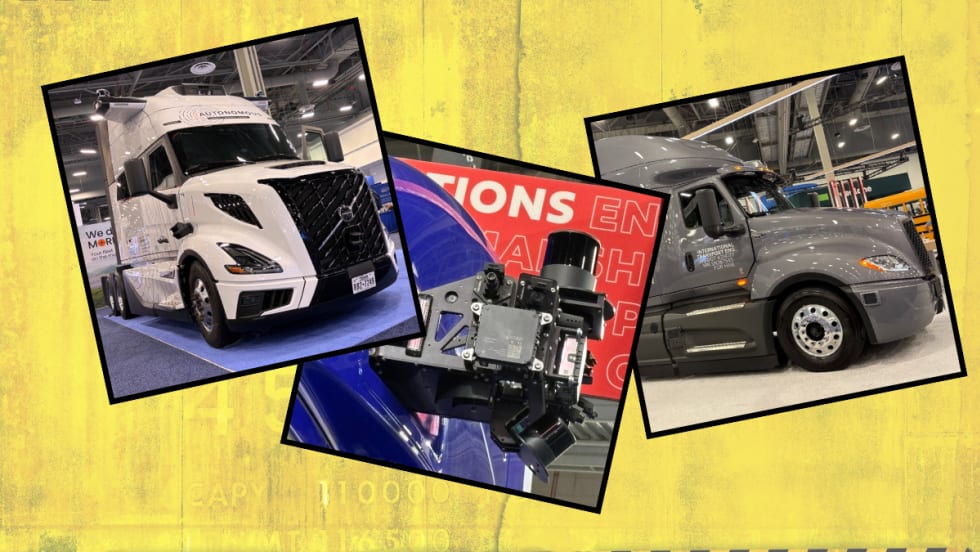
The Biggest Gap in Driverless Trucking Isn’t Tech. It’s Safety Validation
Nauto’s Stefan Heck says autonomous trucks are advancing quickly but proving they’re safe enough for large-scale deployment may be the industry’s hardest challenge.
Read More →
Truck Crash Rates Are Down. So Why Do Insurance Costs Keep Rising?
ATRI’s latest research points to litigation, social inflation, and soaring claims costs as key drivers behind record-high liability premiums for trucking fleets. But there are things motor carriers can do.
Read More →
FMCSA Removes More Than a Dozen ELDs from Registered List
The FMCSA continues its efforts to fight electronic logging devices that don't meet federal requirements, removing more than a dozen from the registered ELD list in May.
Read More →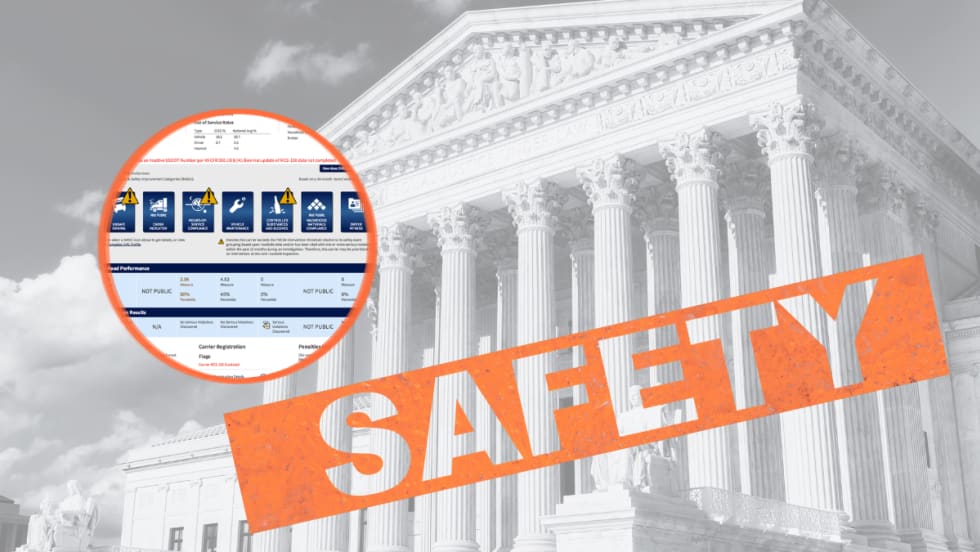
How the Supreme Court Broker Liability Ruling Could Reshape Trucking’s Safety Landscape
The Supreme Court’s May 11 broker-liability ruling may not radically rewrite transportation law overnight. But industry experts say it will intensify pressure on brokers, carriers, and shippers to prove they are prioritizing safety.
Read More →
Recall of Fontaine Fusion Flatbeds Warns Owners Not to Use the Trailers
Some Fontaine Fusion flatbed trailer manufactured between February 2025, and March 2026 could have mainbeams weakened by hydrogen embrittlement because of a problem in the galvanizing process.
Read More →