




Audit Finds Familiar Shortcoming in Cross-Border Trucking Program
It is hard to measure the safety performance of cross-border Mexican trucks because too few of them participate in the trade, says the Inspector General of the Department of Transportation. This is one of several findings in the most recent review of the Federal Motor Carrier Safety Administration border program
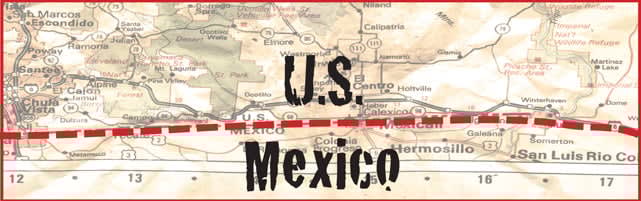
It is hard to measure the safety performance of cross-border Mexican trucks because too few of them participate in the trade, says the Inspector General of the Department of Transportation. This is one of several findings in the most recent review of the Federal Motor Carrier Safety Administration border program.
The agency estimates it needs at least 46 Mexican carriers participating in order to reach its target of 4,100 inspections over three years. But the agency has approved just four applications for authority and completed just 89 inspections, said IG Joseph Come' in his August 16 report.
Since then, several additional Mexican carriers have been cleared to run long-distance across the border. There are now seven, and they have accumulated 132 inspections. Applications for an additional 13 carriers are under review, and applications from six others have been dismissed or withdrawn.
Come' said that the pending applications indicate that more carriers will join, but it is not clear whether even that will provide enough data.
The report is part of an ongoing review process required by law. The next review already is under way.
The IG found that the program fell short in other respects, as well.
He said that agency staff did not properly test Mexican drivers for proficiency in English.
He also said that staff approved some Pre-Authorization Safety Audits before verifying that the carriers had complied with driver license requirements, and that the agency's plan did not include periodic reviews of data quality from the electronic devices it uses to monitor compliance.
And the agency has delayed development of a way to make sure that Mexican carriers do not haul freight within the U.S. The carriers may haul from a point in Mexico to a point in the U.S. and back, but not from one U.S. point to another. The agency has a contract with Teletrac to monitor compliance with these "cabotage" rules, but the company's development of this system is on hold because there are too few carriers to justify the cost.
The IG made four recommendations to the agency:
1. Revise language testing procedures, which the agency has since done.
2. Revise procedures for the pre-authorization audits. The agency did not agree with this, saying that while it recognizes the importance of the PASA process, it has other processes that cover this issue.
3. Start regular checks of its electronic monitoring data. The agency said it already has such a system in place. FMCSA acknowledged that there had been errors in handling a couple of reports, but said they had been corrected.
4. Monitor the carriers for cabotage violations. The agency agreed. It said it monitors cabotage manually and will report violations to Customs and Border Protection in the Department of Homeland Security. When the program is big enough to justify the automated system, it will give Teletrac the go-ahead, the agency said.
The IG's report drew the attention of the Owner-Operator Independent Drivers Association, which has opposed cross-border trucking ever since the U.S. and Mexico signed the North American Free Trade Agreement in 1994.
"This report says what we've been saying all along, that among carriers based solely in Mexico, hardly any are interested in operating in the United States," said OOIDA executive vice president Todd Spencer in a statement.
There are at least two reasons why Mexican carriers are wary of signing up for the program.
One is that the barrier to entry is high. For example, Mexican carriers must have a complete safety management system, including drug and alcohol testing, verification of hours of service compliance, insurance coverage and driver qualifications, among numerous other requirements.
The second is that, due mainly to opposition from OOIDA and the Teamsters union, the cross-border program is in constant jeopardy of being cancelled or suspended.
Under NAFTA, the crossing was supposed to have been opened to long-distance traffic in 2000. The opening was stalled until 2007, in part by difficult negotiations with Mexico but mainly by U.S. labor unions and owner-operator and citizen advocacy groups that oppose free trade, fear the loss of U.S. jobs and argue that Mexican trucks will not be safe.
In 2007 the Bush administration began a demonstration program under which a limited number of U.S. and Mexican carriers could conduct business across the border. The idea was to test the effectiveness of the FMCSA safety management system as a prelude to fully opening the border. This program was killed by Congress.
As is the case with today's program, there were not enough Mexican participants to permit a statistically valid assessment of Mexican safety capabilities. An independent U.S. investigation in 2008 showed that the Mexican carriers in the program had not had any accidents and had much lower out-of-service rates for both drivers and trucks than U.S. carriers do.
The current program was launched in 2011 by the Obama administration after Mexico levied tariffs on U.S. goods in retaliation for the Bush shutdown.
RELATED STORIES:
10/20/2011 - OOIDA, Teamsters, Rep. DeFazio Decry Start of Mexican Truck Program
7/7/2011 - Standoff over Mexican Trucks Resumes with Pilot Program Announcement
More Drivers

Prime Inc. to Open $7.9M Flagship Used-Truck Dealership
A new driver-focused facility to sell Prime Inc's used trucks and trailers will be the first purpose-built location in the company's history.
Read More →
Short Takes: Inside K&B’s Truck Safety Tech
Listen to learn how K&B Transportation uses cellphone-blocking technology, speed management systems, weather geofencing, bridge avoidance tools, and more to improve driver safety.
Read More →
Nussbaum Expands Driver Compensation with Pay Raises, Profit Sharing
Nussbaum Transportation said its latest compensation package could push first-year driver earnings above $90,000 in key hiring markets.
Read More →
Listen: Inside Modern Fleet Safety: AI, Cameras & Speed Control at K&B Transportation
Fleet safety is evolving fast—and technology is at the center of it. Learn how a former commercial vehicle enforcement officer turned director of safety at K&B Transportation is embracing real-world safety technology.
Read More →
Maverick Announces 2026 Driver Pay Raises
New raises for Maverick Transportation drivers will take effect on May 31, 2026.
Read More →
Illinois Trucker Indicted for Nearly $22,000 in Ohio Turnpike Toll Evasion
Authorities say an Illinois trucker avoided paying tolls for two years, and now faces felony charges, possible prison time, and forfeiture of his Freightliner tractor.
Read More →
New Trojan Driver Cargo Theft Scam Bypasses Carrier Vetting Systems
Cargo theft rings plant operatives as drivers inside legitimate, fully vetted carriers, then execute coordinated thefts that look like a traditional straight theft from the outside.
Read More →
WIM, Trucker Path Name Top 3 Women-Friendly Truck Stops
ATA’s Women In Motion Council and Trucker Path highlight three truck stops that meet all seven safety-focused criteria and rank highest among female drivers.
Read More →
FMCSA Extends Paper Medical Card Exemption … Again
Five states still aren't ready to accept commercial driver medical exam information directly from the medical examiner's registry.
Read More →
Mack Launches Digital Driver Guide for Chassis-Specific Truck Info
Mack’s new, virtual owner’s manual delivers VIN-based, on-demand guidance for vehicle systems via web, app, and soon in-cab displays.
Read More →