




Roadcheck 2012 Finds Driver and Vehicle OOS Rates Near Historic Lows
Out-of-service rates during the Commercial Vehicle Safety Alliance's annual Roadcheck inspection blitz in June were the second lowest in 25 years, according to the organization
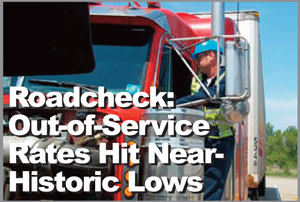
A Roadcheck inspection in Minnesota.
Out-of-service rates during the Commercial Vehicle Safety Alliance's annual Roadcheck inspection blitz in June were the second lowest in 25 years, according to the organization.
In June, CVSA member jurisdictions conducted a record 74,072 truck and bus inspections during the 25th Annual Roadcheck. Of those inspections, 48,815 were North American Standard Level 1 inspections, the most comprehensive roadside inspection. Of those, 22.4% of vehicles and 3.9% of drivers were placed out of service.
These vehicle and driver OOS rates for Level 1 inspections represent the second lowest achieved in 25 years. For comparison, in 1991 (the first year comprehensive data were available,) the Level 1 OOS rates were 34.8% for vehicles and 5.6% for drivers.
The overall OOS rates for the entire event in 2012 (includes all inspection levels) were 20.9% for vehicles and 4.6% for drivers, both of which were higher than last year's numbers.
More Needs to be Done
Despite the positive trend on the Level 1's, this highlights that one in five vehicles selected for inspection was found with a violation serious enough to be considered an imminent safety hazard. These mixed results indicate that, while the attention paid by industry to maintenance and regulatory compliance generally is improving, more needs to be done by industry and enforcement alike, notes the organization.
Roadcheck 2012 emphasized a back-to-the-basics focus, with special attention paid toward braking systems and hours-of-service, the top-ranking violation categories for vehicles and drivers, respectively.
Even with these focus areas, the proportions of brake related and hours-of-service related violations relative to all out-of-service violations declined slightly. In addition, seatbelt violations issued totaled 848, the fewest recorded since 2007.
'Positive impact'
During the event, CVSA estimates that more than 9,500 CVSA and Federal Motor Carrier Safety Administration inspectors participated at approximately 2,500 locations across North America. Also during Roadcheck 2012, 10 states and two Canadian provinces engaged part of their enforcement activities to focus on vehicles serving oil field and natural gas production sites, where increases in commercial truck traffic have raised significant safety concerns.
"This is a clear indication that enforcement and industry's efforts during Roadcheck are having a positive impact," said CVSA Executive director Stephen A. Keppler. "This goes to show that even in these difficult budgetary times for states, provinces and local agencies that each and every roadside inspection is important and makes a difference."
Roadcheck 2012 took place June 5-7, with an average of more than 1,000 trucks or buses inspected every hour during the 72-hour campaign. The United States, Canada and Mexico participated with inspections occurring either at fixed or temporary inspection locations. Inspections included an examination of driver license and credentials, proper and complete records of duty status, safety belt use, driving behaviors and other driver safety conditions. Vehicles were examined for proper brake system maintenance, tire condition, function of lighting systems, properly secured loads, and other vehicle condition related violations.
The annual three-day Roadcheck event has resulted in the inspection of over 1.2 million vehicles since it began in 1988 and gives enforcement, industry and academia an eye on inspection trends from year to year. Meanwhile, enforcement agencies across North America conduct commercial vehicle inspections every day, with approximately 4 million inspections completed in 2011.
CVSA sponsors Roadcheck each year with the support of the Federal Motor Carrier Safety Administration (FMCSA), Canadian Council of Motor Transport Administrators, Transport Canada, and the Secretariat of Communications and Transportation.
Roadcheck 2012 Fact Sheet
Driver results were as follows:
-All inspections: 95.4% of drivers passed, and 4.6% were placed out of service (4.2% were out of service in 2011).
-All Level 1 inspections: 95.1% of drivers passed, and 3.9% were placed out of service (3.7% were out of service in 2011).
-HazMat: 97.7% of drivers passed, and 2.3% were placed out of service (2.5% were out of service in 2011).
-Passenger carrying vehicles: 97.5% of drivers passed, and 2.5% were placed out of service in 2012 (2.6% were placed out of service in 2011).
Vehicle results were as follows:
-All inspections: 79.1% of vehicles passed, and 20.9% were placed out of service (19.3% were out of service in 2011).
-All Level 1 inspections: 77.6% of vehicles passed, and 22.4% were placed out of service (22.8% were out of service in 2011).
-HazMat: 84.4% of vehicles passed the inspection, and 15.6% were placed out of service (17.9% were out of service in 2011).
-Passenger carrying vehicles: 91.4% of vehicles passed the inspection, and 8.6% were placed out of service (8.7% were out of service in 2011).
Other observations:
-The oilfield and natural gas operations emphasis for 2012 resulted in an out-of-service rate of 28.2% for vehicles and 6.7% for drivers, of 149 inspections conducted in 10 states.
More Safety & Compliance

How Waste Connections is Using Data, Telematics, and AI
How do you manage and maintain more than 18,000 connected trucks? Data. Lots of it.
Read More →
Fleet Advantage: Top Logistics Fleets Outperform National Safety Benchmarks
Fleet Advantage's latest TRUST Safety Index found leading logistics fleets maintained significantly lower out-of-service rates and stronger safety scores than national averages, while highlighting persistent challenges related to tires, brakes, and unsafe driving behaviors.
Read More →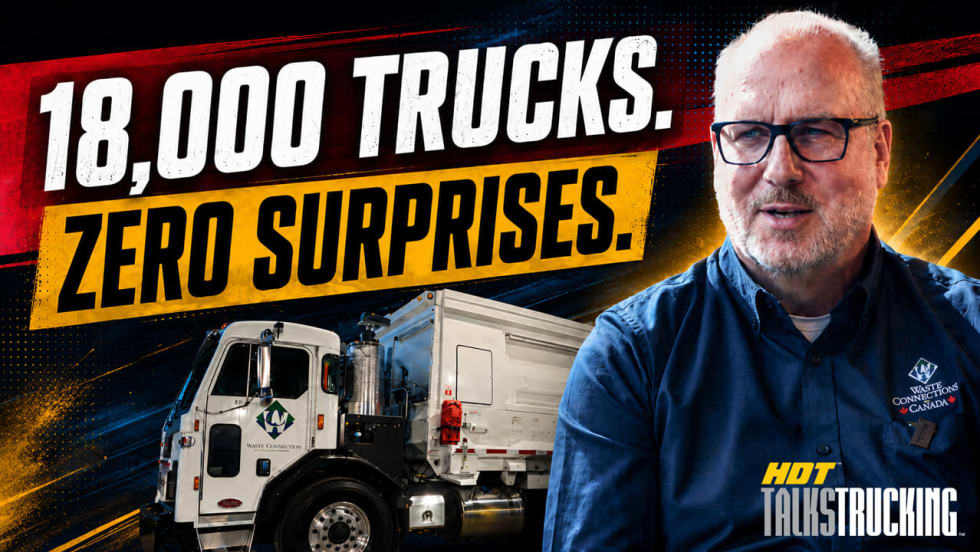
Why Fleet Data Matters More Than Ever at Waste Connections [Watch]
Waste Connections' Chuck Palmer explains how telematics, predictive maintenance, safety analytics, and AI help keep vehicles on the road and drivers safe in this episode of HDT Talks Trucking.
Read More →
Short Takes: How K&B is Using AI
Fleets need to "get on board the train" with AI, says Lance Evans of K&B Transportation in this HDT Talks Trucking Short Takes episode.
Read More →
Short Takes: Inside K&B’s Truck Safety Tech
Listen to learn how K&B Transportation uses cellphone-blocking technology, speed management systems, weather geofencing, bridge avoidance tools, and more to improve driver safety.
Read More →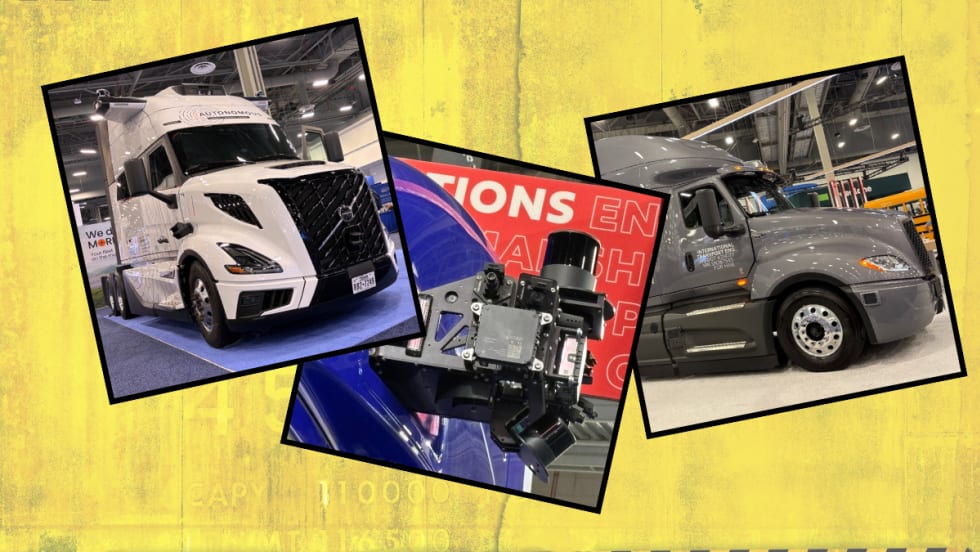
The Biggest Gap in Driverless Trucking Isn’t Tech. It’s Safety Validation
Nauto’s Stefan Heck says autonomous trucks are advancing quickly but proving they’re safe enough for large-scale deployment may be the industry’s hardest challenge.
Read More →
Truck Crash Rates Are Down. So Why Do Insurance Costs Keep Rising?
ATRI’s latest research points to litigation, social inflation, and soaring claims costs as key drivers behind record-high liability premiums for trucking fleets. But there are things motor carriers can do.
Read More →
FMCSA Removes More Than a Dozen ELDs from Registered List
The FMCSA continues its efforts to fight electronic logging devices that don't meet federal requirements, removing more than a dozen from the registered ELD list in May.
Read More →
How the Supreme Court Broker Liability Ruling Could Reshape Trucking’s Safety Landscape
The Supreme Court’s May 11 broker-liability ruling may not radically rewrite transportation law overnight. But industry experts say it will intensify pressure on brokers, carriers, and shippers to prove they are prioritizing safety.
Read More →
Recall of Fontaine Fusion Flatbeds Warns Owners Not to Use the Trailers
Some Fontaine Fusion flatbed trailer manufactured between February 2025, and March 2026 could have mainbeams weakened by hydrogen embrittlement because of a problem in the galvanizing process.
Read More →