




Study: Large Trucks at Greater Risk of Fire in High-Speed Crashes
Large trucks - semi-trucks in particular - are more likely to catch fire in higher speed vehicle crashes compared to light trucks and passenger vehicles, according to a recent study by the Kentucky Injury Prevention and Research Center

Larger vehicles' weight may result in greater impact forces in collisions. These forces may compromise vulnerable fuel tanks, and leaking fuel is more likely to ignite.
Large trucks - semi-trucks in particular - are more likely to catch fire in higher speed vehicle crashes compared to light trucks and passenger vehicles, according to a recent study by the Kentucky Injury Prevention and Research Center.
In a study of Kentucky motor vehicle collisions between 2000 and 2009, the Kentucky large truck fire rate was 113% higher than the light truck/passenger car fire rate. Large trucks made up 14% of vehicles that caught fire after a motor vehicle collision.
Kentucky has 762 miles of interstate highway. Although many of these miles include twists and curves, the study showed most large truck fires occurred on long stretches of straight highway, with a steady speed of at least 55 mph, and the majority of these large truck fires involve only the truck and its driver.
Dr. Terry Bunn, director of KIPRC, suggests two possible causes of these collisions: greater impact force of semi trucks in collisions and fuel tank placement differences between semi trucks and passenger vehicles.
"Large trucks typically have two 150-gallon diesel fuel tanks on the tractor, and another 50-gallon fuel tank if the tractor is hauling a refrigerated trailer," Bunn says. "Fuel tanks for large trucks have greater exposure and are much less protected than light trucks and passenger vehicles."
Bunn says larger vehicles' weight may result in greater impact forces in collisions. These forces may compromise vulnerable fuel tanks, and leaking fuel is more likely to ignite.
Another source of vulnerability with large trucks is the crossover lines between the two fuel tanks. During impact, they may fail due to tear, rupture or puncture and increase the risk of fire. The lack of inertia fuel switches as standard equipment in large truck purchases may also increase the risk of collision fires. The report cites additional causes of large truck fires including decreased vehicle stiffness and reduced crush space in the semi-truck cab.
Other possible contributors to large truck fires are sleepiness and fatigue. If a driver falls asleep and make no evasive maneuvers to avoid fixed objects such as trees and bridge abutments, the driver may be more likely to have a higher impact crash.
Dr. Bunn suggests the incidence of large truck fires can be reduced or eliminated by taking preventative steps to improve safety on the road. These measures included mandatory inertia fuel switches, company training on seatbelt safety, rigid roadside barriers to contain and redirect semi-trucks from leaving the roadway, crossover lines, protected placement of fuel tanks, enforcements of rest period and quality sleep for drivers, investment in driver fatigue technology and elimination of cab distractions.
"Fire safety approaches based on input from truck drivers, trucking companies, large truck manufacturers and roadway engineers are all needed to reduce large truck fires," Bunn says.
To access the complete study, click here.
More Safety & Compliance
How Waste Connections is Using Data, Telematics, and AI
How do you manage and maintain more than 18,000 connected trucks? Data. Lots of it.
Read More →
Fleet Advantage: Top Logistics Fleets Outperform National Safety Benchmarks
Fleet Advantage's latest TRUST Safety Index found leading logistics fleets maintained significantly lower out-of-service rates and stronger safety scores than national averages, while highlighting persistent challenges related to tires, brakes, and unsafe driving behaviors.
Read More →
Why Fleet Data Matters More Than Ever at Waste Connections [Watch]
Waste Connections' Chuck Palmer explains how telematics, predictive maintenance, safety analytics, and AI help keep vehicles on the road and drivers safe in this episode of HDT Talks Trucking.
Read More →
Short Takes: How K&B is Using AI
Fleets need to "get on board the train" with AI, says Lance Evans of K&B Transportation in this HDT Talks Trucking Short Takes episode.
Read More →
Short Takes: Inside K&B’s Truck Safety Tech
Listen to learn how K&B Transportation uses cellphone-blocking technology, speed management systems, weather geofencing, bridge avoidance tools, and more to improve driver safety.
Read More →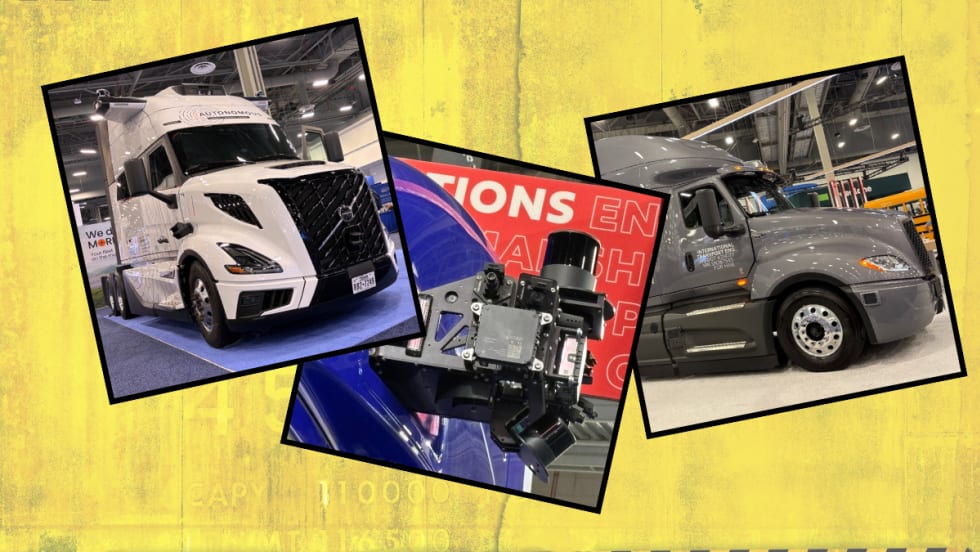
The Biggest Gap in Driverless Trucking Isn’t Tech. It’s Safety Validation
Nauto’s Stefan Heck says autonomous trucks are advancing quickly but proving they’re safe enough for large-scale deployment may be the industry’s hardest challenge.
Read More →
Truck Crash Rates Are Down. So Why Do Insurance Costs Keep Rising?
ATRI’s latest research points to litigation, social inflation, and soaring claims costs as key drivers behind record-high liability premiums for trucking fleets. But there are things motor carriers can do.
Read More →
FMCSA Removes More Than a Dozen ELDs from Registered List
The FMCSA continues its efforts to fight electronic logging devices that don't meet federal requirements, removing more than a dozen from the registered ELD list in May.
Read More →
How the Supreme Court Broker Liability Ruling Could Reshape Trucking’s Safety Landscape
The Supreme Court’s May 11 broker-liability ruling may not radically rewrite transportation law overnight. But industry experts say it will intensify pressure on brokers, carriers, and shippers to prove they are prioritizing safety.
Read More →
Recall of Fontaine Fusion Flatbeds Warns Owners Not to Use the Trailers
Some Fontaine Fusion flatbed trailer manufactured between February 2025, and March 2026 could have mainbeams weakened by hydrogen embrittlement because of a problem in the galvanizing process.
Read More →