




NTSB Conducting Tests at Site of June 2011 Amtrak Train Crash
NTSB investigators have returned to the scene of an accident between an Amtrak passenger train and a tractor and double trailer combination in rural Nevada on June 24, 2011.
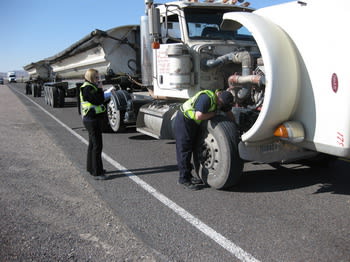
Testing equipment is installed on the truck's brake system to measure air-brake lag time. Photo by NTSB.
NTSB investigators have returned to the scene of an accident between an Amtrak passenger train and a tractor and double trailer combination in rural Nevada on June 24, 2011.
As a result of the accident, the truck driver, a train crew member, and four train passengers were killed.
Investigators were on site conducting tests and gathering data to gain more information about the performance of the vehicle and the circumstances and dynamics of the sequence of events leading up to the accident.
At the NTSB's request, John Davis Trucking, the motor carrier whose vehicle was involved in the crash, supplied a truck and set of trailers for the test that were nearly identical to those involved in the accident. The Nevada Highway Patrol and the Nevada Department of Transportation provided support essential to the testing operation.
In the area of human performance, investigators conducted tests to determine if the driver could have heard the train's horn. The train's locomotive event recorder and audio captured by a microphone mounted external to the locomotive revealed that the horn was sounded four times as the train approached the crossing. Based on information from the recordings, investigators calculated the distances between the truck and the crossing during the four horn blasts.
Investigators timed the test to coincide with a regularly scheduled Amtrak train that travels along the accident segment of the railroad tracks on a daily basis. During the test, train horn sounds were recorded from the inside of the exemplar truck as the Amtrak train approached along with ambient noise of the truck-tractor under a variety of driving conditions.
In the area of vehicle performance, investigators gathered additional data about the braking system and deceleration characteristics of the exemplar truck. Testing equipment was installed within the air-operated commercial vehicle braking system to measure air brake lag time on each of the nine axles of the truck-combination unit. The exemplar truck-tractor combination unit was then skid-tested near the accident site in order to gather information about the speed, stopping distance, and deceleration of the combination unit using multiple methods of data collection.
NTSB investigators are continuing to develop additional factual information and are in the process of analyzing the data derived from the tests performed in Nevada. The accident docket, which includes factual reports and hundreds of pages of documents, is expected to be opened within several months. A Board Meeting, where the determination of the probable cause of the accident will be made, is expected next year.
To read more about the investigation, visit: www.ntsb.gov
More Safety & Compliance
How Waste Connections is Using Data, Telematics, and AI
How do you manage and maintain more than 18,000 connected trucks? Data. Lots of it.
Read More →
Fleet Advantage: Top Logistics Fleets Outperform National Safety Benchmarks
Fleet Advantage's latest TRUST Safety Index found leading logistics fleets maintained significantly lower out-of-service rates and stronger safety scores than national averages, while highlighting persistent challenges related to tires, brakes, and unsafe driving behaviors.
Read More →
Why Fleet Data Matters More Than Ever at Waste Connections [Watch]
Waste Connections' Chuck Palmer explains how telematics, predictive maintenance, safety analytics, and AI help keep vehicles on the road and drivers safe in this episode of HDT Talks Trucking.
Read More →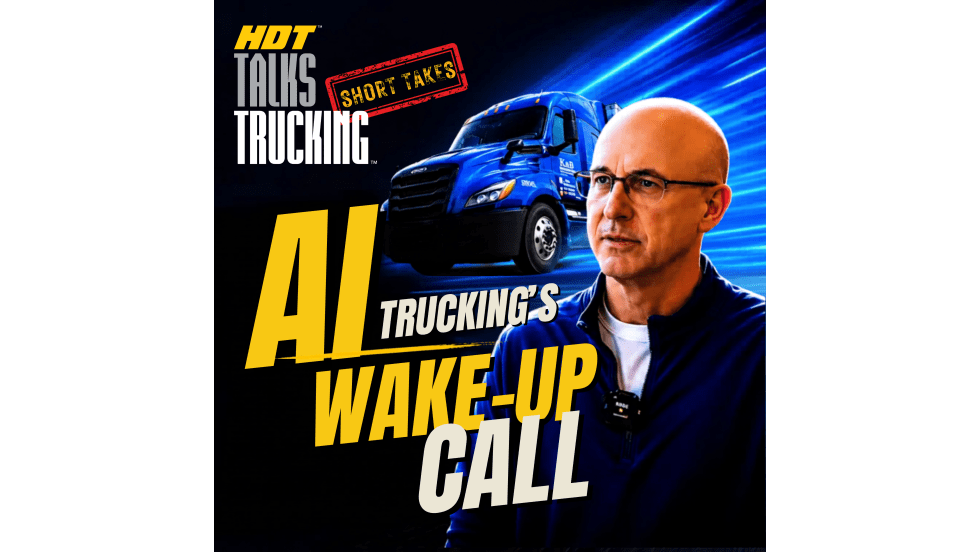
Short Takes: How K&B is Using AI
Fleets need to "get on board the train" with AI, says Lance Evans of K&B Transportation in this HDT Talks Trucking Short Takes episode.
Read More →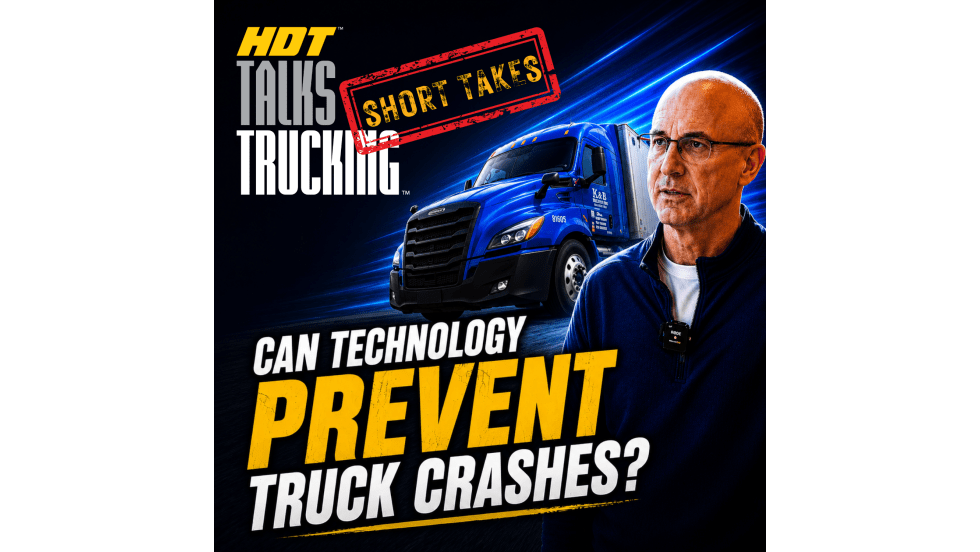
Short Takes: Inside K&B’s Truck Safety Tech
Listen to learn how K&B Transportation uses cellphone-blocking technology, speed management systems, weather geofencing, bridge avoidance tools, and more to improve driver safety.
Read More →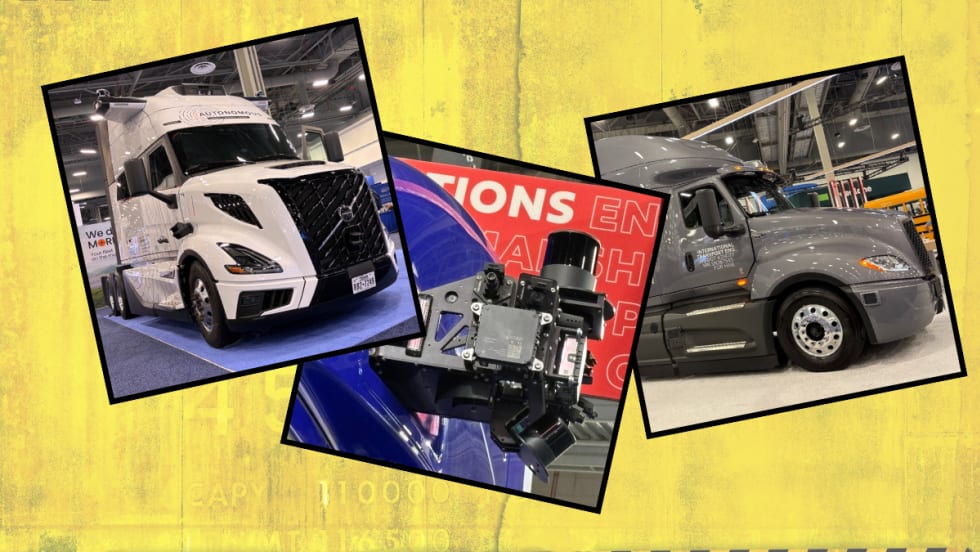
The Biggest Gap in Driverless Trucking Isn’t Tech. It’s Safety Validation
Nauto’s Stefan Heck says autonomous trucks are advancing quickly but proving they’re safe enough for large-scale deployment may be the industry’s hardest challenge.
Read More →
Truck Crash Rates Are Down. So Why Do Insurance Costs Keep Rising?
ATRI’s latest research points to litigation, social inflation, and soaring claims costs as key drivers behind record-high liability premiums for trucking fleets. But there are things motor carriers can do.
Read More →
FMCSA Removes More Than a Dozen ELDs from Registered List
The FMCSA continues its efforts to fight electronic logging devices that don't meet federal requirements, removing more than a dozen from the registered ELD list in May.
Read More →
How the Supreme Court Broker Liability Ruling Could Reshape Trucking’s Safety Landscape
The Supreme Court’s May 11 broker-liability ruling may not radically rewrite transportation law overnight. But industry experts say it will intensify pressure on brokers, carriers, and shippers to prove they are prioritizing safety.
Read More →
Recall of Fontaine Fusion Flatbeds Warns Owners Not to Use the Trailers
Some Fontaine Fusion flatbed trailer manufactured between February 2025, and March 2026 could have mainbeams weakened by hydrogen embrittlement because of a problem in the galvanizing process.
Read More →