




New Bill Would Mandate EOBRs; Backed by Major Trucking Companies
Five major transportation companies today announced their support for legislation introduced by U.S. Senators Mark Pryor (D-Ark.) and Lamar Alexander (R-Tenn.) that would require trucking companies engaged in interstate commerce to install electronic on-board recorders in all trucks
Five major transportation companies today announced their support for legislation introduced by U.S. Senators Mark Pryor (D-Ark.) and Lamar Alexander (R-Tenn.) that would require trucking companies engaged in interstate commerce to install electronic on-board recorders in all trucks.
The "Commercial Driver Compliance Improvement Act" will require commercial motor vehicles used in interstate commerce to install the electronic devices within three years after the passage of the legislation.
"No one wants to share the road with tired truckers, but we all expect our stores to be full of merchandise. Meeting these expectations is a constant balancing act for the trucking industry," Pryor said. "After several meetings with industry and Senate hearings on highway safety, I believe the most sensible and effective solution is to require the use of electronic on-board recorders. This measure will ensure the entire industry is putting safety and driver quality of life before profit."
"This bill will save truckers time, paper, and money, and it will make government leaner," said Alexander. "The Federal Motor Carrier Safety Administration estimates that in paperwork savings alone, converting to electronic on-board records would save $60 million a year."
The companies announcing their endorsement of the bill are J.B. Hunt Transport Services, Knight Transportation, Maverick USA, Schneider National, and U.S. Xpress Enterprises.
The companies are forming an industry coalition called "The Alliance for Driver Safety & Security" to urge Congress to pass the legislation and to also advance other measures that can improve highway safety.
If passed, the legislation will require companies to install an electronic device that is engaged to the truck engine which will identify the driver operating the truck, record a driver‟s duty status, and is capable of monitoring the location and movement of the vehicle. The legislation calls for using existing technology and devices that are currently in the marketplace.
Donald Osterberg, senior vice president of safety for Schneider National in Green Bay, Wis., said that while the current federal hours-of-service rules are "science based, reasonable, and effective," the problem under the status quo is that there is a "lack of compliance with the rules" saying that "fatigue is underreported and thus underestimated as a causal factor in truck-involved crashes. Electronic logs take the non-compliance issues off the table."
Deborah Hersman, Chairman of the National Traffic Safety Board, noted that the NTSB has been advocating the use of onboard recorders for hours of service compliance for 30 years.
Washington Editor Oliver Patton is speaking with representatives of the trucking companies this afternoon; look for their comments on Truckinginfo.com tomorrow, Sept. 30.
More Safety & Compliance
How Waste Connections is Using Data, Telematics, and AI
How do you manage and maintain more than 18,000 connected trucks? Data. Lots of it.
Read More →
Fleet Advantage: Top Logistics Fleets Outperform National Safety Benchmarks
Fleet Advantage's latest TRUST Safety Index found leading logistics fleets maintained significantly lower out-of-service rates and stronger safety scores than national averages, while highlighting persistent challenges related to tires, brakes, and unsafe driving behaviors.
Read More →
Why Fleet Data Matters More Than Ever at Waste Connections [Watch]
Waste Connections' Chuck Palmer explains how telematics, predictive maintenance, safety analytics, and AI help keep vehicles on the road and drivers safe in this episode of HDT Talks Trucking.
Read More →
Short Takes: How K&B is Using AI
Fleets need to "get on board the train" with AI, says Lance Evans of K&B Transportation in this HDT Talks Trucking Short Takes episode.
Read More →
Short Takes: Inside K&B’s Truck Safety Tech
Listen to learn how K&B Transportation uses cellphone-blocking technology, speed management systems, weather geofencing, bridge avoidance tools, and more to improve driver safety.
Read More →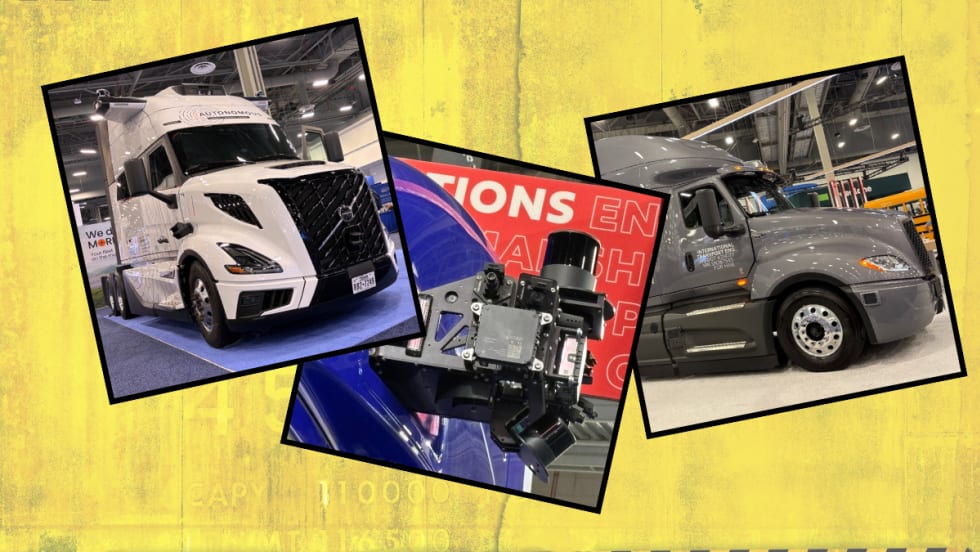
The Biggest Gap in Driverless Trucking Isn’t Tech. It’s Safety Validation
Nauto’s Stefan Heck says autonomous trucks are advancing quickly but proving they’re safe enough for large-scale deployment may be the industry’s hardest challenge.
Read More →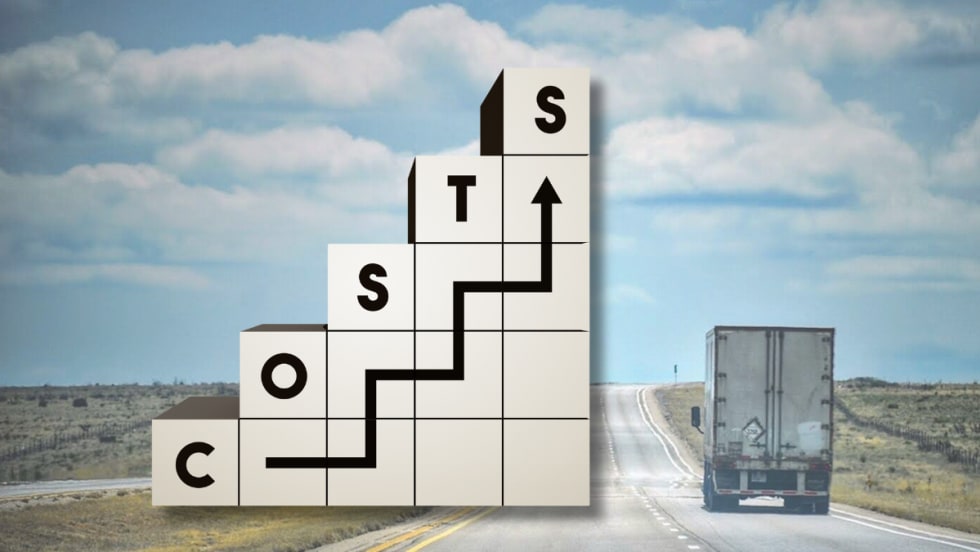
Truck Crash Rates Are Down. So Why Do Insurance Costs Keep Rising?
ATRI’s latest research points to litigation, social inflation, and soaring claims costs as key drivers behind record-high liability premiums for trucking fleets. But there are things motor carriers can do.
Read More →
FMCSA Removes More Than a Dozen ELDs from Registered List
The FMCSA continues its efforts to fight electronic logging devices that don't meet federal requirements, removing more than a dozen from the registered ELD list in May.
Read More →
How the Supreme Court Broker Liability Ruling Could Reshape Trucking’s Safety Landscape
The Supreme Court’s May 11 broker-liability ruling may not radically rewrite transportation law overnight. But industry experts say it will intensify pressure on brokers, carriers, and shippers to prove they are prioritizing safety.
Read More →
Recall of Fontaine Fusion Flatbeds Warns Owners Not to Use the Trailers
Some Fontaine Fusion flatbed trailer manufactured between February 2025, and March 2026 could have mainbeams weakened by hydrogen embrittlement because of a problem in the galvanizing process.
Read More →