




NTSB Recommends On-Board Recorders, Simulators
Sept. 28 – After investigating a 1997 crash that killed eight people, the National Transportation Safety Board has made several recommendations on traction control, onboard recorders and simulator training
Sept. 28 – After investigating a 1997 crash that killed eight people, the National Transportation Safety Board has made several recommendations on traction control, onboard recorders and simulator training.
On Feb. 12, 1997, a Consolidated Freightways doubles truck with empty trailers was traveling northbound on U.S. Route 41 near Slinger, WI. The driver lost control on patchy ice and crossed over the median into the southbound lanes. A flatbed truck loaded with lumber collided with the doubles truck, lost control and crossed over into the northbound lanes. A northbound passenger van underrode the flatbed, killing eight of the nine van occupants.
The NTSB investigated and decided that the probable cause of the accident was the truck driver drove too fast for the conditions. The lack of seat belt use in the van also contributed to the deaths.
The board sent letters recommending actions to help reduce this type of accident in the future to a number of trucking-related groups, including the American Trucking Assns., the Owner-Operator Independent Drivers Assn., the National Highway Traffic Safety Administration and the Teamsters.
The most disturbing recommendation to many in the trucking industry was the use of onboard recorders. In a letter sent to the ATA, OOIDA, the National Private Truck Council and the Independent Truckers and Drivers Assn., the NTSB asked these groups to “advise your members to equip their commercial vehicle fleets with automated and tamper-proof onboard recording devices, such as tachographs or computerized recorders, to identify information concerning both driver and vehicle operating characteristics.”
The onboard recorder recommendation left many in the industry scratching their heads.
“From our perspective,” says OOIDA’s Todd Spencer, “there’s no correlation between an onboard recorder and any perceived safety benefit in this accident, or most accidents. When the people that make onboard recorders market them to motor carriers, they market them as productivity improvers, not safety devices. And these units are relatively expensive for our little guys to purchase, without any corresponding improvement in safety.”
Similarly, ATA spokesman David Barnes points out that NTSB for years has wanted on-board recorders for use in identifying truckers who exceed hours of service regulations, but that wasn’t an issue in this particular case. “The NTSB stated the truck speed at the time was not readily available, and cite it as a reason for wanting onboard recorders. But the police report found that the estimated speed was 43-58 mph. It’s not exactly rocket science to determine how fast a vehicle was going at the time of an accident.”
Less controversial were NTSB’s recommendations that ATA work with federal agencies to “encourage the development and use of simulator-based training for heavy truck operators” and to do lab and fleet testing on adding traction control devices to antilock braking systems. (Traction control devices are already available as an ABS option.)
Barnes points out that his association and the trucking industry already have been working on research of both simulator training and traction control devices.
You can find the entire 80-page report in Adobe Acrobat format on NTSB’s web site at http://www.ntsb.gov/publictn/1998/HAR9801.pdf.
More Safety & Compliance

How Waste Connections is Using Data, Telematics, and AI
How do you manage and maintain more than 18,000 connected trucks? Data. Lots of it.
Read More →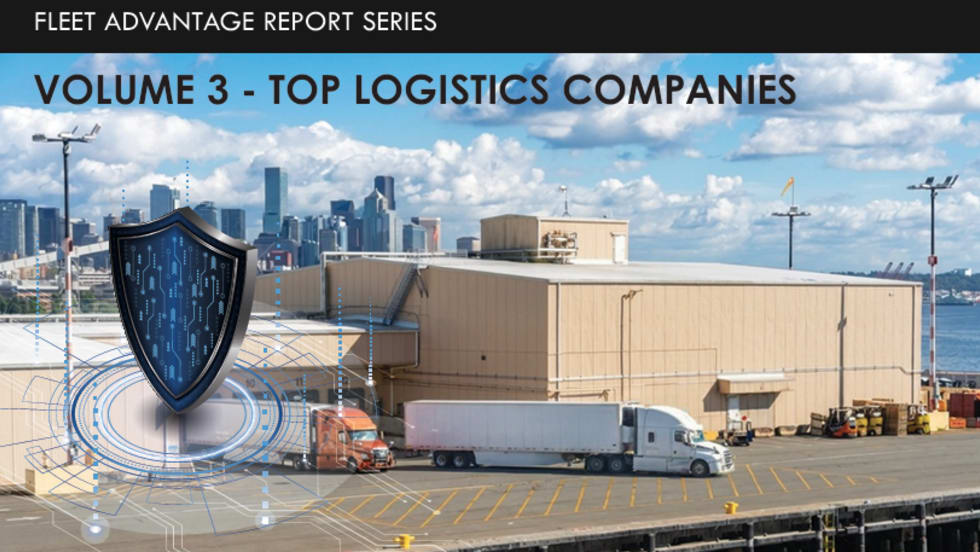
Fleet Advantage: Top Logistics Fleets Outperform National Safety Benchmarks
Fleet Advantage's latest TRUST Safety Index found leading logistics fleets maintained significantly lower out-of-service rates and stronger safety scores than national averages, while highlighting persistent challenges related to tires, brakes, and unsafe driving behaviors.
Read More →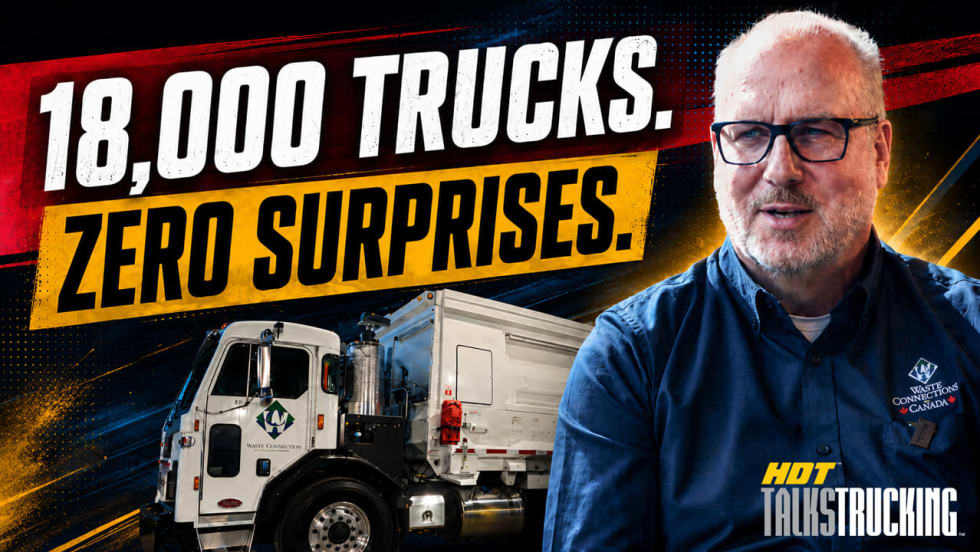
Why Fleet Data Matters More Than Ever at Waste Connections [Watch]
Waste Connections' Chuck Palmer explains how telematics, predictive maintenance, safety analytics, and AI help keep vehicles on the road and drivers safe in this episode of HDT Talks Trucking.
Read More →
Short Takes: How K&B is Using AI
Fleets need to "get on board the train" with AI, says Lance Evans of K&B Transportation in this HDT Talks Trucking Short Takes episode.
Read More →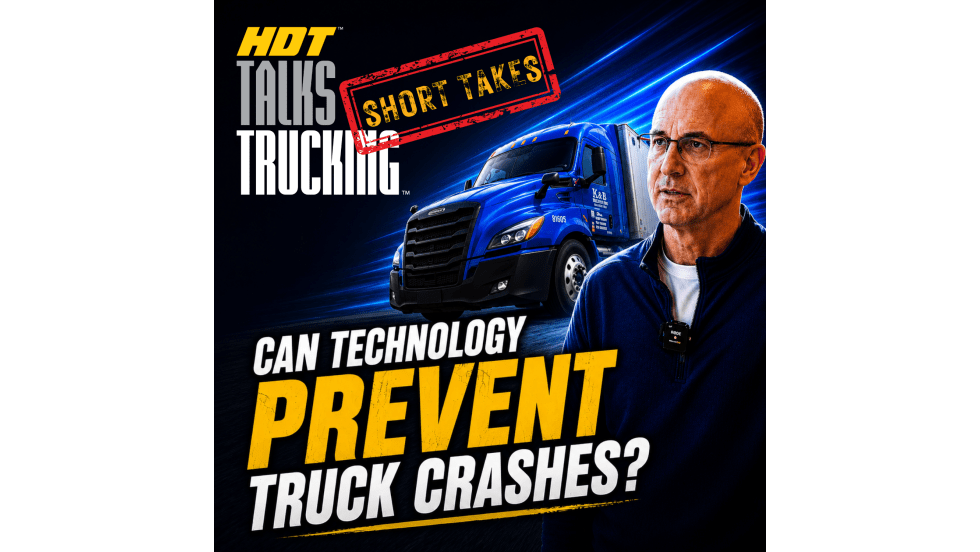
Short Takes: Inside K&B’s Truck Safety Tech
Listen to learn how K&B Transportation uses cellphone-blocking technology, speed management systems, weather geofencing, bridge avoidance tools, and more to improve driver safety.
Read More →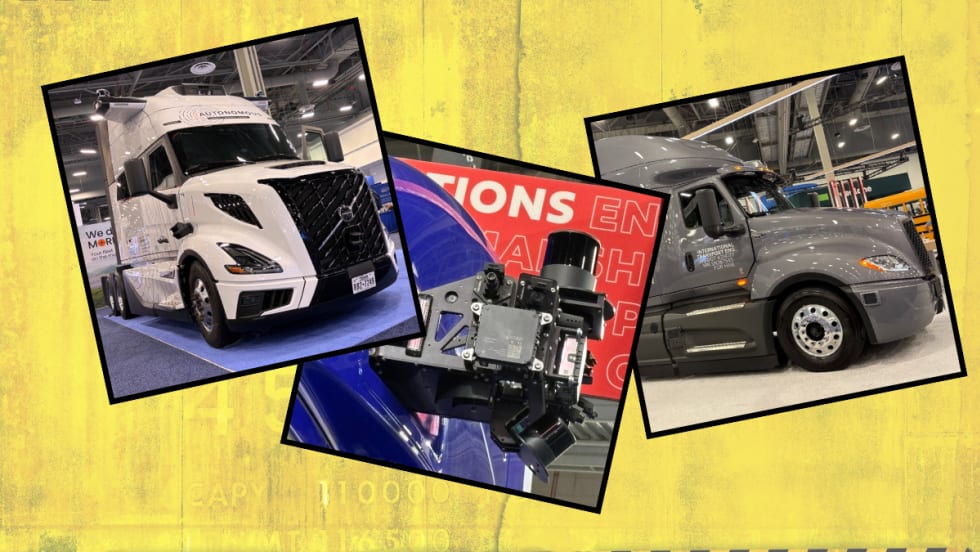
The Biggest Gap in Driverless Trucking Isn’t Tech. It’s Safety Validation
Nauto’s Stefan Heck says autonomous trucks are advancing quickly but proving they’re safe enough for large-scale deployment may be the industry’s hardest challenge.
Read More →
Truck Crash Rates Are Down. So Why Do Insurance Costs Keep Rising?
ATRI’s latest research points to litigation, social inflation, and soaring claims costs as key drivers behind record-high liability premiums for trucking fleets. But there are things motor carriers can do.
Read More →
FMCSA Removes More Than a Dozen ELDs from Registered List
The FMCSA continues its efforts to fight electronic logging devices that don't meet federal requirements, removing more than a dozen from the registered ELD list in May.
Read More →
How the Supreme Court Broker Liability Ruling Could Reshape Trucking’s Safety Landscape
The Supreme Court’s May 11 broker-liability ruling may not radically rewrite transportation law overnight. But industry experts say it will intensify pressure on brokers, carriers, and shippers to prove they are prioritizing safety.
Read More →
Recall of Fontaine Fusion Flatbeds Warns Owners Not to Use the Trailers
Some Fontaine Fusion flatbed trailer manufactured between February 2025, and March 2026 could have mainbeams weakened by hydrogen embrittlement because of a problem in the galvanizing process.
Read More →