




5 Trends in FMCSA Compliance Reviews
The Federal Motor Carrier Safety Administration recently announced that it is changing the process for performing compliance reviews. What do this announcement and other compliance review trends mean for your fleet?
by Don Jerrell, HNI
March 13, 2017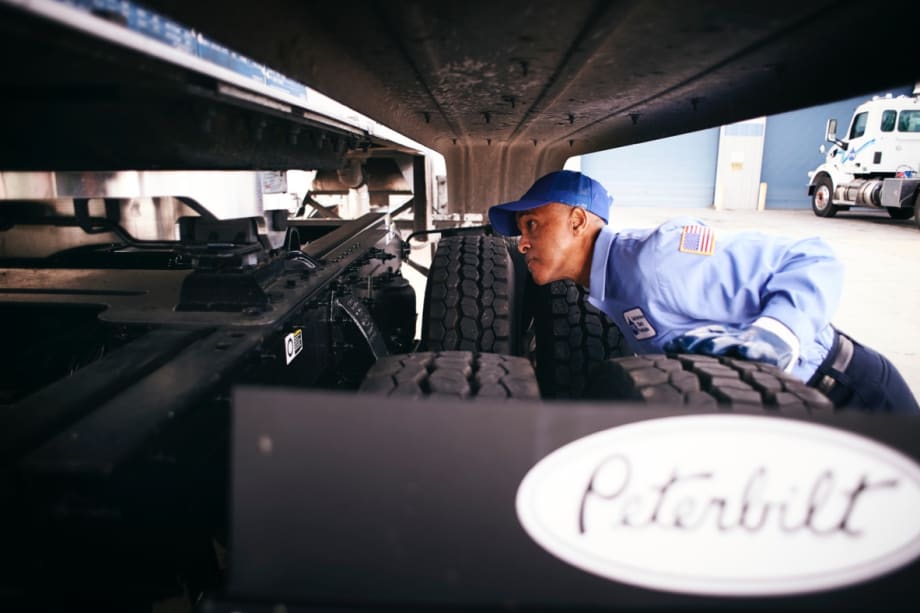
Now that fleets only have to have a driver vehicle inspection report form when a defect has occurred, it is much easier for safety auditors to see when drivers are and aren't doing their job when it comes to pre-trips. Photo: Dupre Logistics
4 min to read
Now that fleets only have to have a driver vehicle inspection report form when a defect has occurred, it is much easier for safety auditors to see when drivers are and aren't doing their job when it comes to pre-trips.Photo: Dupre Logistics
The Federal Motor Carrier Safety Administration recently announced that it is changing the process for performing compliance reviews. Specifically, they referred to expanded interviews with members within the organization. (The truth is, they have been doing this for a while, but recently completed all the training and therefore made the announcement.)
Does this mean that compliance reviews have changed?
Yes and no. FMCSA had already trended from full reviews to focused reviews. However, there are some things that we are seeing with regards to compliance reviews. From our perspective, here are five items that we are seeing:
1. Many reviews are occurring due to complaints vs. CSA scores.
Historically, complaints were considered a lower priority by FMCSA in deciding to perform a compliance review. CSA scores that had BASICs on alert were the primary determining factor for a compliance review. However, recently the complaints are taking a much higher priority than previously. There are a couple of reasons for this:
• Driver coercion rule: In 2016, the DOT released the final rule regarding driver coercion (different from harassment, which is tied to electronic logging devices). As a result, most complaints are being treated as if coercion has occurred. Thus, the visit. What is interesting is that little if any cases of coercion are being found. What is happening is during the investigation the inspector is “discovering” issues that now result in a compliance review being performed while the inspector is at that location. We have seen several carriers who have no scores on alert (in fact have “best in class” scores) in CSA BASICs, but are now receiving a focused review (usually hours of service – but not always), which is resulting in a “conditional” rating along with a fine.
• Ease of filing a complaint: FMCSA has made it very easy for someone to file a complaint. Previously the complainant was requested to put something in writing and send in to the FMCSA. Now the complainant can just go through the FMCSA website and to enter the complaint.
2. Hours of service, in particular false logs, is still the most common violation.
We are still seeing that hours of service is the most common area where violations are occurring during these focused reviews; primarily falsification. Carriers need to make sure they are cross referencing time (not just date) documents with the driver’s logs. These documents could include fuel (from fuel reports not paper receipts), tolls, reimbursement receipts, etc.
3. The DVIR process has now popped up as an easy target
Before December 2015, it was more difficult for an inspector or auditor to be able to make a case with regards to driver vehicle inspectino reports. With drivers turning in a DVIR daily and the requirement of finding a pattern of 10% (critical) in order to make a case that would result in a fine, it was very difficult and time-consuming for the inspector to gather enough information. However, with the new rule of only filling out a DVIR when a defect has occurred, it is much easier to make a case. Throw out all the clean ones and what do you have left?
So inspectors are using roadside inspections that had maintenance issues listed and asking for the DVIR that corresponds with that date. No DVIR or an issue not listed? That’s one. Now you need at a minimum of 10 to make up for that one. Other items that could be used against a DVIR would include breakdown reports filled out by the driver and given to the shop for repairs, and maintenance records that show multiple items that it would be obvious the driver should have been aware.
We recommend carriers to (at a minimum) do the following:
Cross reference roadside inspections that have maintenance issues listed with the drivers DVIR.
Look at your internal processes to see how drivers are communicating to the shop when repairs are needed and cross reference with the driver’s DVIR.
Train the shop to report when they see or perform repairs that should have been seen by the driver and compare to the driver’s DVIR.
4. Changes to the medical card verification process are causing compliance concerns.
The “grace” period is over. If you are not verifying the physician's license via the national registry and/or not running a CDLIS report, you will be a target.
There has been an interesting battle as to when a report from a system vs. a CDLIS report is acceptable. We recommend the carrier run the new CDLIS report, but there has been an interpretation that says if “all” the required information is on a report, you can use that instead – the issue being “all the required information.”
5. Drivers operating with suspended or invalid CDLs.
It only takes a few of these violations to get a BASIC on alert status in CSA. You need to make sure that you have an internal process to monitor and make sure driver’s licenses are not being suspended. (Don’t count on the driver.)
Not updating medical information is a suspension. Many states are not communicating back and forth on suspended licenses too.
Donald G. Jerrell, CDS, is principal and senior risk advisor for HNI Risk Services, a non traditional insurance and safety consulting firm. This article was authored under the guidance and editorial standards of HDT's editors to provide useful information to our readers.
Subscribe to Our Newsletter
More Safety & Compliance
PrePass, Kodiak Connect Driverless Trucks to Roadside Enforcement
The system will allow enforcement agencies to verify Enhanced Inspection information and decide whether Kodiak’s autonomous trucks can bypass roadside screening sites.
Read More →
From One Generation to the Next: How Mentorship Builds Safer Truck Drivers
After three decades in trucking, Harold Perry shares what he's learned about driver safety, mentorship, and helping the next generation build confidence behind the wheel.
Read More →
FMCSA Pauses Biennial-Update Enforcement Amid Motus Transition
Carriers whose updates were due on or after June 1 have more time, while FMCSA works to stabilize its new registration system and warns of phishing sites impersonating its new carrier registration system, Motus.
Read More →
ZF Expands Commercial Vehicle Push in North America
ZF is expanding its North American commercial-vehicle presence with new transmission applications, electrification, trailer technology and autonomous-driving systems.
Read More →
Truck Drivers Need More Than Another Alert
Fleets have more visibility into truck health, safety events, and driver activity than ever. The next challenge is turning all that information into useful guidance for the person who has to decide what to do next.
Read More →
Tesla Wants a Self-Driving Semi. Are Cameras Enough?
Could Tesla’s camera-only autonomous driving technology work on an 80,000-pound Semi? In this commentary, HDT's Deborah Lockridge takes a look at Tesla, Cybercab, and how autonomous trucks see the road.
Read More →
What DOT’s Automated Vehicle Strategy Means for Trucking
The U.S. Department of Transportation issued a new automated-vehicle strategy that outlines plans for driverless-truck regulations, cross-state freight corridors, and federal safety standards.
Read More →
NYC Expands Speed, Pedestrian Safety Tech Across Fleet
New York City is expanding intelligent speed assistance and pedestrian-alert systems across its municipal fleet, moving the technologies from pilot programs into vehicle procurement and retrofit requirements.
Read More →
FMCSA Removes 110 Truck Driver Training Schools from Certified ELDT List
Federal regulators also are targeting more than 160 additional training providers and launching a nationwide audit of third-party CDL skills testers as part of a broader crackdown on trucking fraud.
Read More →
Beyond DOT Compliance: What Makes a Trucking Fleet Truly Safe?
A trucking fleet can follow every rule and still make unsafe decisions. The real test comes when safety conflicts with freight, productivity, or cost.
Read More →