





Related: J.B. Hunt Orders 4,000 Trailers with Safer Rear Impact Guard
Dry Vans: Regulations, What Customers Want, and How It Could Change
While many equipment mandates cause angst in the industry, a recent government proposal to require stronger rear under-ride guards is apparently not one of them.
March 28, 2016
4 min to read
Every company has to answer to its customers, but in some instances, it has to answer to a higher power first — the federal government.
While many equipment mandates cause angst in the industry, a recent government proposal to require stronger rear under-ride guards is apparently not one of them, with most manufacturers either meeting or exceeding the requirement, according to Brian Kahl, VP of sales and marketing at Stoughton Trailers.
“At this point, however, these proposals are just that — proposals,” he says. “If and when these, or any other, proposals are adopted as final, we will be ready to comply with any changes required as a result.”
Since 2011, Hyundai Translead has been equipping its trailers for U.S., Canadian and Mexican markets with rear impact guards compliant with the more stringent Canadian regulation.
“Since the new U.S. regulations are similar to Canadian regulations, therefore we are meeting these standards already,” explains Brett Bartels, deputy general manager, sales and marketing strategy, Hyundai Translead.
Craig Bennett, senior vice president of sales and marketing at Utility Trailer, agrees, saying the company’s standard rear guard already meets both the U.S. and more stringent Canadian requirements.
As David H. Gilliland, VP of national accounts at Great Dane, points out, the government recognized the compliant trailers in its recent Notice of Proposed Rulemaking.
“NHTSA cites evidence from the Truck Trailer Manufacturers Association for the proposition that ‘93% of new trailers sold in the U.S. subject to FMVSS Nos. 223 and 224 are already designed to comply with CMVSS No. 223,’” says Gilliland. “While Great Dane expects the proposed rule to have some impact on industry practices (and specifically on the small minority of trailer manufacturers building trailer models without CMVSS 223-compliant guards in place), the vast majority of the industry’s regulated production already complies with CMVSS No. 223, and NHTSA’s proposal would effectively harmonize the U.S. regulation with Transport Canada’s current requirement.”
What fleets want
According to Bennett, the main concerns for fleets that are spec’ing dry vans have less to do with regulations and more to do with how they can save money.
“We see a growing need for lightweight options, safety options like ingress and egress, cube options, HD options for concentrated loads, load securement options, and more depending on their needs,” he explains.
Stoughton’s Kahl notes that customers continue to ask for weight savings and increased durability, “These can sometimes be opposing directions, but many advancements have been made to design weight out without compromising strength.”
Weight savings can allow for extra payload but also can result in fuel savings, which can also be affected by other options, such as aerodynamic devices – which Bennett notes might be mandated at some point as well.
“These are [currently] required in California, but at this point are not a federal mandate,” he says. But fleets aren’t waiting for a mandate to install options that save fuel.
“We have seen a steady increase in factory installation of aerodynamic devices, primarily side skirts, to the point that today just over 40% of dry vans we build receive a factory-installed aerodynamic device,” Bennett says.
Even with dropping fuel prices, manufacturers are seeing the continued adoption of trailer aerodynamic devices and other fuel-saving technologies, such as tire inflation systems and low rolling resistance tires, according to Larry Adkins, product applications manager at Wabash National Corp.
In addition to lightweight components and materials, such as aluminum wheels, Adkins says. “Other trends we’re seeing are the growing adoption of disc brakes and use of trailer telematics systems.”
But, Adkins adds, customers seldom spec mix-and-match components when they select disc brakes. “Generally they select the suspension manufacturers’ axle and disc brake offerings.”
This may also be due to the cost increase when transitioning to disc brakes, according to Stoughton’s Kahl.
“Air disc brakes have not seen large growth in the van segment. The belief is once this cost difference comes down there will be more interest in spec’ing disc brakes,” he says.
Great Dane’s Gilliland agrees.
“Disc brakes have been slow to gain traction on dry vans in the U.S. I believe it is a function of cost and current trailer brake mix, “he says, adding, “Fleets in Canada have been aggressively spec’ing disc brakes. Overall, the trend toward disc brakes is slowly increasing.”
Subscribe to Our Newsletter
More Safety & Compliance
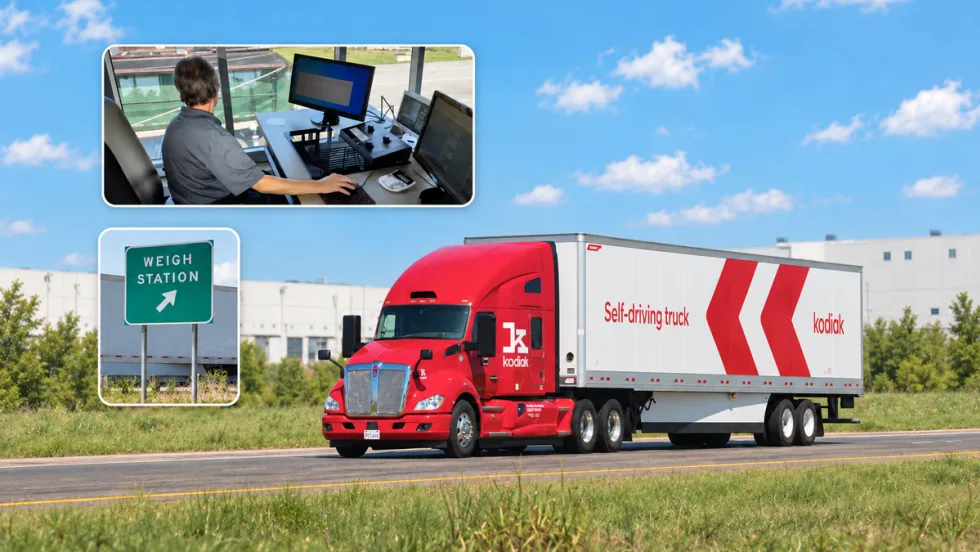
PrePass, Kodiak Connect Driverless Trucks to Roadside Enforcement
The system will allow enforcement agencies to verify Enhanced Inspection information and decide whether Kodiak’s autonomous trucks can bypass roadside screening sites.
Read More →
From One Generation to the Next: How Mentorship Builds Safer Truck Drivers
After three decades in trucking, Harold Perry shares what he's learned about driver safety, mentorship, and helping the next generation build confidence behind the wheel.
Read More →
FMCSA Pauses Biennial-Update Enforcement Amid Motus Transition
Carriers whose updates were due on or after June 1 have more time, while FMCSA works to stabilize its new registration system and warns of phishing sites impersonating its new carrier registration system, Motus.
Read More →
ZF Expands Commercial Vehicle Push in North America
ZF is expanding its North American commercial-vehicle presence with new transmission applications, electrification, trailer technology and autonomous-driving systems.
Read More →
Truck Drivers Need More Than Another Alert
Fleets have more visibility into truck health, safety events, and driver activity than ever. The next challenge is turning all that information into useful guidance for the person who has to decide what to do next.
Read More →
Tesla Wants a Self-Driving Semi. Are Cameras Enough?
Could Tesla’s camera-only autonomous driving technology work on an 80,000-pound Semi? In this commentary, HDT's Deborah Lockridge takes a look at Tesla, Cybercab, and how autonomous trucks see the road.
Read More →
What DOT’s Automated Vehicle Strategy Means for Trucking
The U.S. Department of Transportation issued a new automated-vehicle strategy that outlines plans for driverless-truck regulations, cross-state freight corridors, and federal safety standards.
Read More →
NYC Expands Speed, Pedestrian Safety Tech Across Fleet
New York City is expanding intelligent speed assistance and pedestrian-alert systems across its municipal fleet, moving the technologies from pilot programs into vehicle procurement and retrofit requirements.
Read More →
FMCSA Removes 110 Truck Driver Training Schools from Certified ELDT List
Federal regulators also are targeting more than 160 additional training providers and launching a nationwide audit of third-party CDL skills testers as part of a broader crackdown on trucking fraud.
Read More →
Beyond DOT Compliance: What Makes a Trucking Fleet Truly Safe?
A trucking fleet can follow every rule and still make unsafe decisions. The real test comes when safety conflicts with freight, productivity, or cost.
Read More →